



















“Kya aapko kaahi accountability dikh rahi hai?” (Do you see any accountability anywhere?)
Perhaps nothing captures Gen Z’s style of protest better than its placards. Like one hilarious image from the demonstrations shows a student holding a poster featuring the cartoon character Dora the Explorer with this caption. The sign is a clever twist on Dora’s iconic catchphrase, “Can you see…?” Instead of asking viewers to spot a map or a bridge, the poster asks them to look for something the protesters believe is missing: accountability.
The humour is immediate, but so is the message. Across the protests, references to Bollywood dialogues, internet memes, sitcoms and viral trends have replaced traditional slogans, reflecting the language Gen Z speaks every day.
CJP protest: From jokes to justice
For years, Gen Z has been branded as the “unserious” generation, chronically online, obsessed with memes, short-form videos and internet humour. But the ongoing student protests have turned that perception on its head. The same generation that communicates through trending audio and viral posts is now filling the streets, organising relief efforts and sustaining a movement that has captured national attention.
The protests have shown that internet culture and political consciousness are no longer separate worlds. Instead, they coexist, giving rise to a new style of activism.
Also Read | Social media backlash grows as Dharmendra Pradhan’s daughter disables Instagram
Memes become the movement’s language
Protesters are carrying placards that look like screenshots from social media, borrowing punchlines from popular films, viral reels and trending jokes to communicate serious demands.
“Even my diaper has better leak protection than the NTA.”
This is one of the sharpest puns in the reel. It plays on the dual meaning of the word “leak.” A diaper is designed to prevent urine leaks, while the protest references alleged exam paper leaks. By saying a diaper offers better “leak protection” than the examination authority, the sign ridicules what the protesters see as repeated failures in safeguarding exams. The humour comes from comparing a national testing body to a baby’s diaper, an intentionally absurd comparison that lands because of the shared word “leak.”
I’m too busy being a diva I can’t hear you.”
The phrase “I’m too busy being a diva” is a viral TikTok and Instagram meme template used to jokingly portray someone as ignoring criticism or acting unbothered. In internet slang, a “diva” isn’t just a glamorous celebrity, it has evolved into a tongue-in-cheek way of describing someone who appears overly confident, dramatic or dismissive.
By pairing this meme with an edited image of the Prime Minister, the placard uses satire to suggest that the country’s leadership is ignoring public demands or criticism. The joke lies in the contrast: instead of issuing a direct political slogan, the protester frames the criticism as if it were a light-hearted social media meme.
More than a protest
Behind the witty signs and viral slogans lies an impressive support system. Volunteers have distributed food, water, medicines and phone chargers, while lawyers and doctors have stepped in to offer legal and medical assistance. Residents have opened their doors to stranded protesters, showing that solidarity extends well beyond those leading the marches.
This network of community support has helped sustain demonstrations despite logistical challenges.
Also Read | Chalo Sansad protest: Hanumankind voices support for students in Delhi
Redefining what activism looks like
For this generation, activism does not always wear the solemn face people expect. It can laugh, create memes, remix songs and still remain deeply committed to democratic participation. Rather than weakening the movement, internet culture has made it more accessible, allowing young people to engage with serious issues in a language they understand best.
Rather than diluting the seriousness of the demonstrations, these memes have made the protests more relatable and highly shareable. Photos of witty signs have spread rapidly across social media, helping the movement reach audiences far beyond those physically present. In doing so, protesters have shown that for a generation raised online, a meme isn’t just a joke, it’s a powerful tool for political commentary and collective expression.
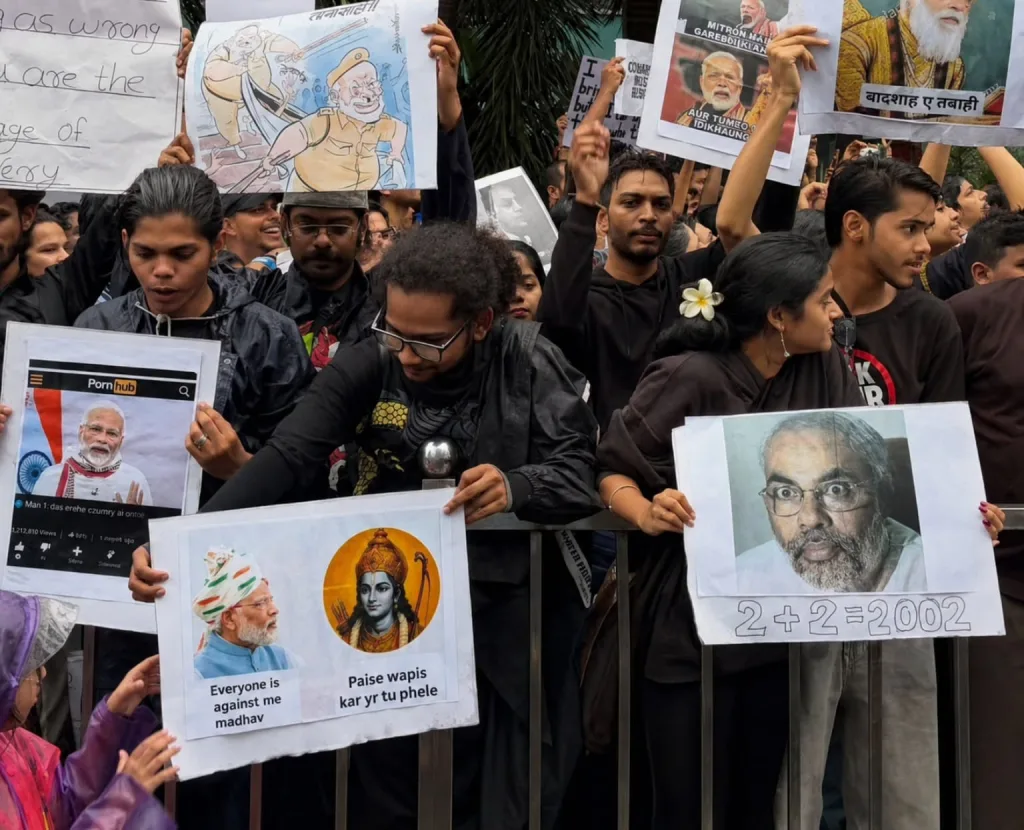
The protests have become a reminder that being online does not make a generation apathetic. Instead, Gen Z is showing that humour can coexist with conviction and that memes, once dismissed as distractions, can become powerful tools of resistance and collective identity.
FAQs
Q1. Why is Gen Z being called an “unserious” generation?
Because it is often stereotyped as being more focused on internet culture and social media than public issues.
Q2. How are these protests different from traditional demonstrations?
They combine digital mobilisation, memes, art, music and community support with peaceful street protests.
