




























Anxiety and panic can surface unexpectedly, bringing with them a racing heartbeat, rapid breathing, trembling hands and overwhelming thoughts. In those moments, it can feel difficult to regain control. While anxiety disorders often require professional care, mental health experts recommend several practical techniques that can help reduce distress in the moment. One of the most widely used is the 5-4-3-2-1 grounding technique.
This mindfulness-based exercise is designed to shift your attention away from anxious thoughts and reconnect you with your surroundings. It does not eliminate anxiety, but it can help interrupt the cycle of fear by encouraging you to focus on what is happening around you instead of what is happening inside your mind.
Because it requires no equipment, can be practised almost anywhere and takes only a few minutes, the technique has become a commonly recommended coping strategy for anxiety, panic attacks, post-traumatic stress disorder (PTSD) and periods of acute stress.
Also Read | What is the June Theory? The viral dating trend taking over social media
What is the 5-4-3-2-1 grounding technique?
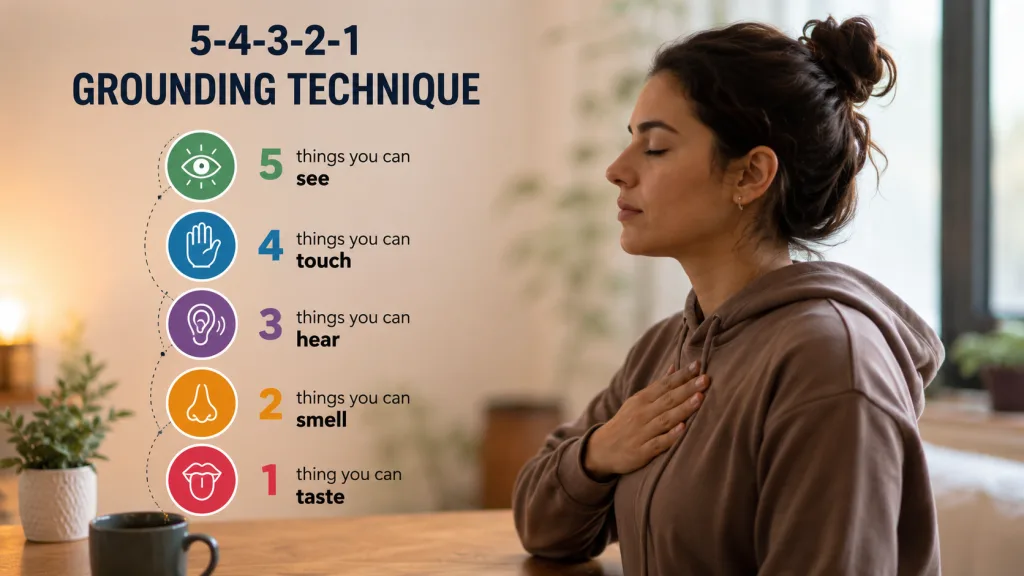
The method uses your five senses to bring your attention back to the present moment. Instead of concentrating on distressing thoughts, you gradually focus on things you can observe through sight, touch, hearing, smell and taste.
The exercise follows a simple sequence:
5 things you can see
4 things you can touch
3 things you can hear
2 things you can smell
1 thing you can taste
If you cannot access one of the senses, for example, if there is nothing noticeable to smell, you can think of familiar scents that you enjoy or remember.
Why can it help during anxiety?
During a panic attack or anxious episode, the body’s stress response activates the sympathetic nervous system. This can lead to a faster heartbeat, quicker breathing and increased muscle tension as the brain becomes focused on perceived threats.
Grounding techniques work by redirecting attention from internal fears to external sensory information. According to the American Psychological Association (APA), mindfulness-based practices can improve emotional regulation and help reduce stress by encouraging present-moment awareness.
Also Read | Healthy relationships start with these 10 everyday green flags
The National Center for Complementary and Integrative Health (NCCIH) also notes that mindfulness interventions may reduce symptoms of anxiety, depression and psychological distress.
How to practise it
The exercise usually takes between two and five minutes.
Start by pausing and taking one or two slow, deep breaths without forcing yourself to relax.
- Then, look around and identify five things you can see, such as a plant, window, book or light.
- Notice four things you can touch, including your clothes, chair, desk or the floor beneath your feet.
- Listen carefully for three sounds, whether they are birds outside, traffic, a fan or your own breathing.
- Identify two smells, such as coffee, soap or fresh air. If you cannot smell anything, recall two scents from memory.
- Finally, focus on one thing you can taste, whether it is water, tea, toothpaste or simply the taste already in your mouth.

What does research say?
Grounding exercises are part of broader mindfulness and cognitive behavioural coping strategies.
A systematic review published in Clinical Psychology Review found that mindfulness-based interventions can significantly reduce anxiety symptoms across different groups. Research published in JAMA Internal Medicine also reported moderate improvements in anxiety, depression and pain among people who practised mindfulness meditation.
The World Health Organisation (WHO) includes stress management and mindfulness among practical self-care approaches that can support mental wellbeing alongside professional treatment.
Although research focused specifically on the 5-4-3-2-1 technique remains limited, psychologists frequently use sensory grounding as part of trauma-informed therapy and cognitive behavioural therapy (CBT) to help people manage acute emotional distress.
Also Read | Feeling lonely despite having a partner? You’re not alone, says survey
When should you use it?
The technique may be useful in several situations, including, when you feel a panic attack beginning, during periods of overwhelming anxiety, if you’re caught in a cycle of overthinking, after receiving upsetting news, before an examination or presentation, during travel-related anxiety, following emotionally triggering situations and during periods of work-related stress.
Many therapists also recommend practising the exercise regularly when you’re calm so that it becomes easier to use during stressful moments.

What it cannot replace
The 5-4-3-2-1 grounding technique is a coping strategy, not a treatment for anxiety disorders.
It should not replace cognitive behavioural therapy (CBT), medication prescribed by a psychiatrist, trauma-focused therapy or other forms of professional mental healthcare.
If anxiety or panic attacks become frequent, interfere with daily life or are accompanied by thoughts of self-harm, it is important to seek help from a qualified mental health professional. Combining self-care strategies with appropriate medical support generally offers the best long-term outcomes.
FAQs:
What is the 5-4-3-2-1 grounding technique?
It is a mindfulness exercise that uses your five senses to help bring your attention back to the present moment.
Can the 5-4-3-2-1 technique replace therapy for anxiety?
No. It is a coping tool and should not replace professional mental health treatment when needed.
