




















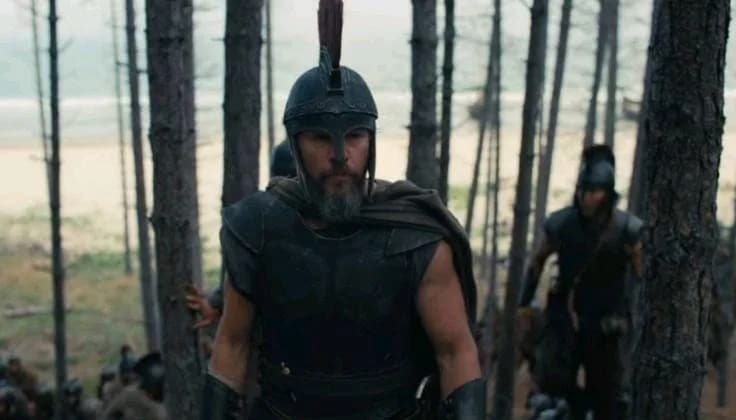
Christopher Nolan’s The Odyssey is as much a visual spectacle as it is a cinematic retelling of Homer’s ancient Greek epic. Staying true to his preference for practical filmmaking over CGI, the Oscar-winning director chose breathtaking real-world locations spread across six countries to recreate Odysseus’ legendary journey home after the Trojan War.
From ancient castles and Mediterranean islands to volcanic landscapes and dramatic coastlines, every location was selected to make the mythical world feel grounded in reality.
Greece: The heart of Odysseus’ journey
Greece served as the film’s primary backdrop, with production taking place across the Peloponnese region. Several historically significant locations feature prominently in the movie, including Pylos, Methoni Castle, Voidokilia Beach, Nestor’s Cave, Almyrolakkos Beach, and Acrocorinth.
Nestor’s Cave, overlooking the iconic horseshoe-shaped Voidokilia Beach, was reportedly used for the sequence featuring the Cyclops Polyphemus, while the ancient fortress of Methoni Castle and the archaeological ruins of Acrocorinth helped recreate the world of classical Greece.
Morocco: Bringing ancient Troy to life
Filming began in Morocco, where Nolan recreated the city of Troy. Production took place in Aït Benhaddou, the UNESCO World Heritage Site famous for its mud-brick architecture, along with Marrakech, Essaouira, and Ouarzazate.
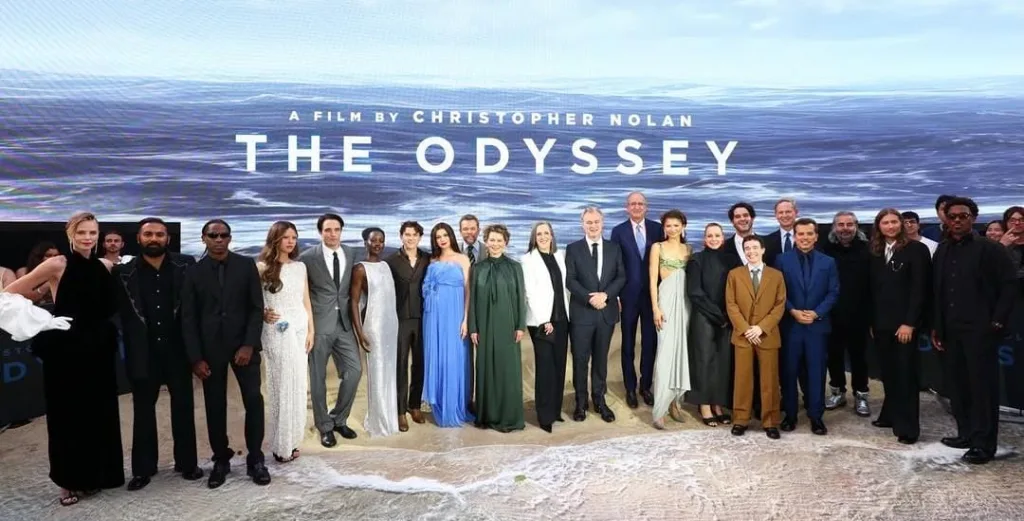
Large practical sets, including a life-sized Trojan Horse, were built for key battle sequences instead of relying on digital effects.
Italy: Sicily’s islands become Homer’s mythical world
Italy played a major role in the production, particularly Sicily, Favignana (Goat Island) and the Aeolian Islands of Lipari, Basiluzzo and Vulcano.
Favignana is widely believed to have inspired Homer’s mythical “Goat Island”, making it a natural choice for Nolan’s adaptation. The surrounding crystal-clear waters and rugged coastlines were used extensively for Odysseus’ sea voyages.
Iceland: A haunting landscape for mythical realms
To capture the darker, supernatural portions of the story, the production travelled to Iceland.
Also Read | CBFC clears Ramayana trailer: Ranbir Kapoor starrer set for global launch
Filming took place around Landeyjahöfn, Hjörleifshöfði, the Markarfljót River, and the Snæfellsnes Peninsula, whose dramatic volcanic landscapes provided an otherworldly backdrop for several key sequences.
Scotland: Rugged coastlines and medieval castles
Scotland’s dramatic coastline also features prominently in The Odyssey.
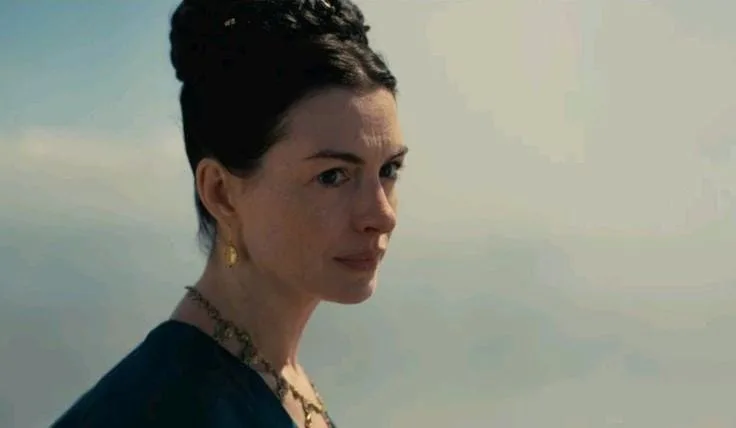
The crew filmed at Findlater Castle, Buckie Harbour, Moray Firth, Sunnyside Beach, and Culbin Forest, using the rugged scenery for maritime sequences and shipwreck scenes. A replica Viking longship was also used during portions of filming.
Los Angeles: Controlled studio sequences
Although most of the film was shot on location, Nolan also filmed select scenes at Universal Studios’ Falls Lake water tank and on a soundstage in Los Angeles, allowing the team to shoot complex water sequences under controlled conditions.
A globe-spanning production
Principal photography lasted around 91 days and took place across multiple countries, making The Odyssey one of Christopher Nolan’s most ambitious productions to date. The film was also shot entirely using IMAX cameras, continuing the director’s commitment to immersive practical filmmaking.
Also Read | Was Rancho based on Sonam Wangchuk? Aamir Khan finally sets the record straight
The result is an epic adventure that transports audiences across ancient kingdoms, windswept coastlines and mythical landscapes using real locations that are as breathtaking as the story itself.
FAQs
Where was Christopher Nolan’s The Odyssey filmed?
The film was shot across Greece, Morocco, Italy (Sicily), Iceland, Scotland and the United States, using real locations instead of CGI for much of its epic landscape.
Why did Christopher Nolan film The Odyssey in multiple countries?
Nolan wanted authentic landscapes that reflected Homer’s legendary journey, choosing ancient ruins, Mediterranean islands, volcanic terrain and rugged coastlines to bring the epic story to life.
