



















Nearly three decades ago, a young student leader named Dharmendra Pradhan stood outside the Odisha Secretariat demanding accountability after an alleged examination paper leak. Police lathis rained down on protesters, and Pradhan, then an Akhil Bharatiya Vidyarthi Parishad (ABVP) activist, was among those injured. The agitation would go on to define his political rise.
Today, the same Dharmendra Pradhan is India’s Union Education Minister, facing nationwide protests over the alleged NEET-UG 2026 paper leak, with opposition parties and student groups demanding his resignation and questioning the government’s handling of one of the country’s biggest examination controversies.
The contrast is impossible to ignore.
In 1997, Pradhan was on the streets accusing a government of failing students. In 2026, he finds himself defending the government against remarkably similar allegations. Politics often comes full circle, but few stories illustrate that cycle as vividly as this one.
From protester to minister
The year was 1997. Odisha was under the Congress government led by Janaki Ballabh Patnaik. An alleged paper leak triggered outrage among students. Around 1,500 protesters gathered outside the state secretariat, demanding action. Police responded with a lathi charge. Pradhan reportedly suffered serious injuries, including fractures, during the crackdown. The incident cemented his image as a fiery student leader and became one of the defining moments of his early political career.
His political journey gathered pace soon after. From student politics, he entered the Odisha Assembly, became a Member of Parliament, handled key portfolios such as Petroleum and Natural Gas, and eventually took charge of the Education Ministry.
The Irony of 2026
The present crisis has put Dharmendra Pradhan in an entirely different position.
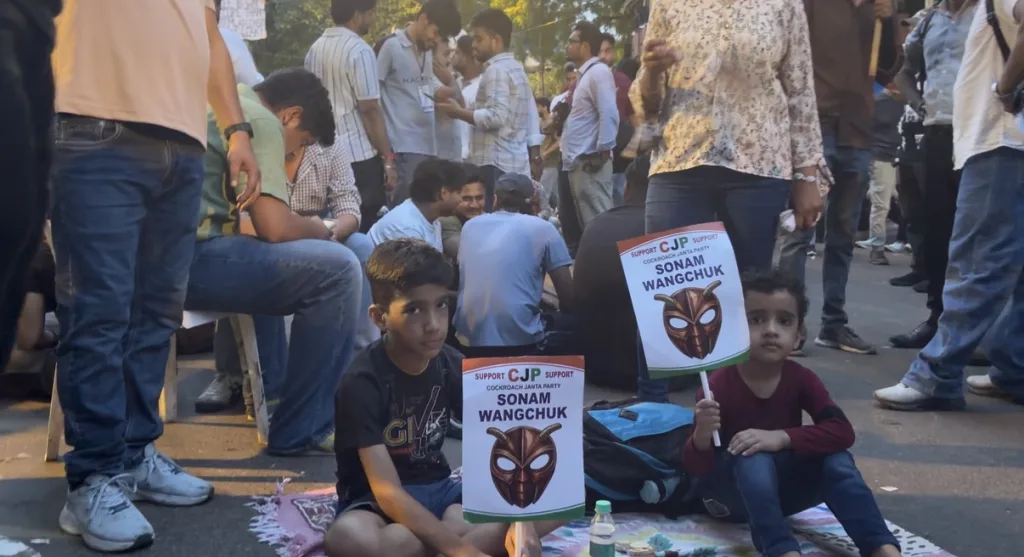
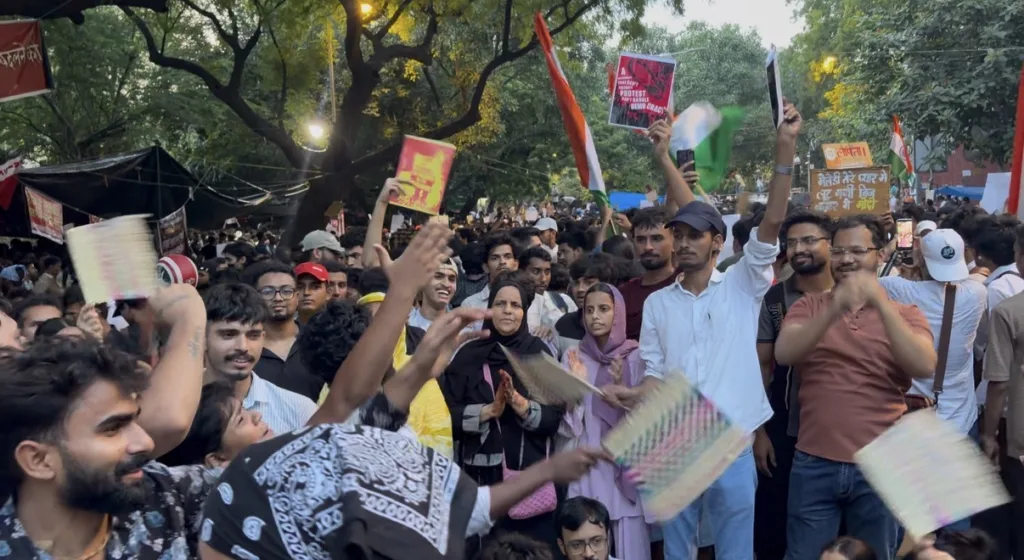
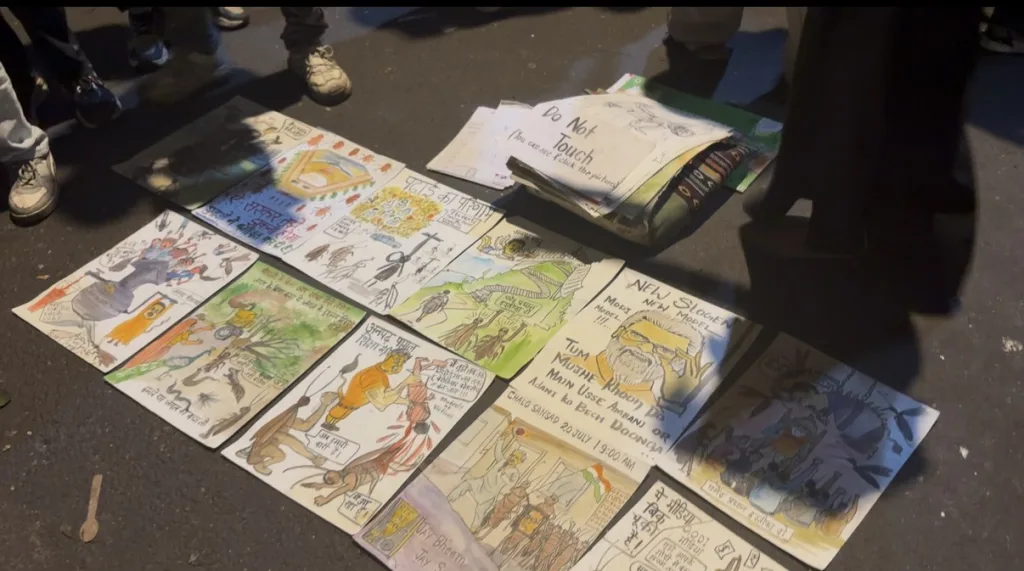
The alleged NEET-UG 2026 paper leak has sparked protests across India, with students alleging that the integrity of one of the country’s most competitive examinations has been compromised. Demonstrations have spread from university campuses to Delhi’s Jantar Mantar, where protesters have demanded accountability and systemic reforms. Opposition leaders have directly targeted Dharmendra Pradhan, arguing that the Education Ministry must take responsibility.
The irony has not been lost on social media either.
Photographs and reports from the 1997 protest have resurfaced online, with many drawing comparisons between the young activist who once fought against examination irregularities and the Cabinet minister now expected to answer for them.
Also Read | Sachin Tendulkar on NEET row: ‘Failure is okay, cheating is not. Never take shortcuts’
More than political optics
The comparison is politically compelling, but it also raises a deeper question about governance.
When Dharmendra Pradhan protested in 1997, accountability was directed at the government of the day. Today, the expectation remains unchanged. The roles have reversed, but the public demand is remarkably similar: ensure fair examinations, protect students’ futures and restore confidence in the system.
That is perhaps the enduring lesson of the episode.
Opposition and government may exchange places over time, but public expectations rarely do.
Also Read | Salman Khan tells students to end protest, says PM will act against paper leak accused
A political circle completed
Indian politics has witnessed many leaders who began their careers as agitators before entering government. The transition from protest to power, however, often comes with an uncomfortable reality. The standards once demanded from those in office eventually become the standards by which former protesters themselves are judged.
For Dharmendra Pradhan, the images from 1997 have become more than a reminder of his political beginnings. They have become a mirror reflecting the expectations attached to his present office.
The student who once asked difficult questions is now the minister expected to answer them. And in politics, there are few moments more symbolic than that.
