























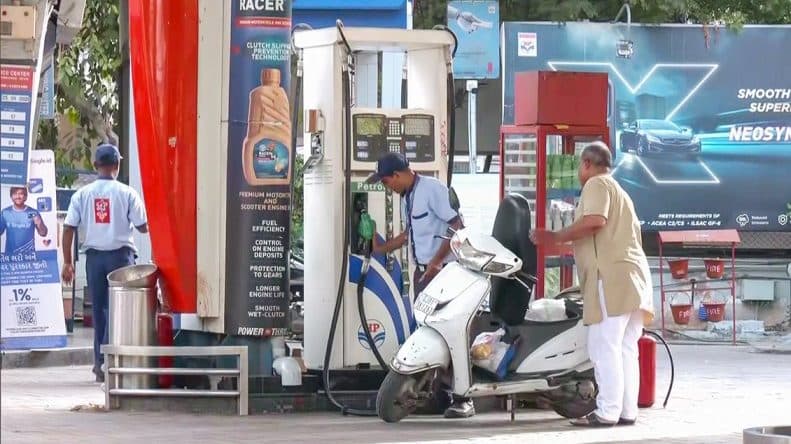
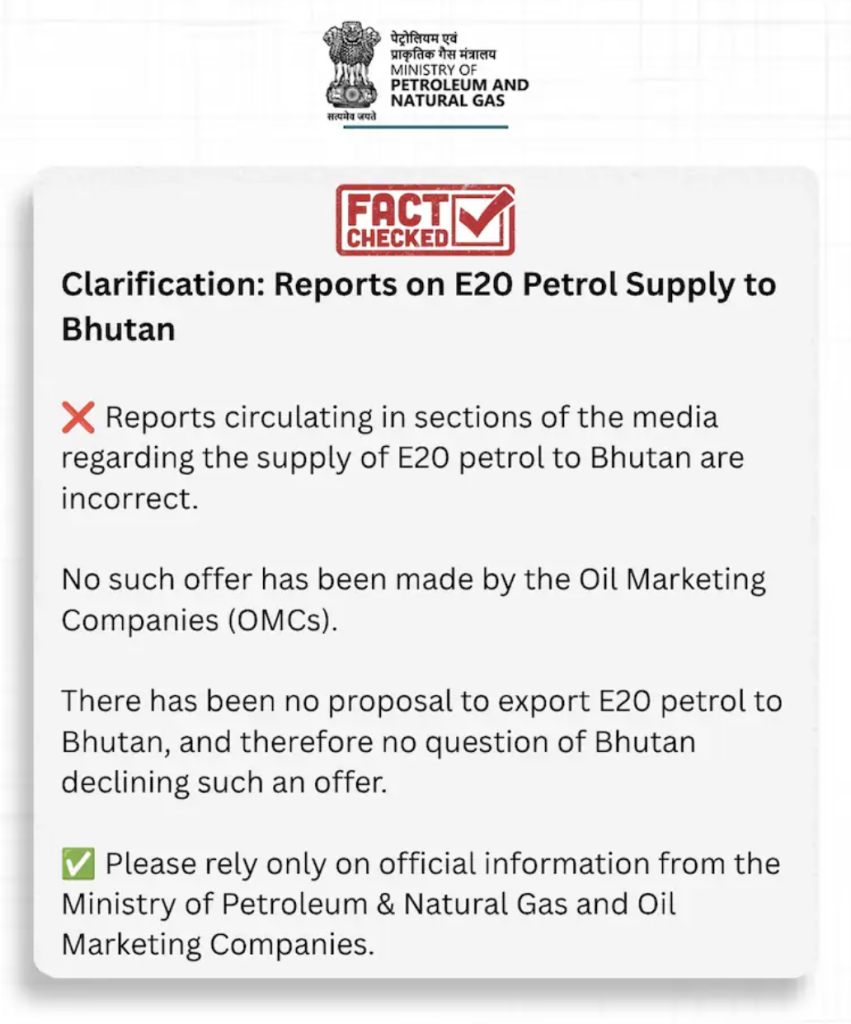
The Union government has rejected reports suggesting Bhutan turned down India’s E20 petrol, clarifying that no formal proposal to export ethanol-blended fuel has been placed before the neighbouring country. The Ministry of Petroleum and Natural Gas said reports claiming Bhutan had rejected India’s fuel offer were inaccurate and urged people to rely only on official communication issued by the ministry and India’s oil marketing companies. The clarification comes after media reports sparked debate over Bhutan E20 petrol and the wider rollout of ethanol-blended fuel in the region.
Bhutan E20 petrol reports prompt official clarification
The controversy began after a report claimed that the Himalayan nation had requested India to continue supplying conventional petrol instead of E20 fuel. Responding to the speculation, the ministry stated that Indian oil marketing companies have not submitted any proposal to export E20 petrol to Bhutan.
The government emphasised that discussions regarding India’s neighbouring country’s E20 petrol have not reached the stage of any official offer or rejection. Officials said misinformation surrounding cross-border fuel supplies should be avoided until verified announcements are made.
The clarification also comes as India continues expanding its ethanol blending programme across the country.
Also Read | India’s passport slips one place to 125th in Global Passport Index 2026
Storage and terrain concerns fuel the discussion
Although the Centre denied reports of the Himalayan nation rejecting Indian fuel, Bhutanese officials quoted in media reports highlighted practical challenges associated with ethanol-blended petrol.
According to India Today, Bhutan’s ageing underground fuel storage facilities may not be suitable for handling ethanol blends because of the possibility of water contamination. Officials also reportedly pointed to the country’s mountainous terrain, where consistent engine performance remains a priority for motorists.
Also Read | Mumbai rains disrupt airport operations: 5 flights diverted, 17 abort landings amid poor visibility
India’s E20 rollout continues despite debate
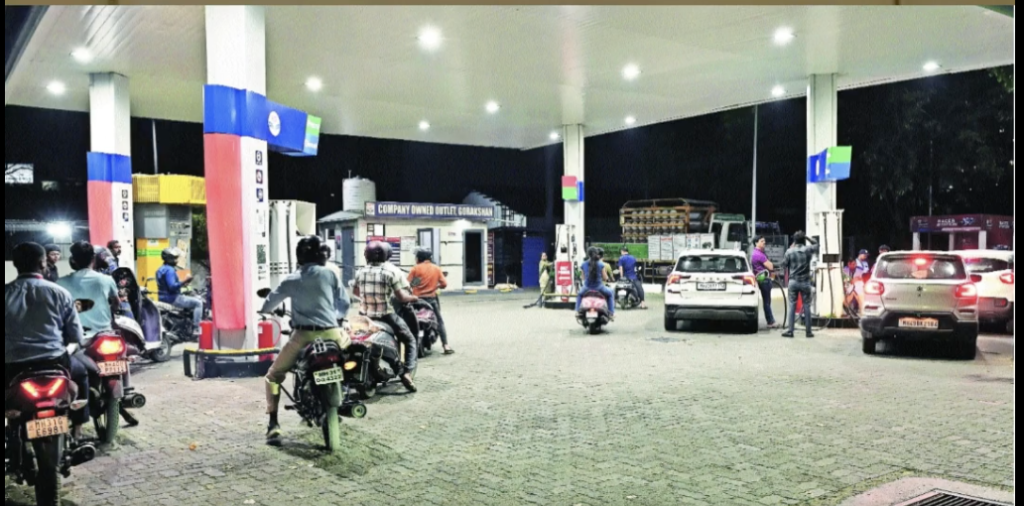
The debate around E20 petrol in Bhutan also coincides with growing discussions within India over the wider adoption of E20 fuel. Owners of older petrol vehicles have raised concerns about fuel efficiency, engine wear and maintenance costs after the introduction of ethanol-blended petrol.
The government, however, continues to defend the policy, arguing that E20 petrol supports India’s ethanol blending targets while reducing dependence on imported fossil fuels. Officials maintain that although mileage may witness a marginal decline, overall engine performance and acceleration remain satisfactory.
