






















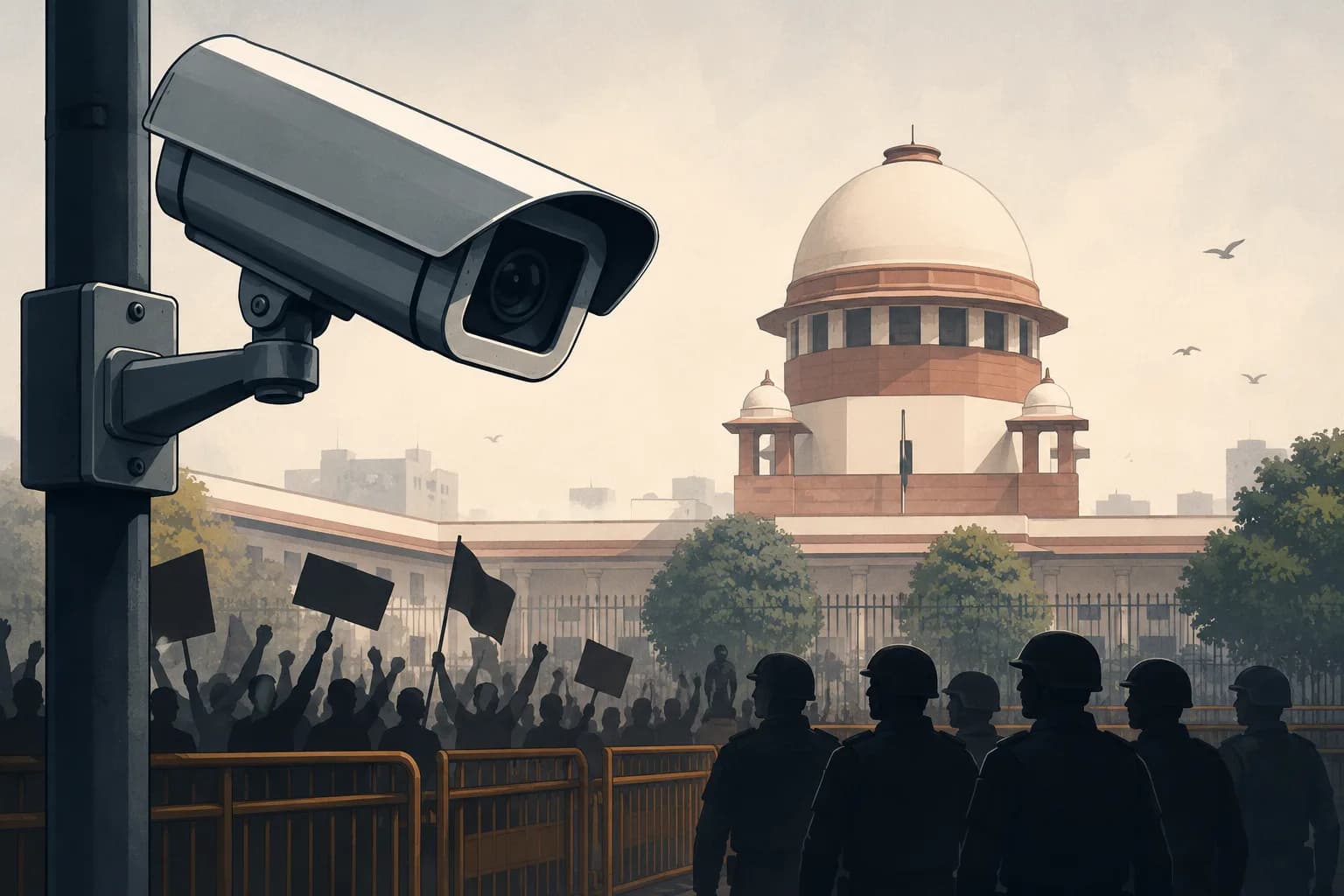
The Delhi High Court on Wednesday directed the preservation of CCTV footage, videography and other relevant records linked to allegations of police excess during a July 20 march to Parliament, while issuing notices to the Centre and the Delhi Police on two pleas that seek judicial scrutiny of the incident.
A bench of Chief Justice D.K. Upadhyaya and Justice Tejas Karia said the material must be kept in line with the standard operating procedure issued by the Delhi Police or the Union government and listed the matter for hearing on September 11.
The petitions concern the police action taken against protesters associated with the Cockroach Janata Party (CJP) during a march from Jantar Mantar to Parliament House.
Also Read | Indus Waters Treaty: India says pact can’t continue amid terror
Delhi HC seeks Centre, Delhi Police response on PILs alleging excessive force during CJP protest; orders preservation of CCTV and digital records
— ANI Digital (@ani_digital) July 22, 2026
Read @ANI Story I https://t.co/e4BM7YyfGw#DelhiHC #DelhiPolice #CJPProtest pic.twitter.com/VuPxfqrkS7
The petitioners’ case takes shape
The pleas say the demonstration began peacefully and was being held over alleged irregularities in NEET but that the situation changed after police intervened.
Senior advocates appearing for the petitioners told the court that the protesters were exercising their constitutional right to peaceful protest and assembly.
One of the lawyers, N. Hariharan, alleged that the use of force was excessive and described the police action as “brutality to the largest measure possible”. The petitioners also claimed that women were molested, more than 90 protesters were injured and officers used force without warning.
In addition, they asked the court to order an inquiry into the episode, register FIRs against identifiable police personnel and secure deployment and operational records.
A bench not easily persuaded
During the hearing, the bench pressed the Centre and the police side on the nature of the allegations.
Additional Solicitor General SV Raju argued that the crowd had been unruly, policemen had been injured and that the petitions were aimed at “hogging the limelight”.
The bench did not accept that framing at face value and asked, “How can you say this is a publicity petition?” The petitioners’ lawyers said they were not asking the court to take their word alone and claimed they had multiple videos to support what happened on the ground.
They also argued that the court should not treat the matter as a series of isolated complaints, given the scale of the allegations and the claim that the police action affected women and children as well.
Until the next hearing beckons
The court’s interim direction means the footage and other records connected to the protest must remain preserved while the Centre and the Delhi Police file counter-affidavits within four weeks.
The petitions, as reported, seek an SIT probe, FIRs against police personnel, production of deployment and operational records and disciplinary action against officers involved in the alleged use of force.
The matter will return to court on September 11, with the record of the July 20 protest now set to remain protected pending the next round of hearings.
Also Read | Delhi Airport issues travel advisory as IMD predicts more rain
FAQs
Q1: Why did the Delhi High Court order CCTV footage to be preserved?
The Delhi High Court directed authorities to preserve CCTV footage, videography and related records to ensure evidence remains available while it hears petitions alleging police excess during the July 20 protest.
Q2: What are the petitioners seeking in the Delhi High Court?
The petitioners have sought an inquiry into the alleged police action, registration of FIRs against responsible officers and preservation of evidence related to the protest.
