






















The removal of a senior Delhi Police officer after a viral video showing him slapping a woman protester has triggered another debate that extends far beyond police conduct. Attention has now turned to the Delhi Police smart glasses worn by the officer during the Cockroach Janta Party protest at Jantar Mantar.
The wearable device, spotted in several videos from the protest site, has prompted privacy advocates and technology observers to question how such equipment is being deployed, what data it collects and whether citizens are adequately informed about its use. While there is no official confirmation that the glasses recorded or scanned protesters during the demonstration, the incident has intensified concerns over the growing use of AI-powered surveillance tools in public spaces.

Delhi Police smart glasses raise fresh privacy concerns
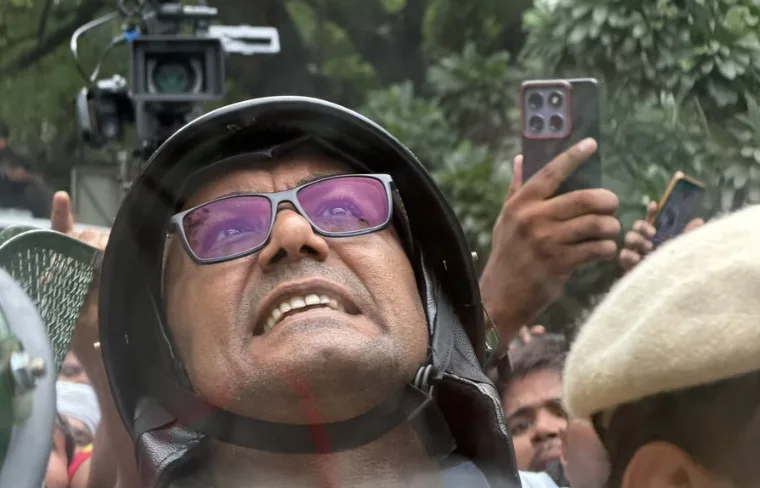
The discussion gathered momentum after videos from the protest appeared to show Additional Deputy Commissioner of Police Sandeep Lamba wearing AI-enabled smart glasses. Lamba was later removed from protest duty following widespread criticism over his conduct during the demonstration.
Observers have questioned whether the Delhi Police smart glasses were consumer wearable devices or part of the smart policing equipment that Delhi Police has publicly tested in recent months. Earlier this year, the force announced trials of AI-powered smart glasses designed to assist officers during security deployments. However, authorities have not stated whether the device worn during the protest was actively recording or using facial recognition technology.
Also Read | Sachin Tendulkar on NEET row: ‘Failure is okay, cheating is not. Never take shortcuts’
Wearable surveillance enters the public conversation
The growing debate around Delhi Police smart glasses reflects broader concerns over wearable surveillance in India. Unlike fixed CCTV cameras or handheld recording devices, smart glasses operate discreetly and can potentially capture images without drawing attention.
Media reports have previously highlighted that Delhi Police experimented with AI-enabled smart glasses capable of assisting officers during crowd management and law enforcement operations. Independent reports have also raised questions about procurement records and operational guidelines through Right to Information requests.
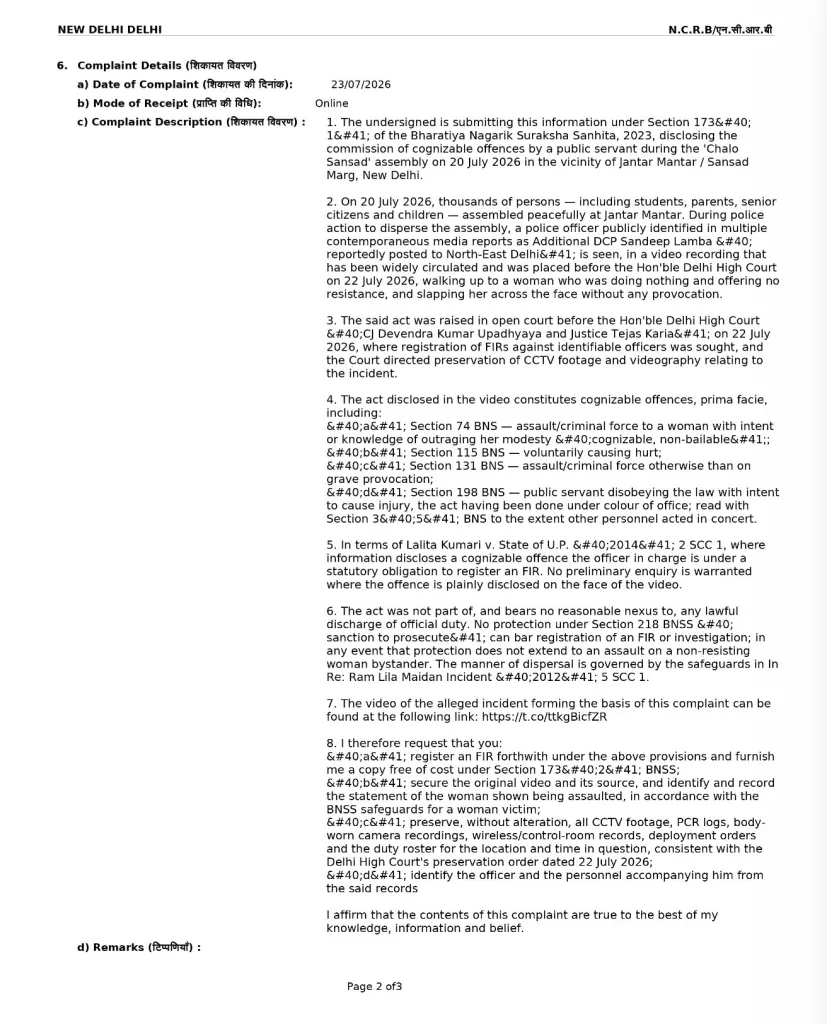
I have filed a complaint with the SHO, Parliament Street Police Station,
— Saket Gokhale (@SaketGokhale) July 23, 2026
for registration of an FIR against Additional DCP Sandeep Lamba who
assaulted a woman protestor at Jantar Mantar on 20 July 2026.
Yesterday, in the Delhi High Court, the Government's answer to the
petitions… pic.twitter.com/ucDjl1dorP
Privacy advocates argue that while such technologies may strengthen policing, they also require clear legal safeguards, transparency and accountability. Experts say public confidence depends on citizens understanding how collected data is stored, processed and eventually deleted.
Also Read | Political circle completed? In 1997, Dharmendra Pradhan protested against a paper leak, now facing one
Calls grow for greater transparency
The controversy surrounding Delhi Police smart glasses has renewed calls for stronger oversight of AI-based policing tools. Legal experts note that India currently has no dedicated legislation governing police use of facial recognition systems or wearable surveillance devices.
The Delhi High Court has already directed authorities to preserve CCTV footage and other records related to the protest while hearing petitions concerning alleged police excesses. As discussions continue, civil society groups are urging authorities to publish clear operating procedures for emerging surveillance technologies.
The Delhi Police smart glasses debate now extends beyond a single protest. It has become part of a larger national conversation about balancing public security with individual privacy in an era where artificial intelligence is increasingly becoming part of everyday policing.
