

























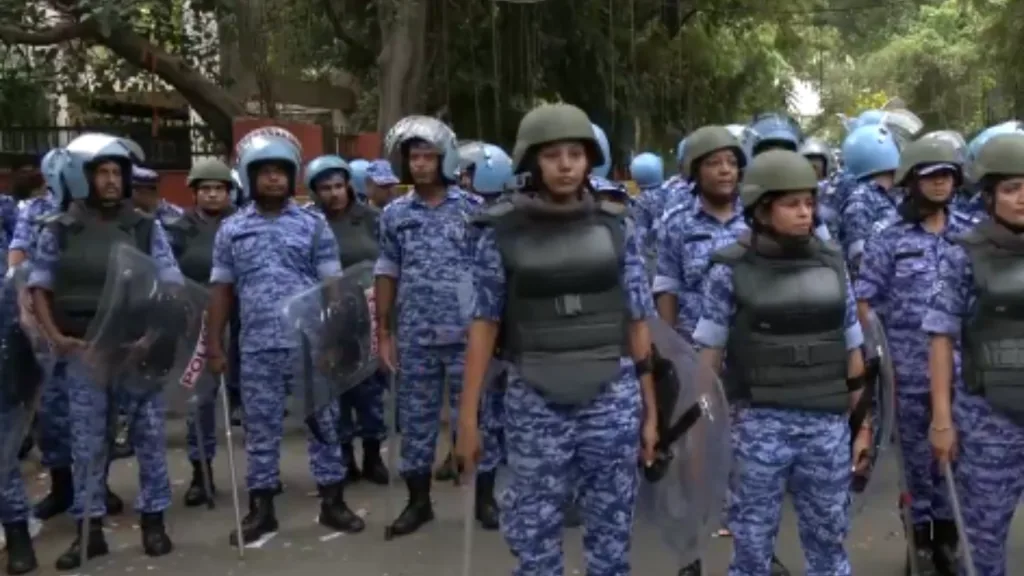
Security has been stepped up across parts of New Delhi ahead of the Monsoon Session of Parliament and the Cockroach Janta Party’s (CJP) proposed ‘Chalo Sansad’ march on Monday, July 20. As part of the security arrangements, Delhi Police has enforced prohibitory orders under Section 163 of the Bharatiya Nagarik Suraksha Sanhita (BNSS) in the New Delhi district.
The restrictions come after the CJP announced a march towards Parliament over alleged irregularities in the NEET examination and to press for the resignation of Union Education minister Dharmendra Pradhan.
Why has Section 163 been imposed?
Delhi Police said the restrictions are aimed at maintaining law and order during the Parliament session. On Sunday, Deputy Commissioner of Police (DCP) Sachin Sharma issued a public advisory on X, making it clear that no approval had been granted for the proposed march.
Also Read | Anna Hazare urges Centre to hold talks with Sonam Wangchuk before ‘tragic outcome’
“The Delhi Police categorically clarifies that no permission has been sought or granted for any such protest march/procession.”
The advisory further stated, “Accordingly, protest marches, processions, demonstrations and assemblies of five or more persons are strictly prohibited, except at the designated protest site at Jantar Mantar, with prior permission.”
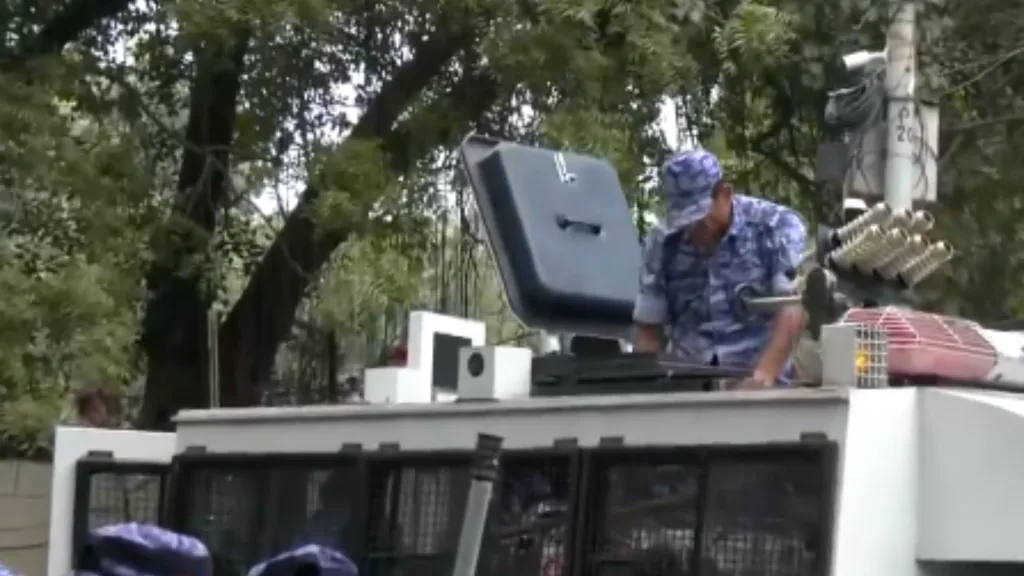
Police also said preventive deployment would remain in place throughout the Parliament session.
🚨Prohabitory orders u/s 163 BNSS are in force in New Delhi District except designated protest site at Jantar Mantar Road.
— Delhi Police (@DelhiPolice) July 19, 2026
Further, no permission has been sought or granted for any proposed march to Parliament on 20 July 2026.
Citizens are advised not to participate in any… pic.twitter.com/aUio5slVM6
What activities are prohibited?
Under the order, several activities have been barred across the notified area. These include holding any public meetings, assembly of five or more persons, carrying fire-arms, banners, placards, lathis, spears, swords, sticks and brickbats, shouting slogans, making speeches, taking out processions or demonstrations, organising picketing or dharnas at any public place within the specified area without written permission.
Which areas are covered?
The prohibitory orders apply across the entire Sub-Division Parliament Street in the New Delhi district. However, Jantar Mantar Road, as marked in the official map attached to the order, has been kept outside the restrictions.
Also Read | Delhi Police bars CJP’s Parliament March, calls protest unauthorised
The order states that activities at the exempted protest site may be allowed beyond 5 pm, provided organisers obtain prior written permission from the authorities.
The order has been issued by Ajay Sharma, Assistant Commissioner of Police, Sub-Division Parliament Street, New Delhi District, under the Delhi Police Act, 1978, read with Section 163 of the Bharatiya Nagarik Suraksha Sanhita (BNSS), 2023.
The police order also warns that any violation of the restrictions will attract action under Section 223 of the Bharatiya Nyaya Sanhita (BNS), 2023.
FAQs:
Why has Section 163 been imposed in parts of New Delhi?
It has been imposed to maintain law and order ahead of the Monsoon Session and the proposed CJP protest march.
Are protests completely banned under Section 163?
Protests are prohibited in the notified area, except at Jantar Mantar with prior permission, as stated by Delhi Police.