


























India’s Vikram 1 becomes world’s first private rocket to reach orbit on first try.
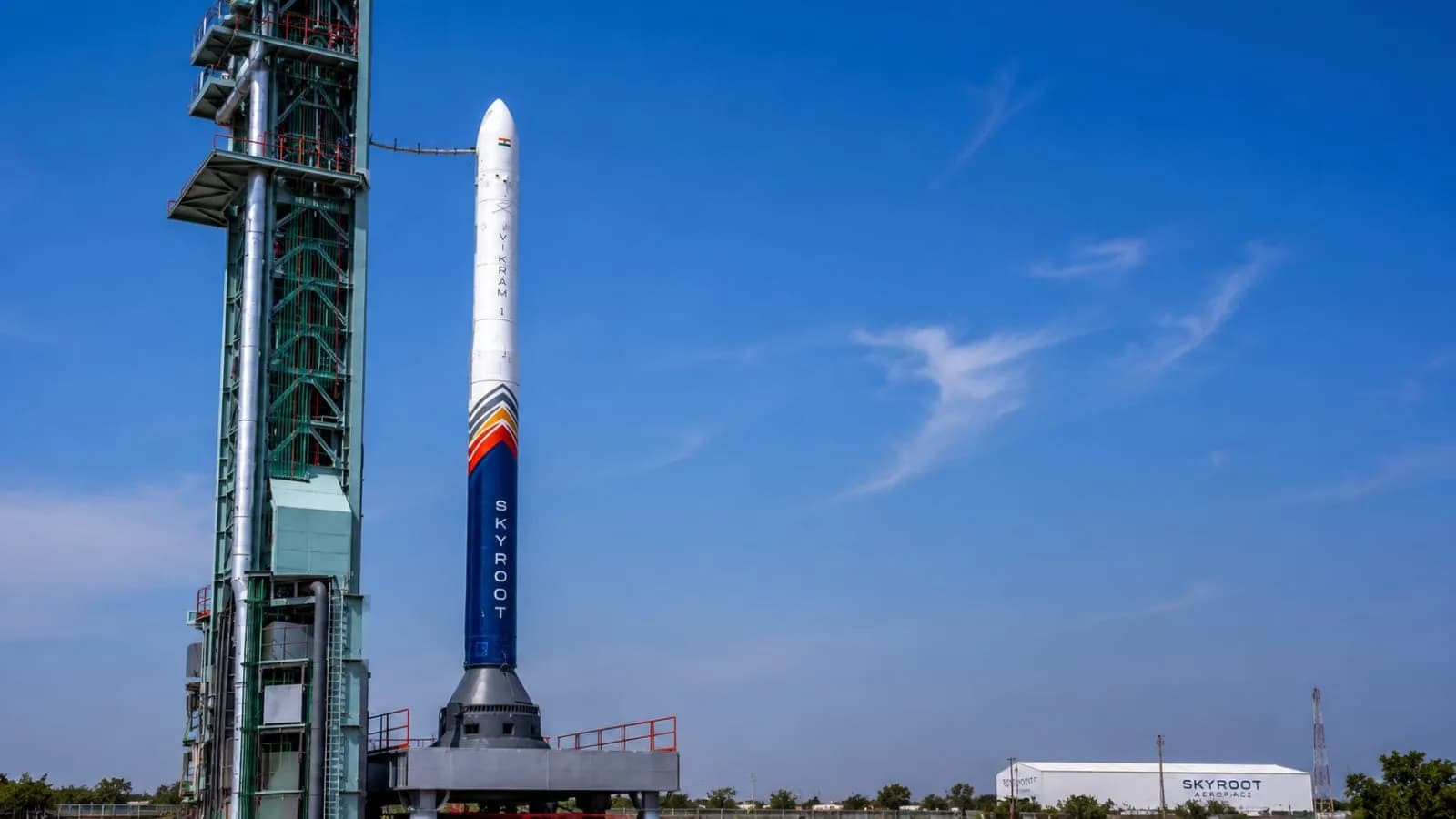
On July 18, India’s homegrown Vikram 1 rocket became the world’s first privately developed orbital vehicle to successfully place multiple customer payloads into Low Earth Orbit on its very first attempt.
So what does this mean for private startups eyeing commercial missions? Here’s a breakdown.
This milestone has changed the commercial space race in a big way. Experts say investor focus is now shifting from technology risk to execution risk, and global satellite operators finally have an affordable alternative to the big legacy launch monopolies.
What was Mission Aagaman
ORBIT ACHIEVED. 🚀
— Skyroot Aerospace (@SkyrootA) July 18, 2026
Vikram-1 Test Flight-1 has reached orbit. India's first privately developed orbital rocket has completed its final burn and injected its payloads into a ~450 km orbit, making India the third country in the world with private orbital launch capability.…
Skyroot Aerospace successfully launched its Vikram 1 rocket under what’s being called Mission Aagaman on Saturday.
Lifting off from the Satish Dhawan Space Centre in Sriharikota, the maiden test flight reached orbit and deployed multiple payloads into a 450 km Low Earth Orbit. This makes India only the third country in the world to achieve private orbital launch capability using a privately developed launch vehicle.
Also Read | Vande Bharat, Rajdhani trains cancelled, diverted: Full list
The commercial and tech payloads included Skyroot’s SCOPE satellite, DCUBED’s tech demonstrator, Grahaa Space’s SOLARAS S3 satellite, and Cosmoserve Space’s Embrace, a robotic arm built to capture orbital debris.
There was also symbolic memorabilia on board, including a handwritten “Vande Mataram” postcard signed by Prime Minister Narendra Modi, an artwork called “Cosmic Bloom,” and an 18 karat gold micro rocket engraved with tiny tributes to scientists C.V. Raman, Vikram Sarabhai, and A.P.J. Abdul Kalam
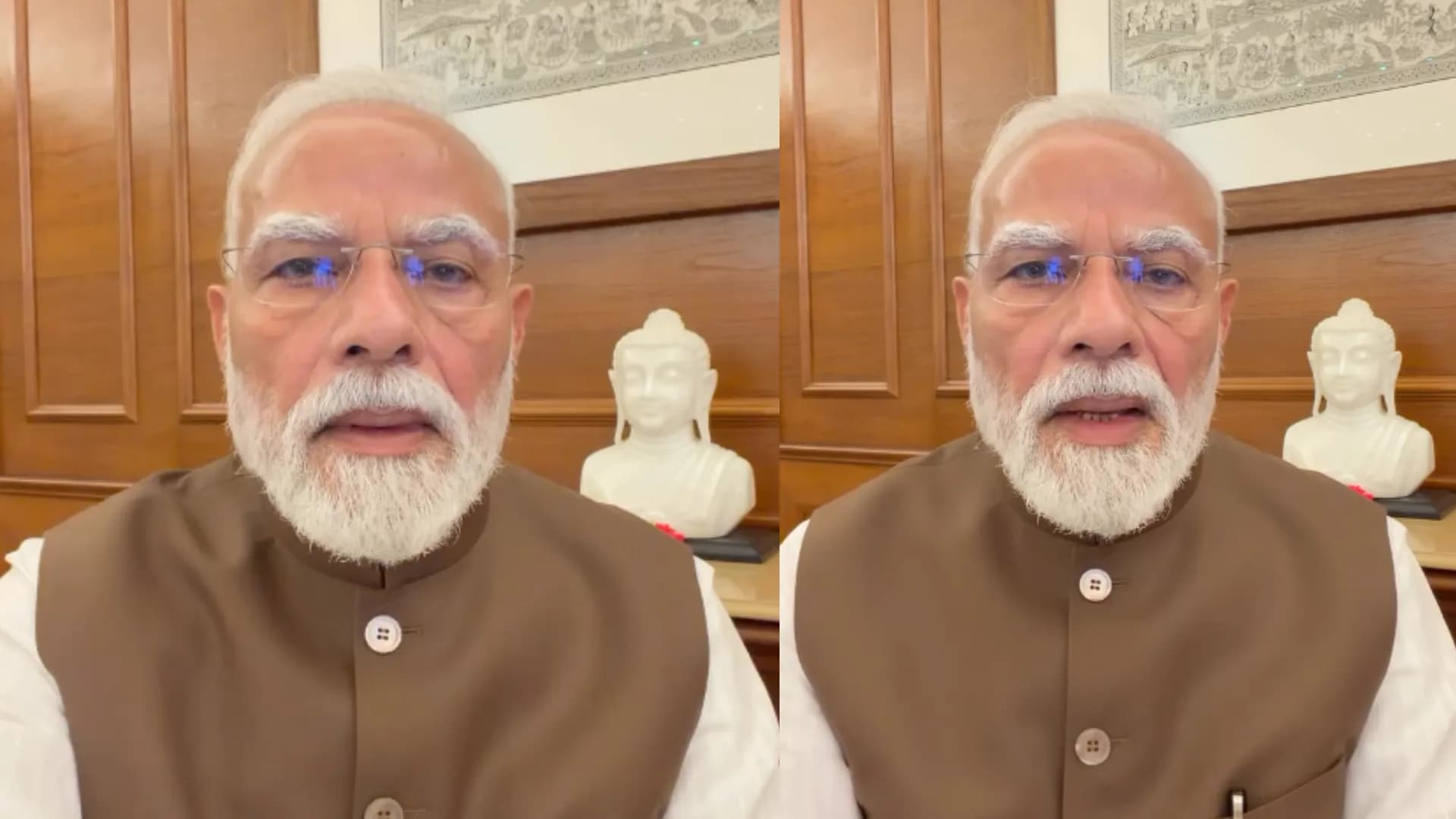
Spoke to the team of Skyroot Aerospace and congratulated them on the successful launch of Vikram-1.
— Narendra Modi (@narendramodi) July 18, 2026
This is a defining moment in India’s space journey. The growing participation of our private sector is opening new frontiers and accelerating innovation.
This achievement will… pic.twitter.com/epWjOY8yKa
Not a bus, more like a cab service for space
While heavy lift rockets like SpaceX operate like fixed route trains that drop multiple payloads at one destination, Skyroot’s approach is built around flexibility.
Working more like an “Uber for space,” Vikram 1 offers customised orbital deployments, placing small satellites at exact altitudes, inclinations and coordinates. Satellite operators can book payload slots directly through the company’s platform, almost like booking a cab.
Using 3D printed liquid and cryogenic engines, all carbon composite structures, and subsidised ISRO infrastructure, Skyroot can price launches between $5 million and $10 million, nearly 50 percent cheaper than regional small satellite competitors, according to the Times of India and other reports.
Also Read | Sonam Wangchuk ends 23-day fast after JP Nadda’s talks with protesters
A catalyst for over 400 spacetech startups
The success of Vikram 1 has set off a wave of momentum across India’s growing space economy, which is projected to grow from $8.4 billion to $44 billion by 2033.
Indian satellite builders have long dealt with massive backlogs while waiting for ISRO or foreign rockets. Having domestic private vehicles now means predictable, faster launch schedules.
Startups like Agnikul Cosmos (building the Agnibaan rocket), Dhruva Space (satellite buses) and Pixxel (hyperspectral imaging) are quickly moving from pure technology demonstrations to real commercial contracts. The range of payloads deployed during Mission Aagaman, from agricultural Earth observation cameras to a robotic arm for space debris removal, shows just how ready these specialised space services are for business.
What’s next for Skyroot Aerospace and the Vikram series
The second Vikram 1 test flight is planned for later this year as the company moves toward regular operational launches. Skyroot is aiming to scale up to one launch every three months for the rest of the year, building toward one launch a month by 2027.
Vikram 2 is scheduled for 2027 and will carry a heavier payload capacity of up to 900 kg to Low Earth Orbit, along with an upgraded cryogenic upper engine. Meanwhile, EtherealX is developing a Technology Demonstrator Vehicle aiming for its first live launch by 2027, offering low cost, modular commercial space transportation.
Also Read | Why monsoon 2026 is among India’s driest on record
On the satellite side, Pixxel is moving fast on its Honeybee series of earth observation satellites, aiming to put two satellites into orbit this year and four more next year, working toward a 100 satellite planetary infrastructure constellation. Digantara is also actively deploying its next generation space surveillance and tracking satellites, targeting a fleet of 17 operational satellites by the end of 2027.
Agnikul Cosmos eyes reusable launches and ocean landings
After validating its suborbital engine, Chennai based Agnikul Cosmos is now stepping into orbital class missions.
Mission 02, planned for later this year, will be a key milestone, sending their multi stage Agnibaan configuration to Low Earth Orbit. The mission will attempt India’s first ever ocean landing of an orbital class private booster through a controlled descent into the sea.
Mission 02 will also test what’s being called a zero waste upper stage, a convertible stage that stays operational in orbit as a continuous micro laboratory satellite platform instead of becoming space debris.
Missions 03 and 04 are expected to follow within four to five months of Mission 02, and these will carry fully paid, operational commercial satellite payloads into orbit.
FAQS
1.What is Mission Aagaman?
It is Skyroot Aerospace’s Vikram 1 launch on July 18, which made it the world’s first privately developed rocket to place multiple customer payloads into orbit on its first attempt.
2.How cheap are Skyroot’s launches compared to competitors?
Vikram 1 launches are priced between $5 million and $10 million, nearly 50 percent cheaper than regional small satellite competitors.
