










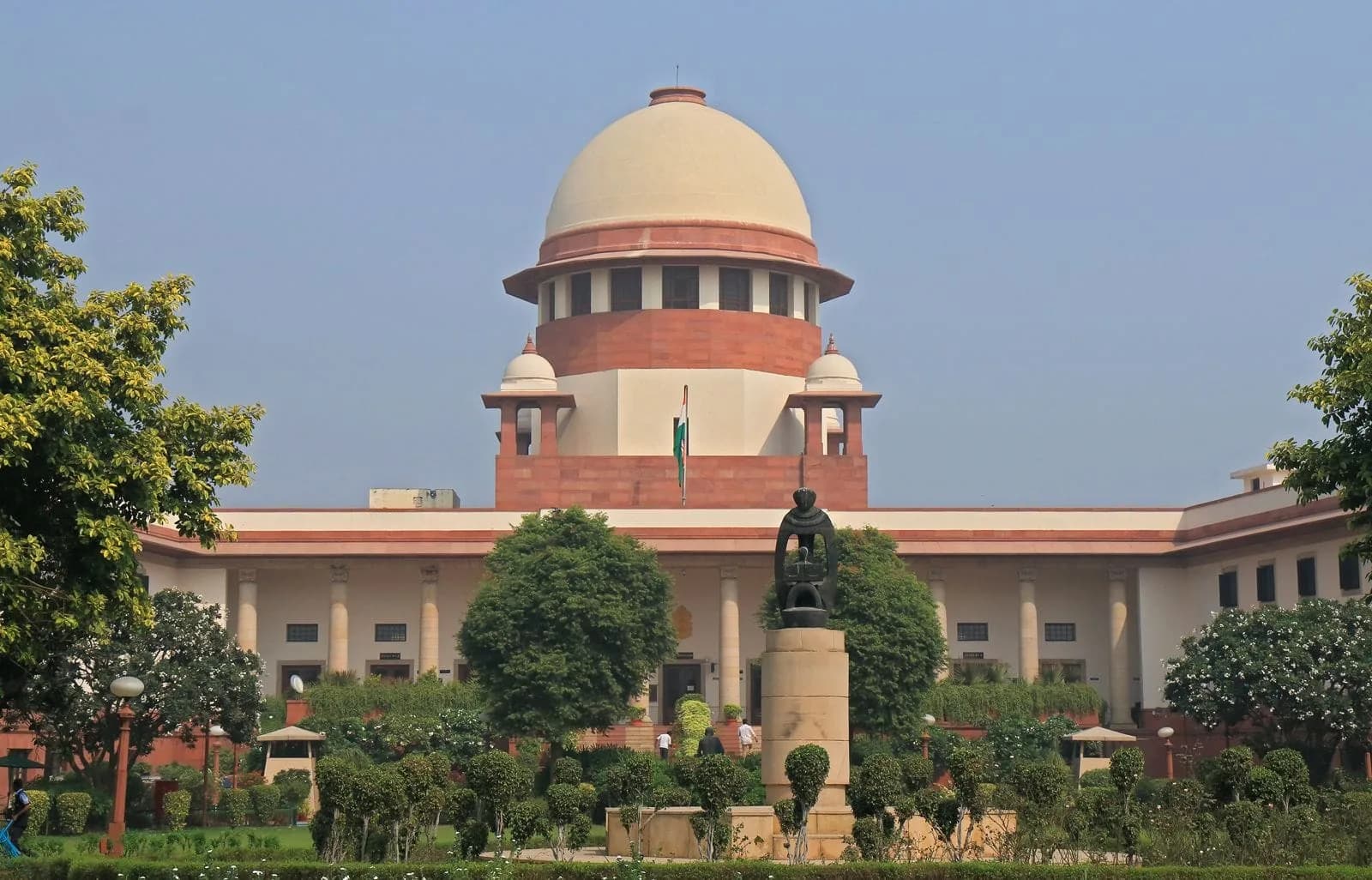














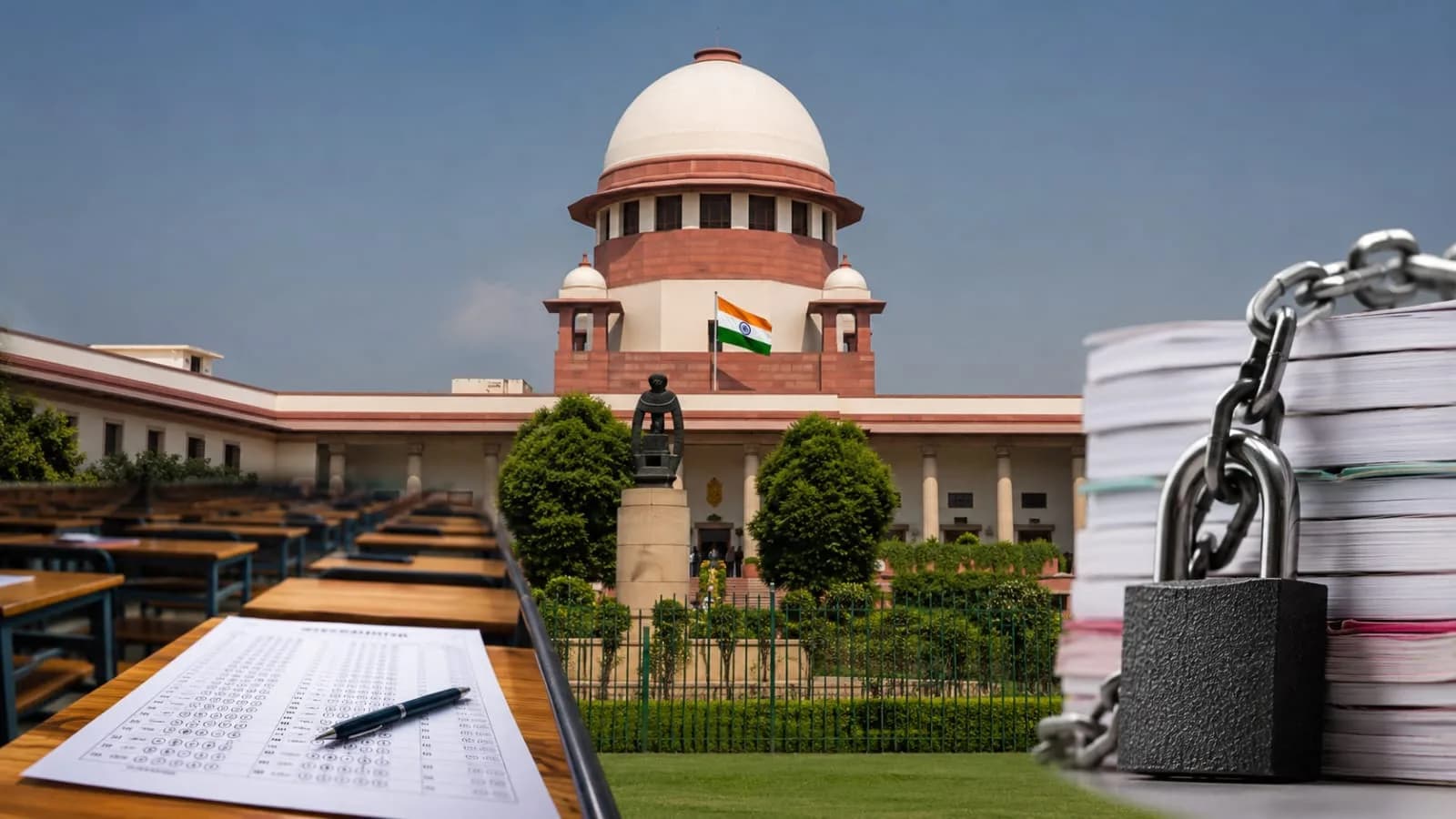
The Supreme Court has said it will “very closely monitor” how the central government reforms the National Testing Agency (NTA) to stop future paper leaks in the NEET exam.
The court made it clear it does not want quick fixes, but a lasting system that solves the problem for good.
A bench of Justices PS Narasimha and Alok Aradhe was hearing petitions filed by the United Doctors Front and the FAIMA Doctors Association, both of which have raised concerns about how the NTA functions.
The hearing took place against the backdrop of the NEET paper leak scandal, which caused widespread anger after reports of leaked question papers and other irregularities in India’s largest medical entrance exam.
Following the controversy, the government had set up the Radhakrishnan Committee to suggest reforms in the NTA and in the exam process itself.
Government asks for more time
Solicitor General Tushar Mehta, representing the central government, told the court that work on the reforms was underway and asked for a bit more time to present a complete plan.
“There is some progress. I request a few more days so that we can present a holistic view,” he said.
Justice Narasimha made it clear that the court wanted real, long term institutional change, not temporary arrangements.
Court says temporary fixes are not the answer
The judges pointed out that in the past, the government had even used the Air Force to transport question papers safely, an extreme step taken to avoid leaks.
Justice Narasimha said such measures cannot be treated as a real solution. “You deployed the Air Force, but that is ad hoc,” he remarked, adding, “Ad hocism has troubled us for years.”
Mehta assured the court that the government would walk it through the entire process, right from how the papers are printed to how they are transported and finally handed to students.
“We will explain right from the printing press till the time the student gets the paper. For children, there cannot be any adversarial response,” he said.
The court said the real goal now is to build permanent safeguards into the system so that such emergency steps are never needed again.
Detailed roadmap sought from the government
The bench has directed the Centre to submit a detailed affidavit covering every part of the reform plan.
This includes how a new governing board for the NTA would be structured, how transparency would be ensured, how different stakeholders would be involved, and how experts would be appointed across various functions.
Justice Narasimha also asked the government to explain how it plans to work with expert institutions like the IITs as part of the new framework.
Also Read | Delhi University cautions students over Jantar Mantar protests

The court wants the affidavit to cover the full exam cycle, from planning before the exam, to how it is conducted, to what happens afterward.
Some of the specific issues the bench wants addressed are how state and district level exam bodies are structured, whether the exam could be held in multiple sessions, how question papers can be printed and transported securely, and what safeguards are needed after the exam is over.
Possible shift to computer based testing
The court also asked the government to explain its plans for moving NEET to a computer based testing format.
“It is a suggestion to shift to computer based testing. Tell us the proposal, the cybersecurity and how it is to be conducted,” Justice Narasimha said.
The judges stressed that if the exam does go digital, it must be backed by strong cybersecurity. “If you digitise it, how will you secure it?” the court asked, asking the government to explain how it would protect digital systems and exam data from being hacked or leaked.
Also Read | CJP says Pradhan’s resignation is ‘non-negotiable’, protest to continue
Advocate Tanvi Dubey, representing the petitioners, also suggested moving to computer based testing and asked the government to share a clear blueprint of its proposed standard operating procedures.
Government says reforms go beyond committee recommendations
Mehta told the court that the government was doing even more than what the Radhakrishnan Committee had recommended, and that the entire process was being monitored at the highest level of government.
“The government is taking ten extra miles. Everything is being supervised at the highest level,” he said, adding that the Centre would accept any suggestions the court makes.
Also Read | PM Modi promises fast-track courts over paper leak cases
Justice Narasimha ended the hearing by making it clear that this would not be treated as a one time fix.
“We will very closely monitor it so that complete institutionalisation takes place. We can’t let this continue,” the bench said.
The case will be heard next on July 27, by when the Centre is expected to file its affidavit laying out the full set of reforms and measures to prevent future NEET paper leaks.
FAQS
Q1: What did the Supreme Court say about NTA reforms?
It said it will “very closely monitor” the Centre’s efforts to overhaul the NTA and stop future NEET paper leaks, and warned against temporary or ad hoc fixes.
Q2: Who filed the petitions?
The United Doctors Front and the FAIMA Doctors Association, raising concerns over structural issues in the NTA’s functioning.
