



























India is set to enter a new phase in its space journey as Skyroot Aerospace’s Vikram-1 prepares for its maiden orbital launch from the Satish Dhawan Space Centre in Sriharikota on July 18. If successful, it will become the country’s first privately developed orbital rocket to lift off from Indian soil.
The launch vehicle, developed under Mission Aagaman, is scheduled to take off at 11:30 am from the First Launch Pad and will carry four technology demonstration payloads from Indian and international companies.
Also Read | NEET UG 2026 result declared, two students secure top rank
According to Skyroot Aerospace, all stages of Vikram-1 have been integrated and stacked successfully, while final vehicle, telemetry and tracking checks have been completed ahead of launch.
Why is Vikram-1 a landmark mission?
The mission marks India’s entry into the global private orbital launch market and is expected to generate crucial flight data on propulsion, stage separation, guidance, navigation, control systems and overall vehicle performance.
Skyroot Aerospace Co-founder and CEO Pawan Kumar Chandana said the launch clearance followed rigorous testing and described the mission as a defining milestone for India’s space sector.
India's first privately developed orbital rocket Vikram-1 set for maiden launch on July 18
— ANI Digital (@ani_digital) July 16, 2026
Read @ANI Story | https://t.co/RkWV8GU4Bz#Vikram1 #OrbitalRocket #MaidenLaunch pic.twitter.com/dlJETtYExr
“The clearance of Vikram-1 for flight following rigorous testing is a defining milestone in India’s space journey. This first test flight marks the beginning of Skyroot’s aspiration to open space for all,” Chandana said in a company statement.
Skyroot Co-founder and COO Naga Bharath Daka said the mission represents the efforts of nearly 1,000 people, over 400 suppliers and years of development, adding that the flight data will help the company improve future launch vehicles.
What will Vikram-1 carry into orbit?
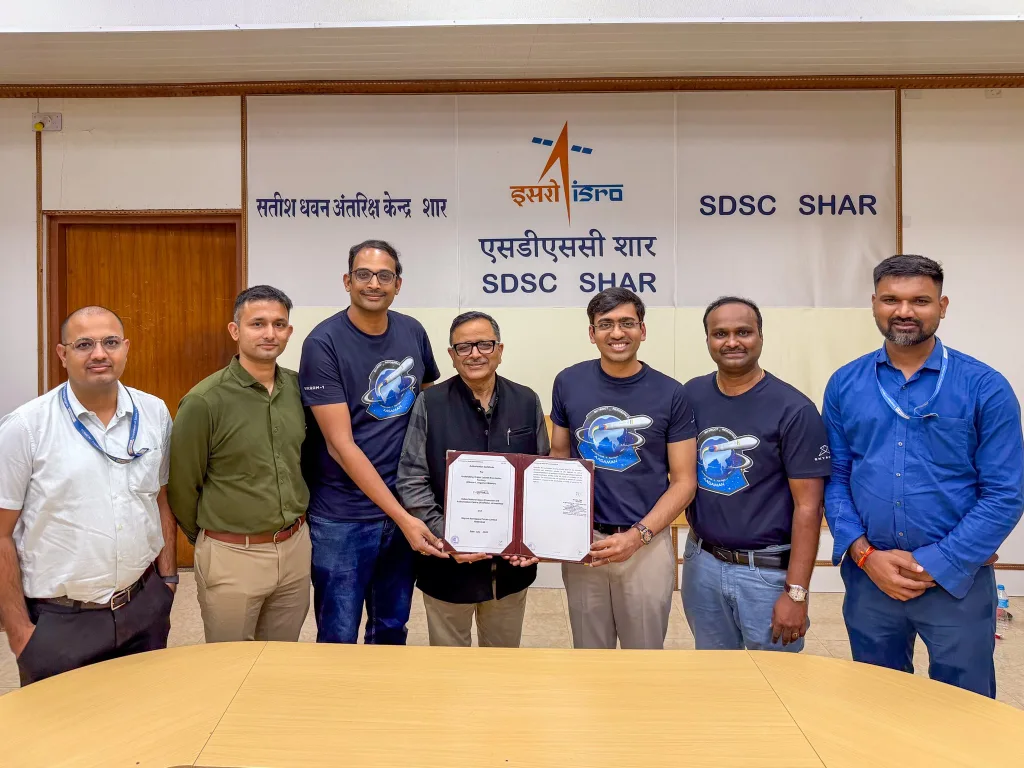
The maiden flight will carry four technology demonstration payloads, including:
Solaras S3, developed by Bengaluru-based Grahaa Space
Embrace, an in-orbit debris-clearing robotic arm by Hyderabad-based Cosmoserve Space
Scope, developed by Skyroot Aerospace
An in-orbit demonstration payload from German aerospace company DCUBED
The mission will also carry microscopic 18-carat gold sculptures of Sir C.V. Raman, Dr Vikram Sarabhai and Dr A.P.J. Abdul Kalam, along with Cosmos Diamonds’ artwork titled Cosmic Bloom.
Standing nearly seven storeys tall, Vikram-1 is designed to place satellites weighing up to 350 kg into Low Earth Orbit. The launch vehicle features an all-carbon composite structure and uses in-house propulsion systems, including 3D-printed engines and high-thrust solid-fuel boosters.
Also Read | Mumbai local train violence sparks safety concerns after attacks
The July 18 launch will be Skyroot’s second space mission after the successful suborbital flight of Vikram-S in November 2022, which became the first privately built rocket to reach space from India.
FAQs
Q1. When will Vikram-1 launch?
Skyroot Aerospace’s Vikram-1 is scheduled for launch from Sriharikota at 11:30 am on July 18, 2026.
Q2. Why is Vikram-1 significant?
Vikram-1 is India’s first privately developed orbital rocket and marks the country’s entry into the commercial private orbital launch sector.
