



























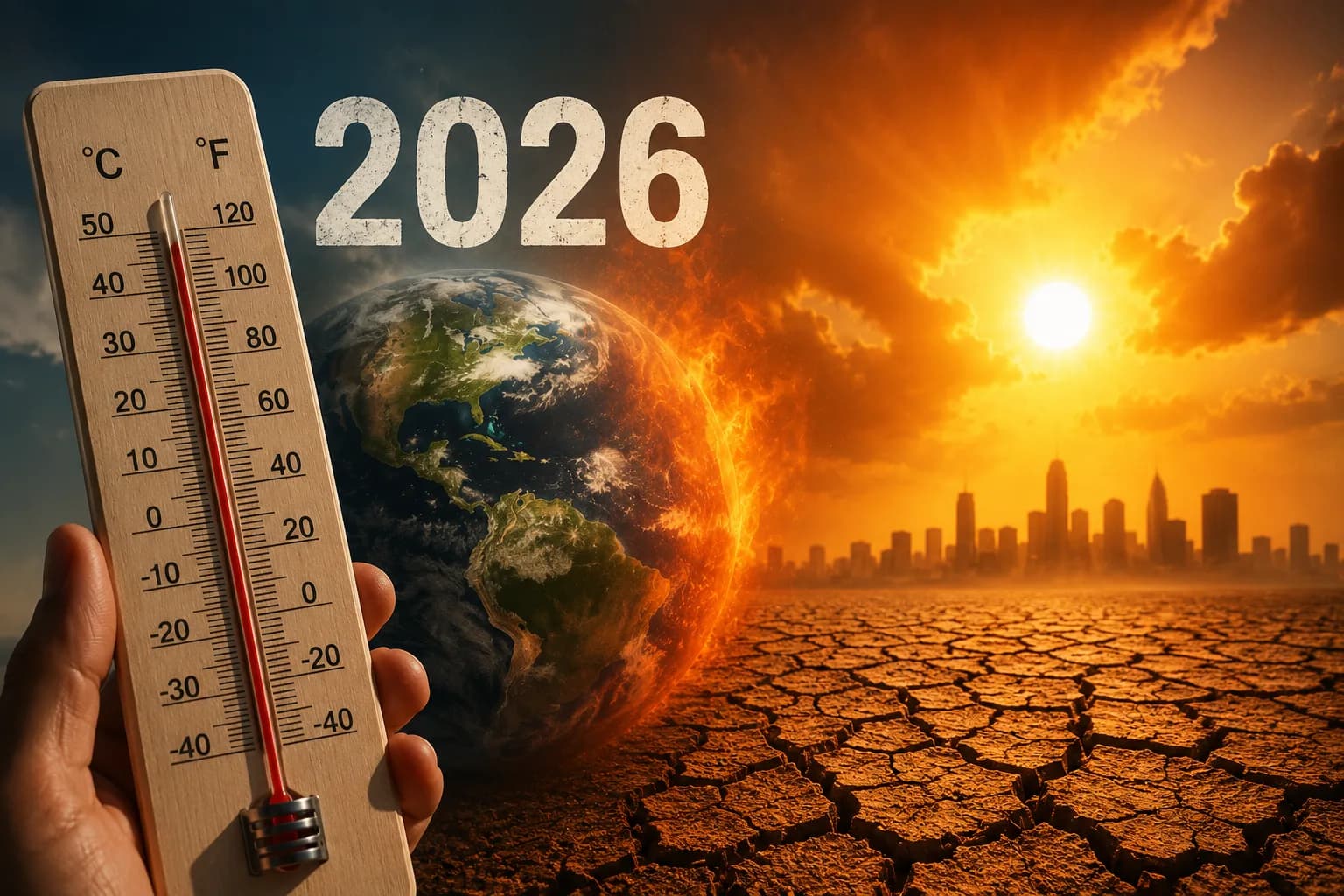
The first half of 2026 has kept global temperatures near record levels, raising fresh concerns that the year could rank among the hottest ever recorded. According to temperature data from the Copernicus Climate Change Service (C3S), the year is currently tracking behind only 2024 and 2025, with scientists warning that the 1.5°C warming threshold is becoming increasingly easy to breach.
While climate experts say it remains uncertain whether 2026 will surpass all previous records, current trends suggest it could finish as the second warmest year on record if temperatures remain elevated during the second half of the year.
Also Read | Monsoon tracker: Rainfall deficit shrinks, but regional gaps stay
Why is 2026 tracking so warm?
According to ERA5 data published by the Copernicus Climate Change Service, global temperatures up to July 14 averaged around 1.45°C above pre-industrial levels, making 2026 the third warmest year for the same period behind 2024 and 2025.
Scientists note that the previous three years—2023, 2024 and 2025—were already the warmest in recorded history. Their average warming exceeded 1.5°C, highlighting how close the planet is to crossing the long-term climate threshold associated with more severe impacts.

One notable feature of 2026 has been the persistence of unusually high temperatures despite La Niña-like conditions early in the year. Climate scientists say this suggests that underlying global warming has become strong enough to keep temperatures elevated even without a strong warming event.
Can El Niño push 2026 to a new record?
Climate experts expect the developing El Niño to strengthen further in the coming months. Historically, El Niño raises global temperatures with a lag of two to four months after forming.
Secondly, an average temperature of 1.53°C above pre-industrial times during the last six months of 2026 would make this year the second-warmest in history. At the same time, an average of 1.77°C above pre-industrial times would ensure 2026 to be the warmest year ever recorded.
Also Read | How climate change is quietly affecting India’s sleep
Though a sudden rise in temperatures at this level would be unusual during several months, experts do not exclude the possibility of such an outcome in case El Niño continues to develop into one of the most powerful ever seen.

At this point, researchers argue that the importance of the issue goes far beyond annual temperatures. Repeated attempts to reach, and even cross, the mark of 1.5°C show that global warming is becoming the norm rather than an exception.
FAQS
Q1. Is there a chance that 2026 can become the hottest year ever recorded?
Yes, though it seems more probable that 2026 will become the second-warmest year in history.
Q2. What does the 1.5°C warming threshold signify?
The 1.5°C mark is considered a significant benchmark suggested by climate scientists as the increase of temperature above it poses risks of extreme weather events.
