






















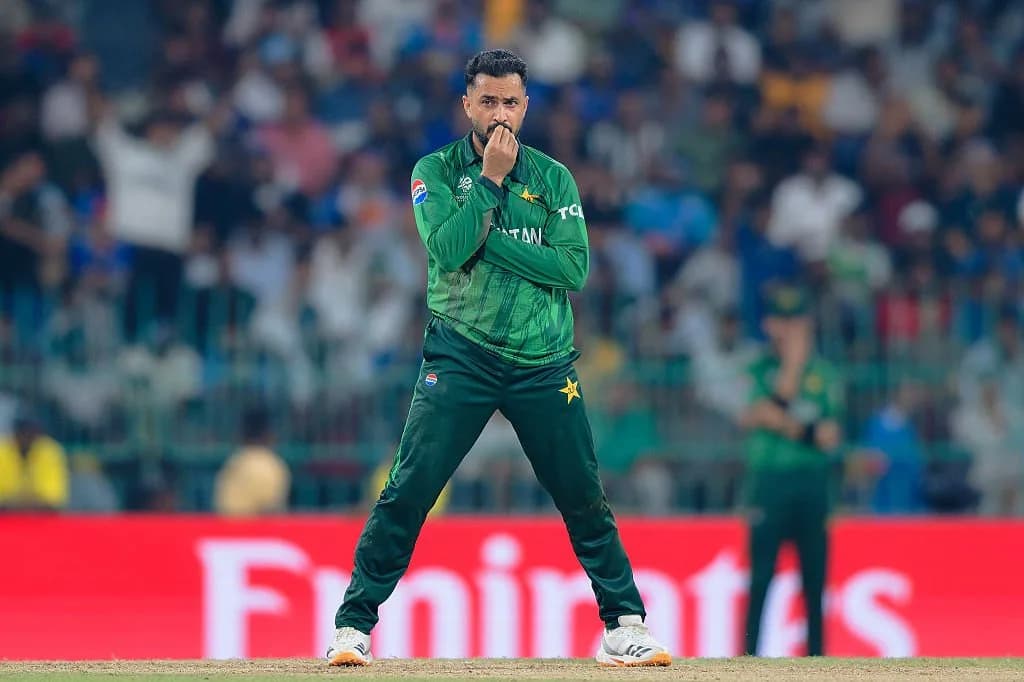
Mohammad Nawaz, the Pakistan all-rounder, has been sanctioned by the International Cricket Council (ICC) after breaching the governing body’s Anti-Doping Code during the 2026 ICC Men’s T20 World Cup. The left-arm spinner has accepted a three-month suspension, which could be reduced to one month if he completes a treatment programme.
Mohammad Nawaz tested positive
The ICC said Nawaz tested positive for Carboxy-THC, a cannabis-related substance listed as a “Substance of Abuse” under its Anti-Doping Code. The sample was collected after Pakistan’s group-stage match against the Netherlands on February 7 during the T20 World Cup.
Pakistan Spinner Mohammad Nawaz Sanctioned for Breaching ICC Anti-Doping Code 🤯
— Aswin Dugout 🏏 (@M_Aswin100) July 17, 2026
– Mohd Nawaz has been Sanctioned for Breaching the ICC Anti-Doping Code following a Doping Test carried out during the ICC Men’s T20 World Cup 2026 😮 pic.twitter.com/AZVcPLNnHb
The governing body stated that Nawaz admitted to the violation and proved that the substance was consumed outside competition and was not intended to improve his performance. As a result, the ICC imposed a three-month ban, backdated to May 1, 2026, the date on which he accepted a provisional suspension. The suspension can be reduced if he completes an approved substance abuse treatment programme.
Mohammad Nawaz’s World Cup performances disqualified
The ICC has also disqualified all of Nawaz’s individual results recorded between February 7 and May 1, 2026. This means his performances during Pakistan’s T20 World Cup campaign and any matches played before his provisional suspension will no longer count in the official record.
🚨 BREAKING: Pakistan all-rounder Mohammad Nawaz has been handed a three-month suspension after testing positive for Carboxy-THC, a prohibited substance, during the 2026 ICC Men’s T20 World Cup.
— CricVerse (@CricVerseHQ) July 17, 2026
The urine sample was collected on 7 February 2026, following Pakistan’s T20 World…
Mohammad Nawaz represented Pakistan in all seven matches during the tournament, contributing with both bat and ball as the team reached the Super Eights before being eliminated.
The ICC clarified that the case involved the use of a recreational substance outside competition rather than a performance-enhancing drug. However, the Anti-Doping Code still requires disciplinary action in such cases.
With the suspension backdated, Nawaz has already served most of the ban and will be eligible to return to competitive cricket once he fulfils the treatment programme requirements.
