



















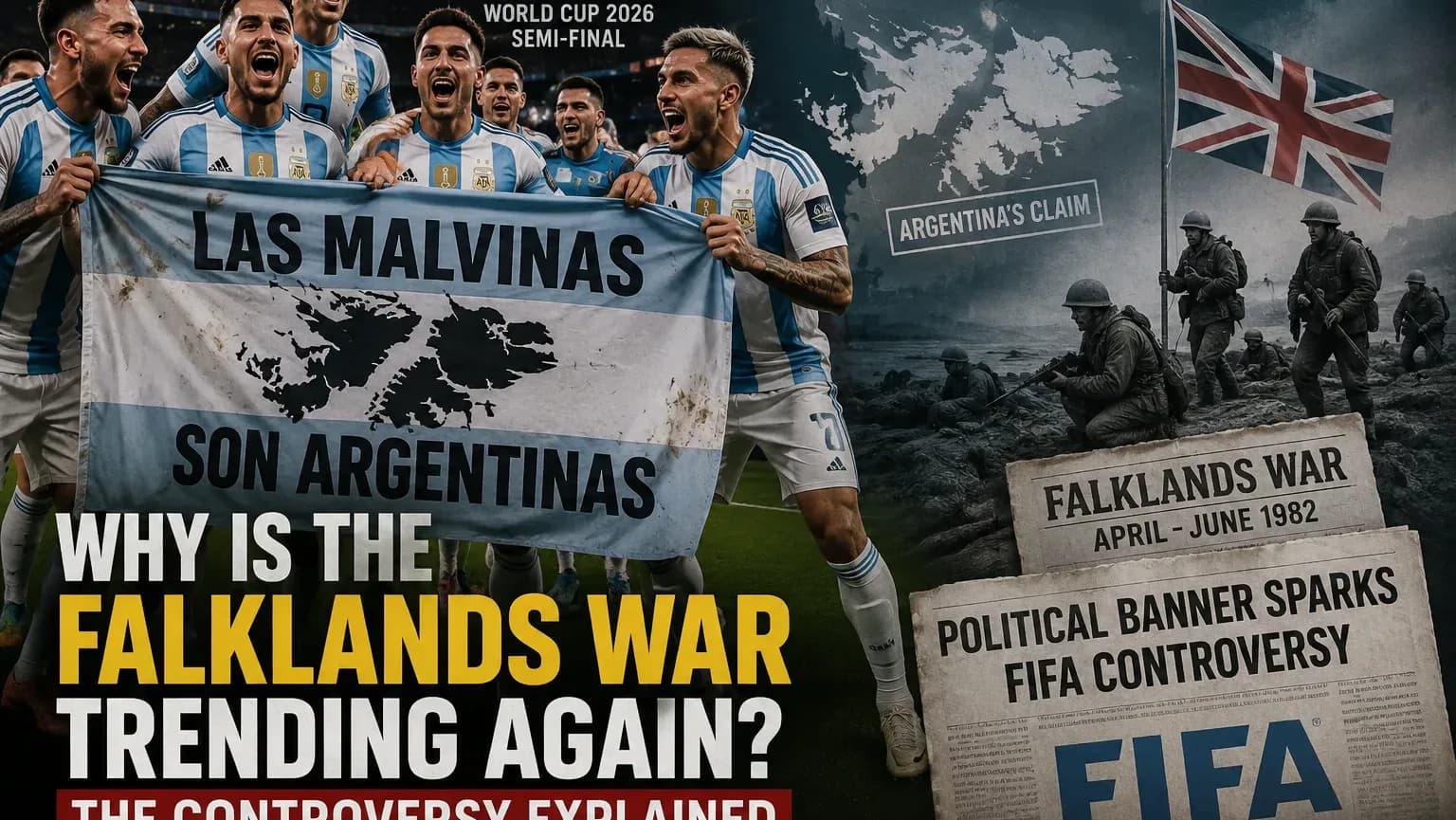
Argentina’s dramatic 2-1 comeback victory over England in the FIFA World Cup 2026 semi-final has done more than secure a place in Sunday’s final against Spain. It has also reignited one of the world’s longest-running political disputes, with the Falklands War once again becoming one of the most searched topics online.
As celebrations erupted across Argentina, social media was flooded with posts about the Falklands conflict, while a controversial banner displayed by Argentina’s players has now raised the possibility of FIFA disciplinary action.
Whenever Argentina and England meet on football’s biggest stage, the rivalry extends beyond sport. The nations share a painful history rooted in the 1982 Falklands War, and every high-profile encounter tends to revive memories of that conflict.
Following Argentina’s semi-final victory, users social media began discussing the Falklands War, sharing archival photographs, historical footage, political commentary and comparisons between football and history.
So, why is a war fought more than four decades ago trending after a football match?
Argentina’s celebration sparks FIFA controversy
The discussion intensified after Argentina’s players celebrated their victory by posing with a banner reading “Las Malvinas son Argentinas” (“The Falklands are Argentine”).
The slogan refers to Argentina’s long-standing claim over the Falkland Islands, known in Argentina as the Islas Malvinas. Images of the celebration quickly spread across social media, prompting widespread debate over whether political messages should accompany international football celebrations.
According to FIFA regulations, political messaging during official competitions is prohibited. As a result, Argentina could now face disciplinary proceedings.
🇦🇷 Argentina players with a banner after the match:
— Ultras Clips (@ultras_clips) July 15, 2026
'Las Malvinas son Argentinas' – 'The Falkland Islands are Argentine' pic.twitter.com/fGxNhciOAJ
This would not be the first such incident. In 2014, FIFA fined the Argentine Football Association £20,000 after players displayed the same “Las Malvinas son Argentinas” message before an international friendly against Slovenia. Argentina’s squad had also been linked to Falklands-related chants earlier during the current World Cup, making the latest incident even more significant.
Also Read | FIFA World Cup 2026 Golden Boot race: Can Lionel Messi hold off Kylian Mbappé?
What was the Falklands War?
The Falklands War was fought in 1982 after Argentina invaded the Falkland Islands, a British Overseas Territory in the South Atlantic Ocean.
Britain responded by deploying a naval task force to retake the islands, leading to a conflict that lasted just over two months. Hundreds of military personnel from both countries lost their lives before British forces regained control.
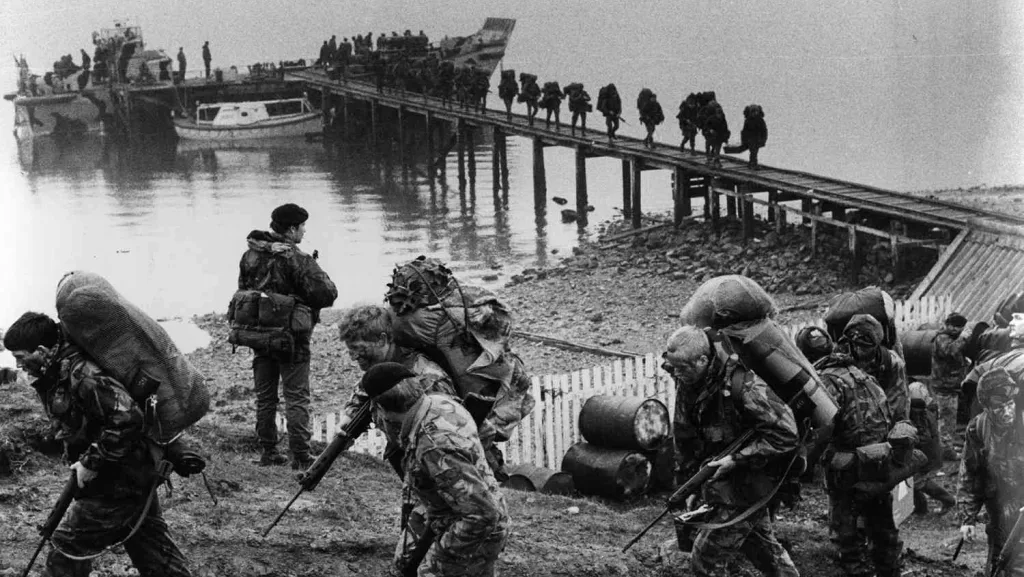
Although the war ended in June 1982, Argentina has never abandoned its sovereignty claim over the islands, ensuring the issue remains politically sensitive in both countries.
Football keeps reviving the debate
The emotional connection between football and the Falklands War dates back to the 1986 FIFA World Cup. Just four years after the conflict, Argentina defeated England in the quarter-finals through Diego Maradona’s unforgettable brace. His controversial “Hand of God” goal and his breathtaking solo effort—later dubbed the “Goal of the Century”—became defining moments in football history.
Also Read | Lautaro Martinez’s comeback goal sends Argentina into the FIFA World Cup 2026 final
For many Argentinians, that victory symbolised national pride. For many England supporters, it remains one of the most painful defeats the country has experienced on the international stage.
Since then, every Argentina-England meeting has carried historical significance far beyond football.
Social media has amplified the conversation
Unlike previous generations, today’s sporting moments unfold instantly online.
Within minutes of Argentina’s latest victory, hashtags relating to the Falklands War, the Malvinas Islands, Diego Maradona and England began trending globally. Some users celebrated the football victory, others revisited historical events, while historians and journalists explained why the dispute continues to resonate decades later.
Argentina have reached the World Cup semifinals six times and have won all six:
— B/R Football (@brfootball) July 16, 2026
🔹 1930—beat USA 6-1
🔹 1986—beat Belgium 2-0
🔹 1990—beat Italy 4-3 on pens
🔹 2014—beat Netherlands 4-2 on pens
🔹 2022—beat Croatia
🔹 2026—beat England 2-1
Their perfect streak continues 💪🇦🇷 pic.twitter.com/y6MGbvV5uM
The combination of football, politics and history ensured the Falklands War once again entered global conversation.
Football, politics and history
While supporters naturally celebrate memorable victories, many observers have urged caution over linking sporting success with military conflict.
The Falklands War remains a deeply painful chapter for veterans, families of those killed and communities in both Argentina and the United Kingdom. For them, it represents human loss rather than sporting rivalry.
The possibility of FIFA investigating Argentina’s banner has also reignited debate over whether political messages have any place during international tournaments. Whatever the governing body’s decision, the controversy has once again demonstrated how quickly football can intersect with history.
Why is the Falklands War trending again?
The Falklands War is trending because Argentina’s World Cup victory over England has reopened historical memories that continue to shape one of football’s fiercest rivalries.
The politically charged “Las Malvinas son Argentinas” banner has added another layer to the story, potentially exposing Argentina to FIFA sanctions while driving millions of online searches about the conflict.
More than 40 years after the war ended, the latest World Cup clash has shown that when Argentina and England meet, the conversation rarely remains confined to football. Their rivalry continues to be influenced by history, politics and national identity, making every encounter one of the most emotionally charged fixtures in world sport.
FAQs
Why is the Falklands War trending after Argentina’s World Cup win?
Argentina’s victory over England and the players’ “Las Malvinas son Argentinas” banner reignited global discussion about the 1982 Falklands War.
Could FIFA punish Argentina over the Falklands banner?
Yes. FIFA prohibits political messages during official competitions, so the banner could lead to disciplinary action if investigated.
