












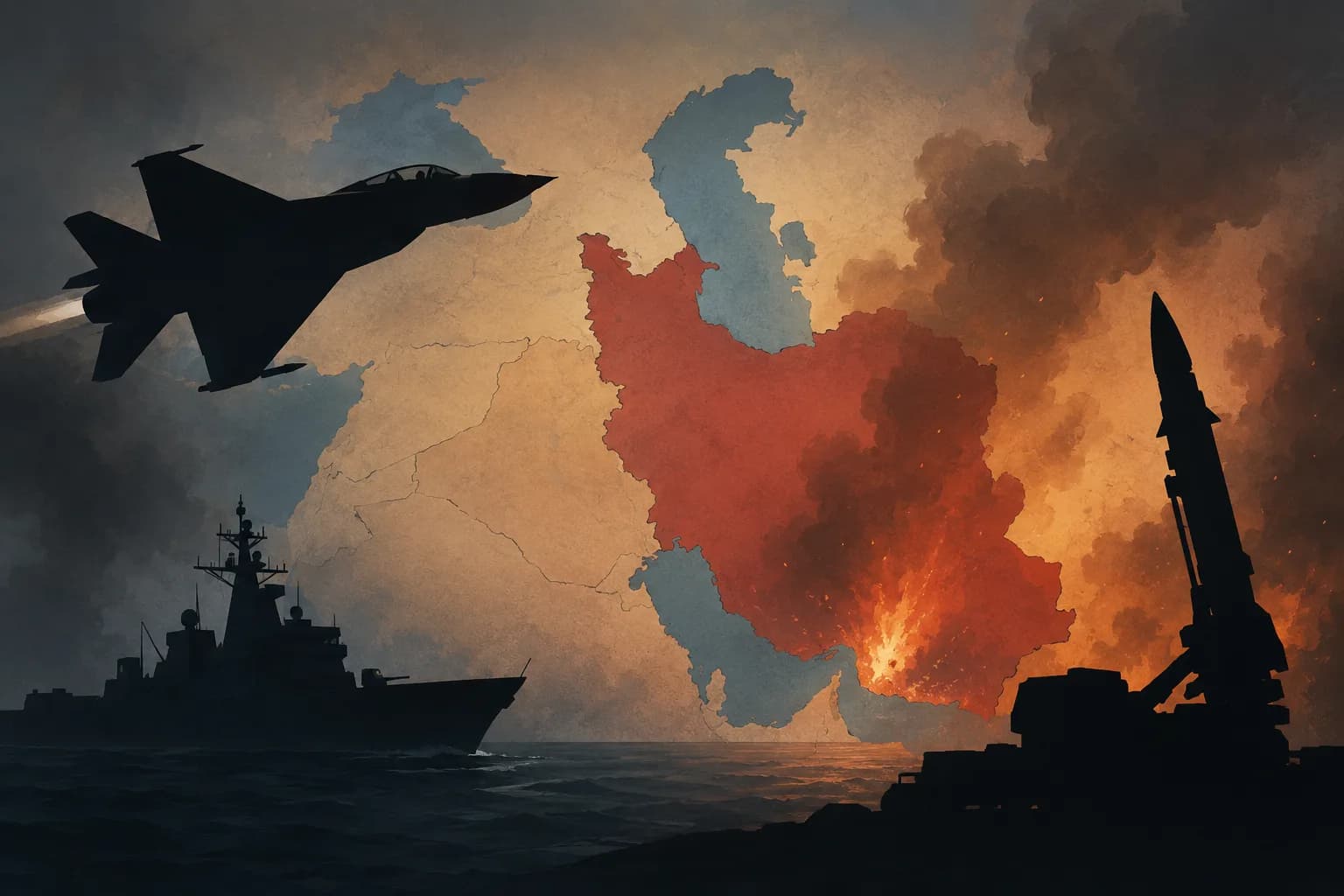










President Donald Trump said on Monday that the United States was reinstating a naval blockade on Iran in the Strait of Hormuz and would charge 20% on cargo shipped through the vital waterway after Tehran said it had closed the strait and warned that passage would remain suspended until “stability and calm” returned.
Trump said the strait would remain open “with or without Iran” and described the US as the “guardian” of the route, adding that the reimbursement would cover the costs of providing security.
The move followed another exchange of missile and drone attacks that raised fresh doubts over a fragile interim understanding reached last month to reopen the strait and ease hostilities.
Also Read | Iran declares ’14-point’ US deal in crisis as fresh strikes shake Hormuz region
🇺🇸⚡️🇮🇷 BREAKING: President Trump announces the U.S. naval BLOCKADE against Iran will be REINSTATED. pic.twitter.com/2ynvupRlrN
— JackTheRippler ©️ (@RippleXrpie) July 13, 2026
A powder keg by the shoreline
Iranian state media said explosions were heard in the port cities of Bandar Abbas, Sirik and Jask, as well as on Qeshm Island.
The US military said it had hit Iranian air defence systems, coastal radar sites, missile and drone capabilities and small boats.
Iran’s Revolutionary Guards claimed strikes on US military facilities in Bahrain and Kuwait, along with radar systems in Oman and targets in Jordan, in retaliation for earlier US action.
BREAKING: US President Donald Trump says Washington is reinstating a naval blockade against Iran — but also says the US will demand a 20% fee on all cargo shipped to guarantee the Strait of Hormuz is open to other countries (on first reading, that equals to ~$15 per barrel!!!!) pic.twitter.com/ktpdkjrUOl
— Javier Blas (@JavierBlas) July 13, 2026
Words sharpen where weapons already have
Trump first floated the idea of US control over the strait in a Fox News interview, saying Washington would “probably run it” and could call itself the “guardian angel of the strait”.
In his Truth Social post, he wrote, “We are reinstating THE IRANIAN BLOCKADE,” and said the US would be reimbursed “at the rate of 20% on all cargo shipped”.
Iran’s Revolutionary Guards said that the only way to restore regular shipping through the strait was to end US military intervention, warning that “continued interference could lead to greater incidents in the global oil and gas sector”.
Iran’s top joint military command rejected any US role in deciding the future of the route.
"We are reinstating the THE IRANIAN BLOCKADE, so named because it is only stopping Iran’s ships or customers from entering or leaving… The U.S.A. will be, from this point forward, known as “THE GUARDIAN OF THE HORMUZ STRAIT,”" – President Donald J. Trump 🇺🇸 pic.twitter.com/9iKOWCPq06
— The White House (@WhiteHouse) July 13, 2026
When commerce catches a cold
The dispute has immediate economic consequences because the Strait of Hormuz is one of the world’s most important energy chokepoints.
Brent crude rose more than 4% on Monday after Trump’s comments and amid fears of disruption to oil and gas flows. The conflict has become one of the main battlegrounds in the war and has already pushed up energy prices and inflation concerns globally.
US officials reported about 20 vessels escorted through the strait in the previous 24 hours, even as ship-tracking data showed limited traffic and MarineTraffic recorded a 52% fall in vessel activity through the route over July 10-12 compared with the previous week.
The standoff now hangs over both the shipping lane and the wider ceasefire effort, with both sides insisting they still hold the upper hand.
Also Read | Japan builds new intelligence agency as China, Russia and North Korea threats grow
FAQs
Q1: Why is the Strait of Hormuz important?
The Strait of Hormuz is one of the world’s busiest oil shipping routes, carrying a significant share of global crude oil and liquefied natural gas exports.
Q2: Why did Trump announce a US blockade of Iran?
Trump said the US would reinstate the blockade and charge ships for safe passage to protect maritime traffic through the Strait of Hormuz amid the escalating conflict.
