



























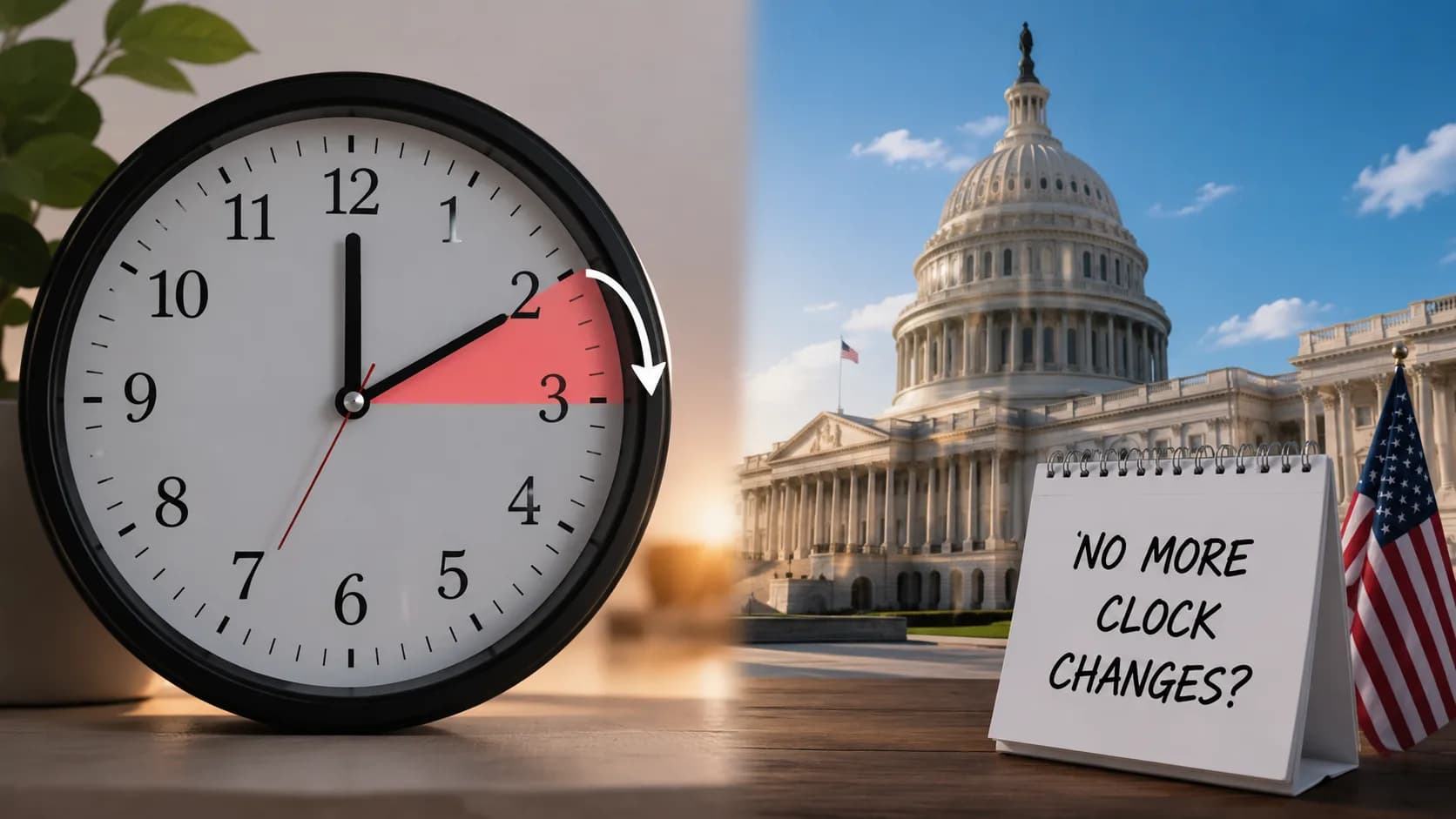
The US House of Representatives has approved the Sunshine Protection Act, taking a fresh step towards ending the long-standing practice of changing clocks twice a year.
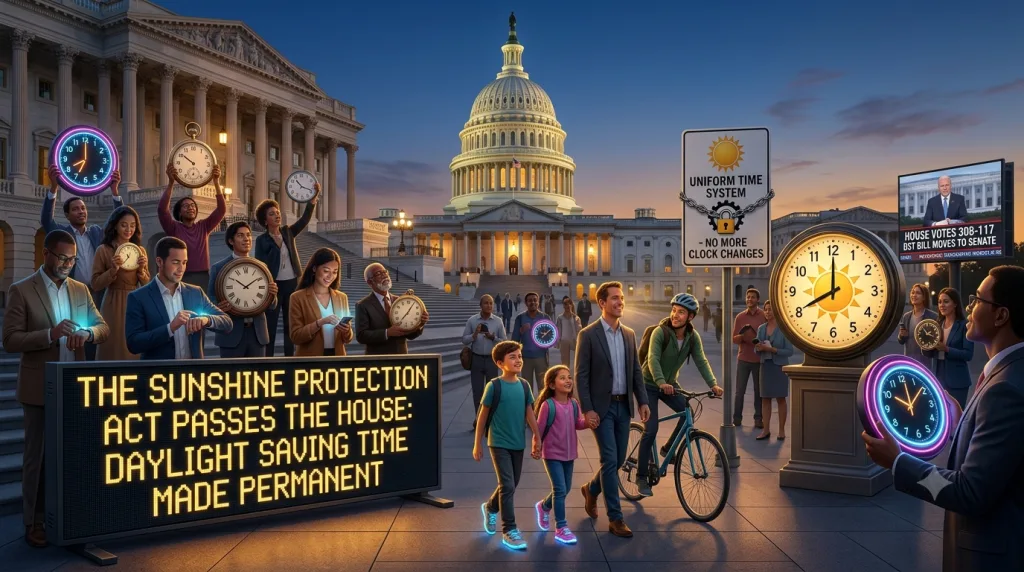
The Bill cleared the House with a 308-117 vote and will now move to the Senate. If it receives Senate approval and is signed into law, Americans would no longer need to adjust their clocks every spring and autumn.
Instead, the country would remain on Daylight Saving Time (DST) throughout the year, bringing an end to the familiar “spring forward” and “fall back” routine.
PASSED! The Sunshine Protection Act makes daylight saving time permanent and eliminates biannual time changes. Congratulations, Rep. @VernBuchanan! pic.twitter.com/6iMDwLkFNP
— House Republicans (@HouseGOP) July 14, 2026
What would change?
Under the proposed Bill, clocks would stay one hour ahead of standard time year-round.
Also Read | US steps up pressure on Iran with fourth day of strikes and Hormuz naval blockade
States that currently do not observe DST, including Hawaii and most of Arizona, would still be able to continue using permanent standard time, provided they meet the required exemption criteria.
If the legislation becomes law, it would create a uniform system for most of the country while removing the need for seasonal clock adjustments.
BREAKING: The House has passed legislation to make Daylight Saving Time permanent nationwide, ending the twice-a-year clock changes by a 308-117 vote. Backed by President Trump, the bill now heads to the Senate. If approved and signed into law, Americans would no longer have to… pic.twitter.com/6iy9O9ZWYf
— Breaking911 (@Breaking911) July 14, 2026
Why supporters want the change
Backers of the Bill say ending the twice-yearly clock changes would make daily life simpler and reduce disruptions caused by shifting time.
Supporters argue that a permanent DST system could improve sleep consistency, increase evening daylight and offer benefits for businesses, tourism, outdoor activities and consumer spending after working hours.
The legislation has also received support from US President Donald Trump, who has backed efforts to permanently end the biannual clock changes.
Lawmakers supporting the proposal have described the current system as outdated and unnecessary for families, workers and businesses.
Why some experts remain opposed
Despite broad support in the House, the proposal continues to face criticism.
Health experts, sleep researchers and some lawmakers have warned that permanent DST could result in darker winter mornings, particularly affecting schoolchildren, commuters and people who begin work early in the day.
Some critics believe permanent standard time would be a better option, arguing that it aligns more closely with natural sleep cycles and circadian rhythms.
Also Read | Will Trump’s Hormuz toll make petrol costlier in India?
What happens next?
The debate over Daylight Saving Time has continued in Congress for several years, with earlier efforts failing to become law.
The latest Bill marks another attempt to establish a permanent nationwide time policy. However, before any changes take effect, the legislation must still pass the Senate and receive the President’s approval. Until then, the current system of changing clocks twice a year remains in place.
FAQs:
What is the Sunshine Protection Act?
It is a Bill that would make Daylight Saving Time permanent and end changing clocks twice a year in most of the US.
Has the Daylight Saving Time Bill become law?
No. It has passed the House and must still clear the Senate before it can become law.
