




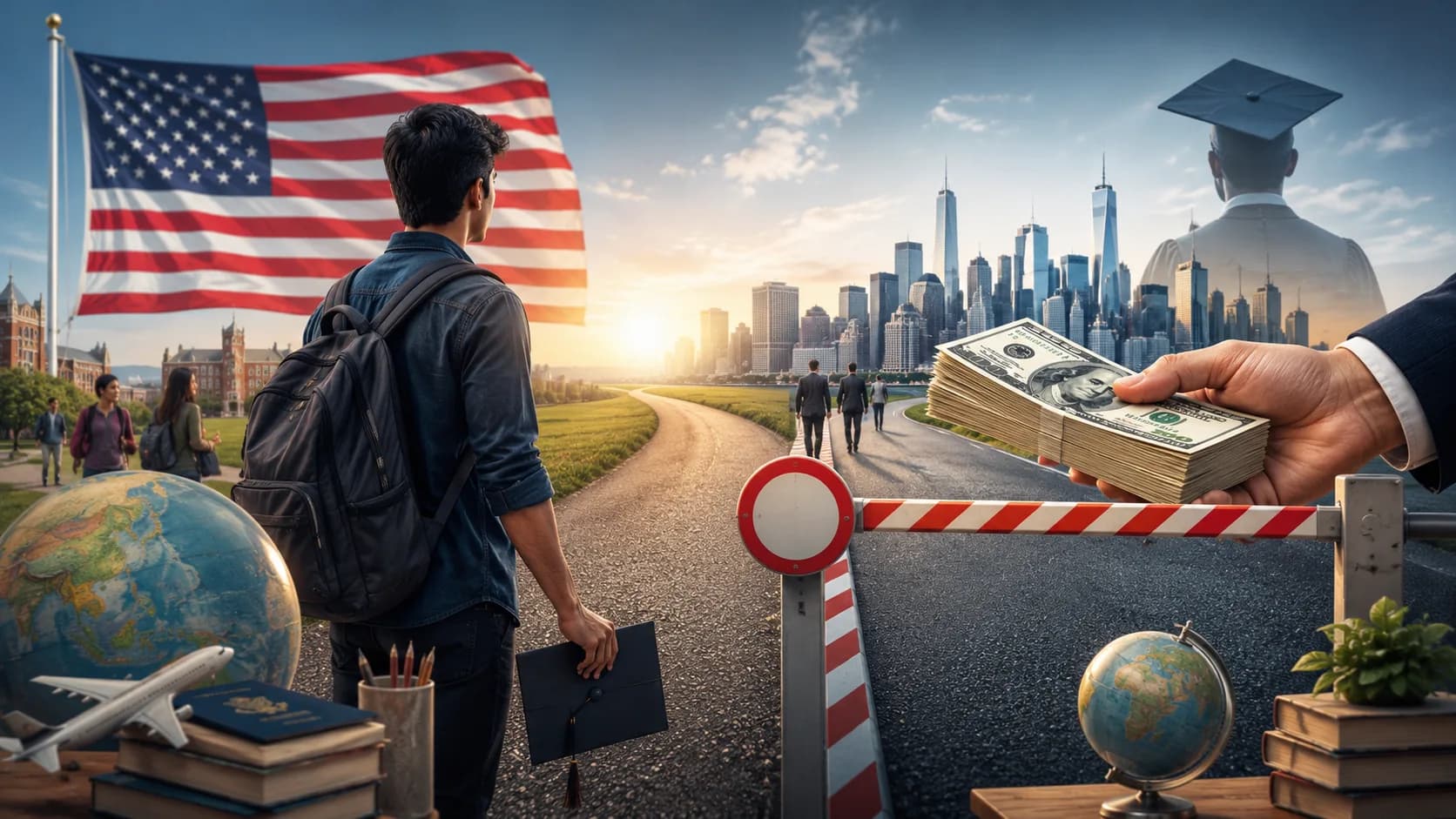










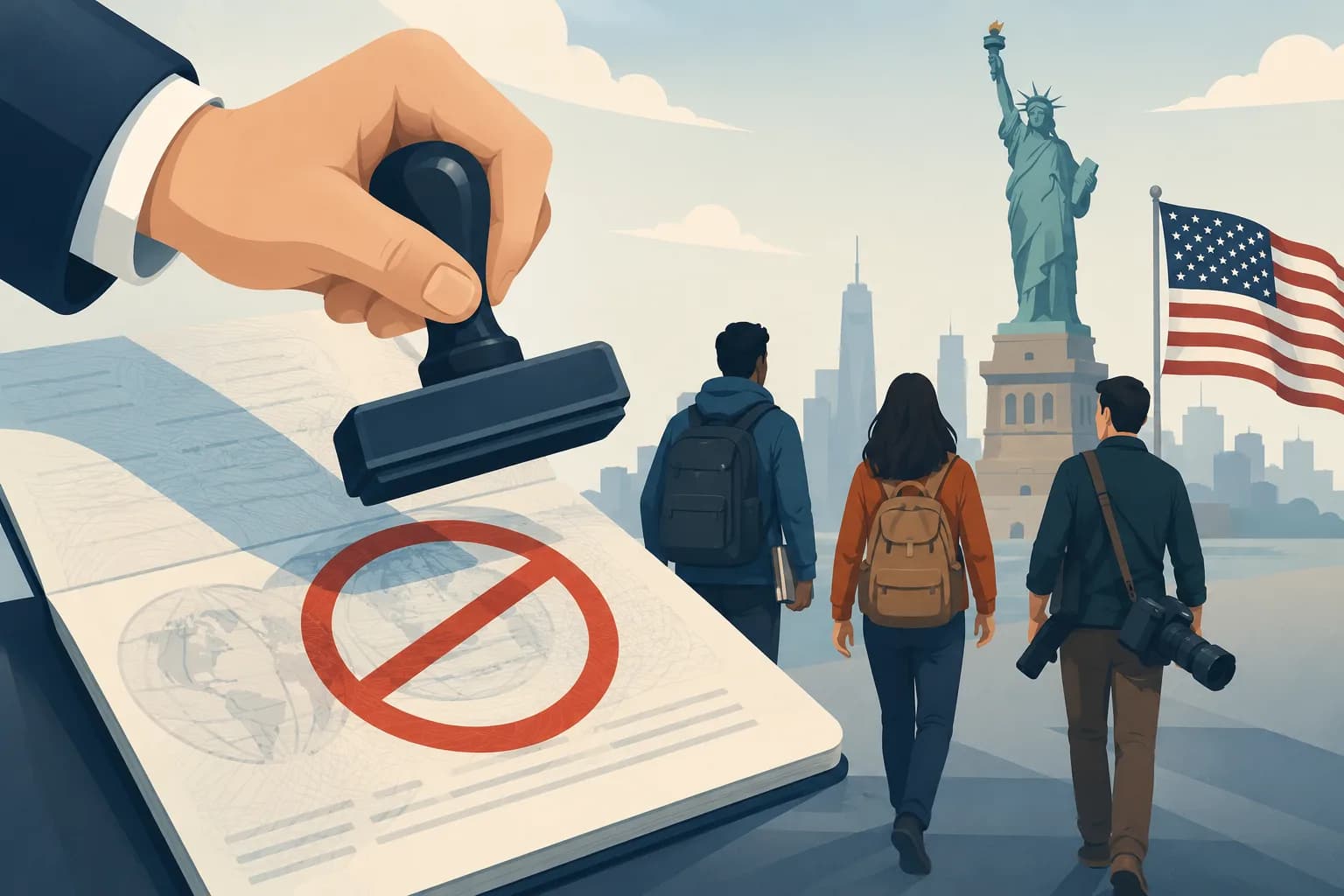
The Trump administration moved on Thursday to tighten the duration of visas for foreign students, cultural exchange visitors, and journalists, according to a final rule issued by the Department of Homeland Security (DHS).
The rule would replace the current system, under which F visas for international students, J visas for exchange visitors, and I visas for members of the media can remain valid for the duration of a program or employment in the United States.
Under the new framework, student and exchange visas would be capped at four years, while journalist visas would be limited to 240 days, or 90 days for Chinese nationals. The rule is set to take effect 60 days after publication in the federal register, subject to congressional review.
Also Read | Prince Harry’s reunion with King Charles had one ‘non-negotiable’ royal presence
Trump Admin's New Visa Restrictions: Students, Researchers & Journalists Impacted | Here Are the Details#USVisa #VisaRules #USImmigration #InternationalStudents #StudentVisa #F1Visa #Researchers #Journalists #VisaRestrictions #ImmigrationNews pic.twitter.com/H8zf2wAHGS
— NewsMobile (@NewsMobileIndia) July 16, 2026
A closer watch begins
DHS said the change is meant to address oversight concerns tied to rising visa volumes and the length of time some non-immigrants remain in the country.
In the rule, the department said there were more than 1.8 million student visa admissions in 2024, an increase of more than 11% from the previous year. It also said the United States granted visas to more than 500,000 exchange visitors and 37,300 members of the media in fiscal 2024.
DHS argued that the increase “poses a challenge” to its ability to monitor and oversee these categories of visitors and said it has examples of students and exchange visitors staying for decades on their visas.
If visa holders want to remain beyond the fixed admission period, they would need to seek an extension from DHS or leave and re-enter the country.
US locks in fixed time limits for foreign students, exchange visitors and journalists, no more open-ended stays
— Nabila Jamal (@nabilajamal_) July 16, 2026
New DHS rule, effective 60 days after publication, per Reuters:
• F visa (students): capped at 4 years
• J visa (exchange visitors): fixed term set by program
• I… pic.twitter.com/9ZMqxXqKpk
What do the new US visa restrictions mean for students?
The policy is the latest step in a broader immigration crackdown under President Donald Trump, whose administration has increased scrutiny of legal immigration since he returned to office in January 2025.
The administration has revoked student visas and green cards over ideological views and stripped legal status from hundreds of thousands of migrants.
The new rule also adds restrictions for students; graduate students would not be allowed to change their “educational objectives” during their stay, and they would be barred from transferring to another school without authorization.
The grace period for students after completing a degree or training would also be cut from 60 days to 30 days. Doug Rand, a former DHS official, criticized the move, saying, “Most Americans understand the value of welcoming international students,” and adding, “This rule would do the opposite.”
#BREAKING The Department of Homeland Security is moving to change U.S. visa rules by replacing the current duration of status system with fixed time limits for certain foreign students, exchange visitors, and journalists.
— MCBN (@MCBNNEWSS) July 16, 2026
•Foreign students: New limits would cap stays at up to… pic.twitter.com/1KdNiCivjp
A longer road through the paperwork
The rule is likely to be closely watched by universities, media organizations, and immigration lawyers because it creates a more rigid system for maintaining lawful status in the United States.
Visa holders can still apply for extensions, but the tighter timelines could add administrative pressure for students seeking to complete longer courses, exchange visitors whose assignments stretch beyond the new cap, and foreign journalists posted in the US for extended periods.
The announcement also drew criticism from immigration advocates, who said the changes could complicate legal pathways and raise uncertainty for people already in the country.
Also Read | ‘Take off the uniform and come into politics’: Fazlur Rehman dares Pakistan army chief Asim Munir
FAQs
Q1: What are the new US visa rules for international students?
The new rule limits most F student visas to a fixed stay of up to four years instead of allowing them to remain for the duration of their academic programme.
Q2: How will the new US visa rules affect foreign journalists?
The rule limits I visas for foreign journalists to 240 days, or 90 days for Chinese nationals, with extensions required for longer stays.
