


























Commercial shipping through the Strait of Hormuz has slowed sharply as the renewed military confrontation between the United States and Iran continues to affect one of the world’s busiest energy corridors. Fresh data showed vessel movements dropping to their lowest level in three weeks, with growing security concerns forcing many operators to rethink planned voyages.
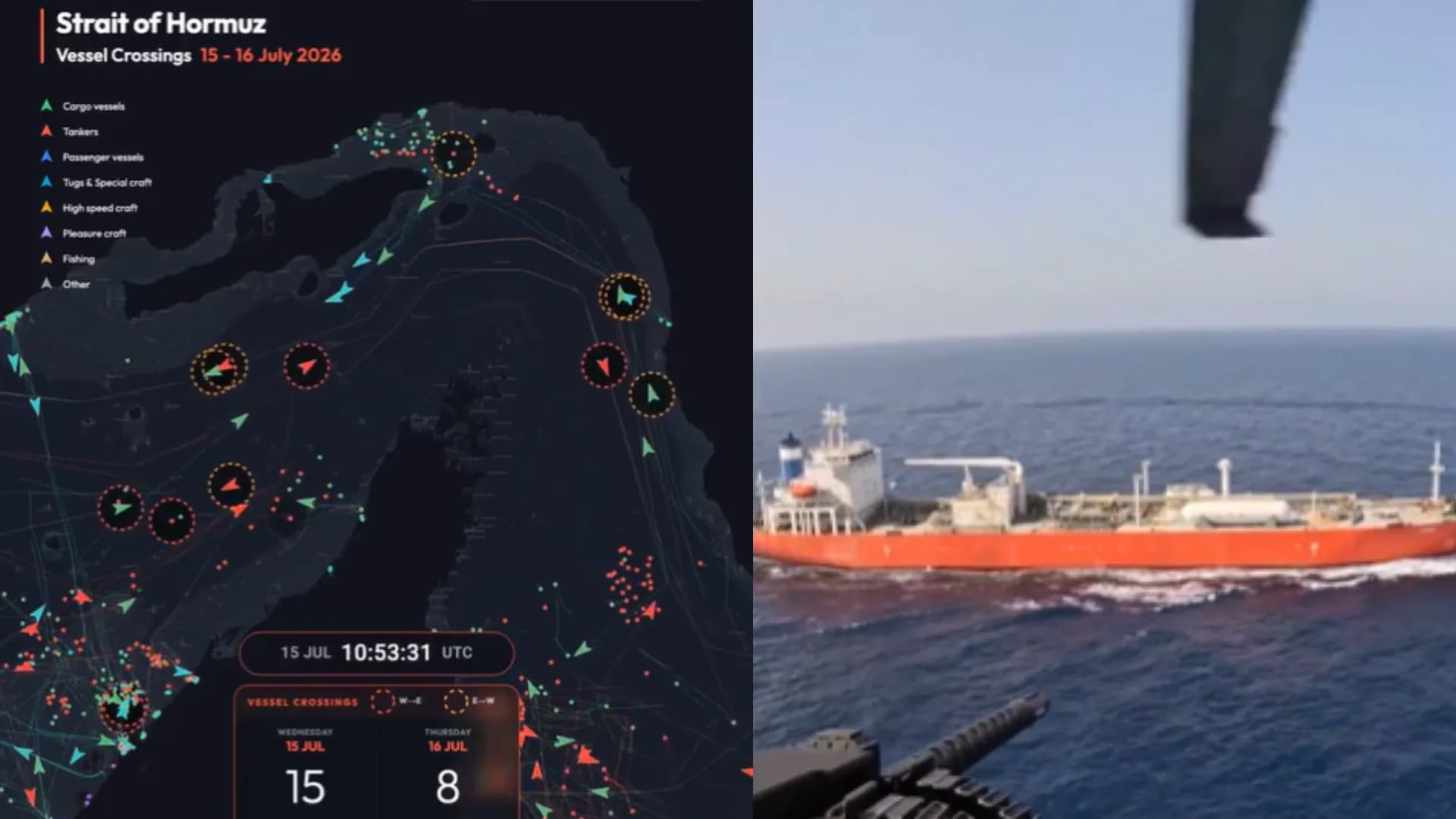
According to maritime analytics firm Kpler, only eight confirmed vessel crossings were recorded on July 16. Of these, seven passed through the Iranian route, indicating that shipping activity is becoming increasingly concentrated in higher-risk waters.
The data also showed an even split between low-risk and sanctioned vessels, while no shadow fleet movements were detected.
Strait crossings hit three week low
— Kpler (@Kpler) July 17, 2026
Strait of Hormuz traffic continued to weaken on 16 July, with confirmed crossings falling to eight, the lowest level in three weeks. Seven of the eight transits used the Iranian route, highlighting a growing concentration of movements through… pic.twitter.com/YEA63ZGkVJ
Also Read | Iran warns CENTCOM of ‘zero hour’ while Trump weighs next military move
Ships halt or change course
The latest decline comes as rising tensions have disrupted normal maritime operations in the region. Many commercial vessels either paused their journeys or turned back after recent Iranian attacks on ships and the resumption of a US blockade targeting Iran-related shipping.
Kpler data showed that the sanctioned product tanker Miraan, carrying fuel oil, and the LPG vessel Norita exited the Strait of Hormuz through the Iranian route before stopping in the Gulf of Oman, where the US blockade is in place. Another vessel, the bunkering tanker Arolia, reversed course shortly after leaving the strait and returned to the Gulf.
On Wednesday, only 11 ships crossed the strategic waterway, a sharp fall from the average of around 125 daily transits recorded before the conflict escalated.
Watch the moment a US Army helicopter is targeted in the Persian Gulf near the Strait of Hormuz.. The helicopter intended to strike them – but it was caught off guard! 🇺🇸🇮🇷 pic.twitter.com/A3OaAXHfLf
— IRGC (@IRGC_Press) July 17, 2026
Oil trade under pressure
No Very Large Crude Carrier (VLCC) or liquefied natural gas tanker crossed the strait for a second straight day on Thursday. However, two VLCCs later reappeared on AIS tracking outside the waterway. The Colombia Prosperity, carrying Saudi crude, was heading towards Okinawa in Japan, while the Costa Rica Prosperity, loaded with Iraqi Basra Medium crude, was bound for Turkey.
Iraq also temporarily halted oil loading operations at its Basra terminal after a drone struck an oil tanker. Authorities later resumed operations.
Conflict fuels uncertainty
Iran’s Revolutionary Guards warned on Thursday that “no oil or gas would be exported through the Strait of Hormuz as long as US attacks continued.”
Also Read | Three killed in Iran as US strikes continue; Tehran hits American bases in Gulf
The latest disruption unfolded as fighting between the United States and Iran entered its sixth consecutive night. Iranian authorities said US strikes hit bridges, a railway station and Iranshahr Airport, while officials in Hormozgan reported seven deaths.
The White House, however, said American forces had targeted only military objectives, including logistics infrastructure. As hostilities continue, security concerns rather than diplomatic developments are increasingly shaping commercial shipping through the Strait of Hormuz.
FAQs:
Why has tanker traffic fallen in the Strait of Hormuz?
Renewed US-Iran hostilities and security risks have forced many vessels to delay, reroute or turn back.
Why is the Strait of Hormuz strategically important?
It is one of the world’s busiest routes for transporting crude oil and liquefied natural gas.
