







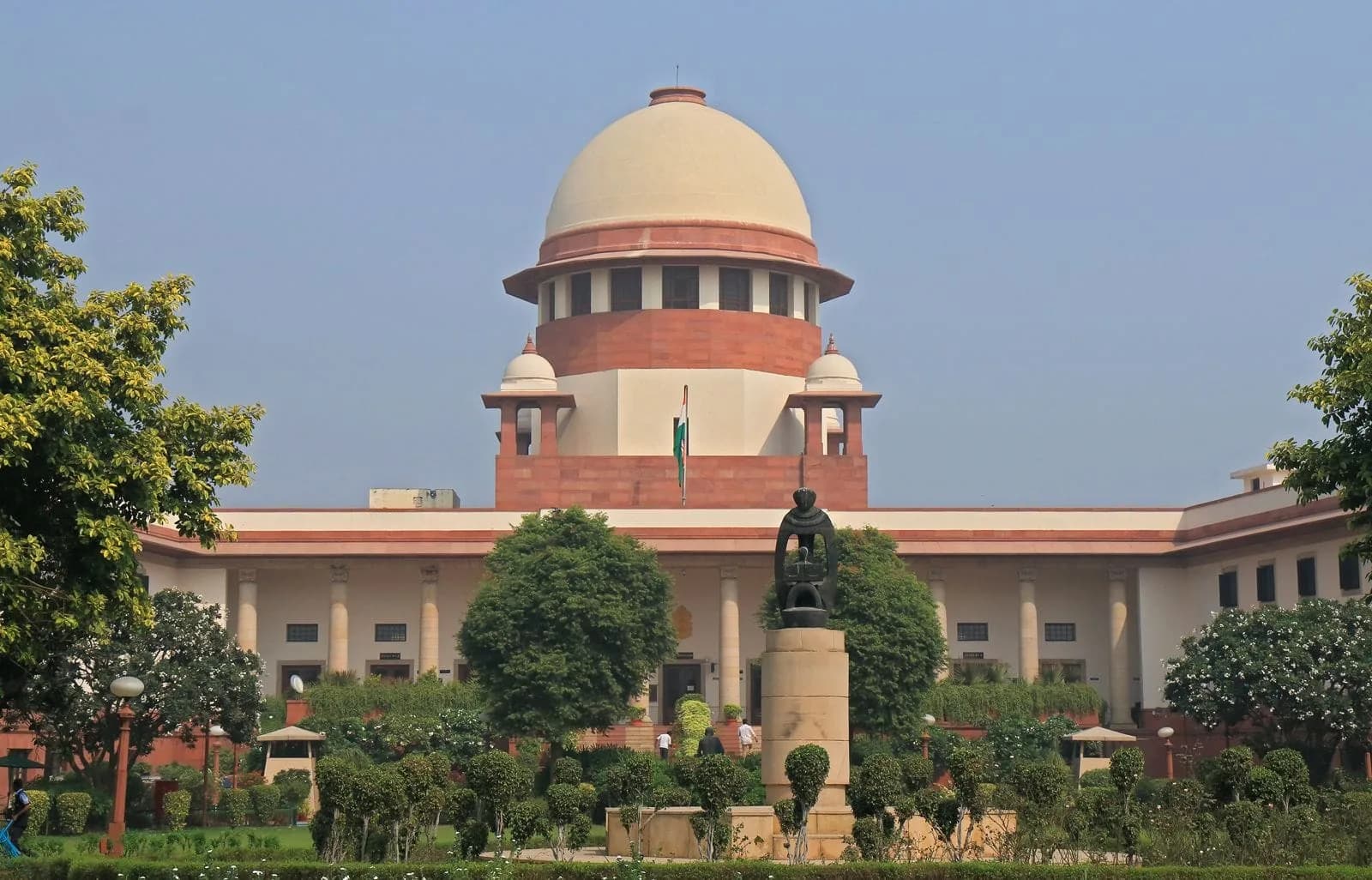



















The Supreme Court on Wednesday set aside a 2015 trial court order summoning former Prime Minister Manmohan Singh as an accused in the Talabira coal block allocation case, accepting two closure reports filed by the Central Bureau of Investigation (CBI) and closing the proceedings against him.
A three-judge bench comprising Chief Justice of India Surya Kant, Justice Joymalya Bagchi and Justice V Mohana held that the special court had no valid basis to reject the CBI’s findings and had wrongly proceeded against Singh, who died in December 2024 while his challenge to the summons was still pending before the apex court.
Truth always prevails.
— Subodh Kumar Pandey (@subodh26pandey) July 29, 2026
The Supreme Court has accepted the CBI’s closure report and formally cleared the late former Prime Minister Dr Manmohan Singh of all allegations in the coal block allocation case. The trial court’s 2015 summons has been set aside and the matter stands… https://t.co/VQM2pDK3ef pic.twitter.com/sXmtkukOPx
Also Read | Who is Jagdish Aphale? IIT Bombay alumnus appointed Ram Temple trust secretary
Justice, though delayed, had the final word
An appeal ordinarily turns infructuous once the appellant dies. The Bench acknowledged it could have closed the matter on that basis alone.
The order itself noted, “Due to the unfortunate demise of the appellant, this appeal could be disposed of as infructuous. But with a view to consider the aspect of the learned special judge taking cognizance and summoning the appellant, we have gone through both closure reports filed by the CBI”.
The bench chose instead to rule on the merits because the 2015 order carried adverse findings against Singh that would otherwise have stayed on record and went through both of the CBI’s closure reports before concluding that the summons could not be sustained.
The ruling gives Singh a posthumous legal vindication.
India's most educated Prime Minister, Dr. Manmohan Singh, has been found completely innocent in the allegations related to the coal scam case ,,
— Helle (@Oyemisty) July 29, 2026
The court said that the allegations of corruption against Manmohan Singh in the coal scam were not proven.
Will the people of the… pic.twitter.com/GD8tgWEAtA
How a coal block became a saga
The case dates back to 2005, when Singh held the coal portfolio alongside the prime ministership.
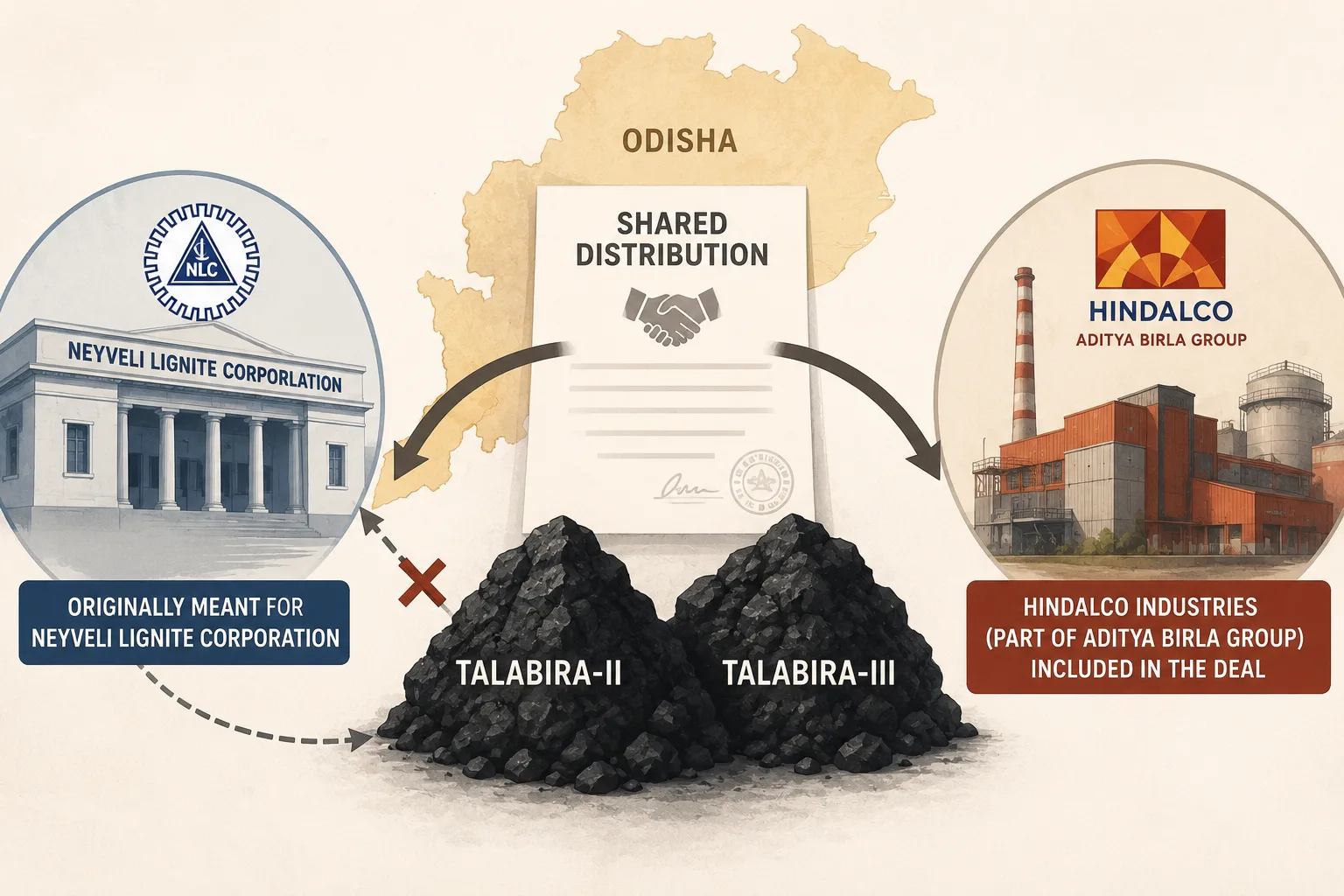
It was about the shared distribution of the Talabira-II and Talabira-III coal blocks in Odisha, which were originally meant for the state-run Neyveli Lignite Corporation before Hindalco Industries, part of the Aditya Birla Group, was included in the deal.
The allocation became one of several individual cases the CBI examined after a landmark 2014 Supreme Court ruling.
That judgment found coal blocks had been handed out for decades without competitive bidding, calling the process arbitrary and legally unsustainable, in what came to be known as the “Coalgate” scandal.
Investigating the Talabira matter since 2013, the CBI eventually concluded there was no evidence to prosecute Singh and filed closure reports, the formal findings an investigating agency submits when it sees no case for trial.
Supreme Court has cleared De Manmohan Singh Ji in the fake “coal” scam. Dr Singh himself ordered CBI investigation.
— Shantanu (@shaandelhite) July 30, 2026
Now, RSS, BJP, Godi media, Arvind Kejriwal and Narendra Modi who mocked him by saying that he used to shower by wearing a raincoat must apologise to the nation..! pic.twitter.com/fuC0zNpRcm
A summons that lingered for more than a decade
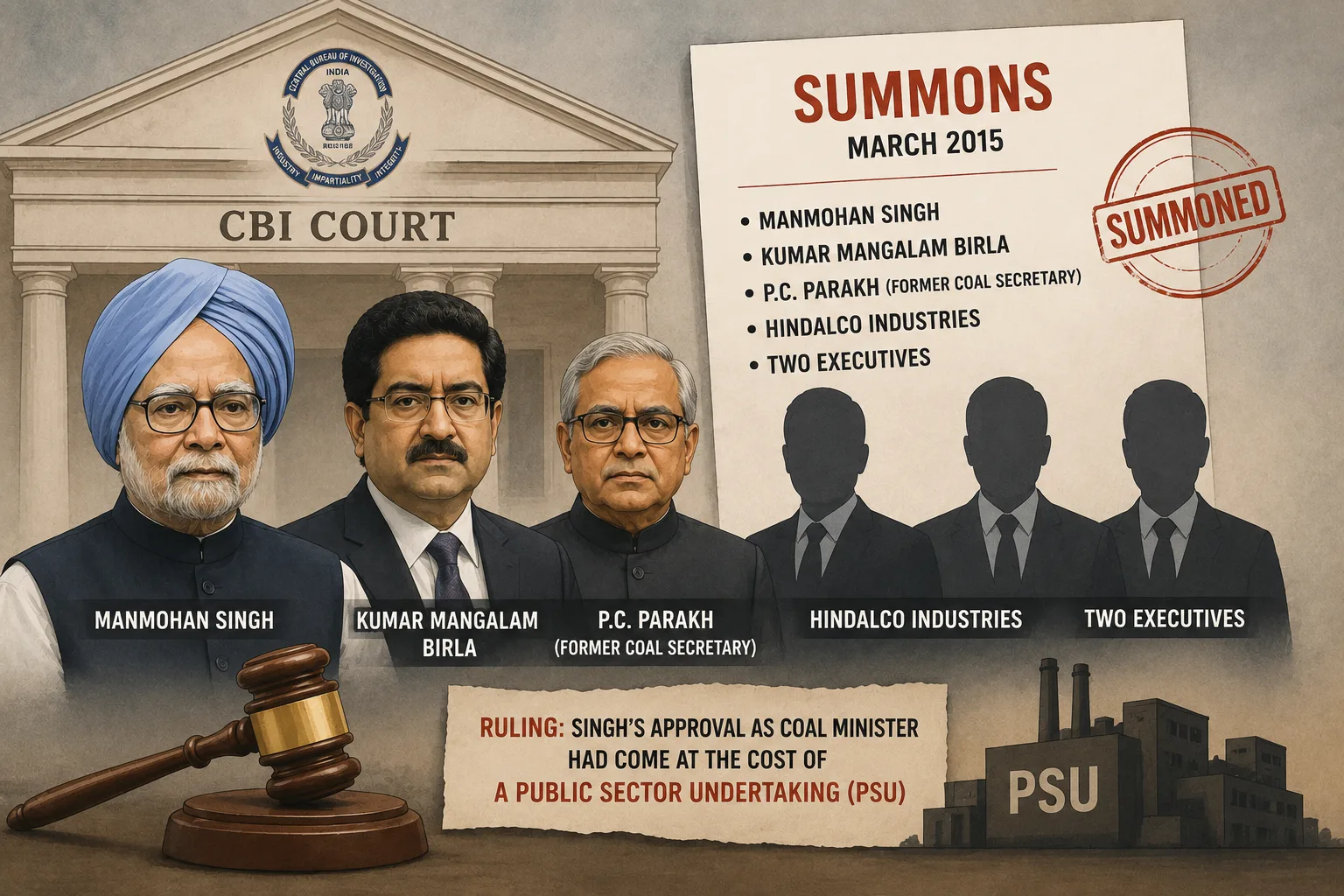
A special CBI court rejected those findings in March 2015 and summoned Singh along with industrialist Kumar Mangalam Birla, former Coal Secretary P.C. Parakh, Hindalco Industries and two of its executives, ruling that Singh’s approval as coal minister had come at the cost of a public sector undertaking (PSU).
Singh maintained throughout that the allocation was an administrative decision taken within the policy framework of the time and denied any criminal wrongdoing.
He challenged the summons within weeks, and the Supreme Court stayed the order that April, leaving the case unresolved for more than a decade.
VIDEO | Delhi: On the Supreme Court closing a criminal case against former PM Manmohan Singh in a coal block allocation case, Congress MP Manish Tewari says, "On January 4, 2014, Prime Minister Dr. Manmohan Singh held his last press conference as Prime Minister. I had anchored… pic.twitter.com/EY4oEVPg4Z
— Press Trust of India (@PTI_News) July 30, 2026
More than procedure was at stake
Appearing for Singh at the recent hearing, senior advocate Kapil Sibal argued that although the appeal could technically have lapsed after his death, the adverse remarks recorded against him needed to be formally undone.
He contended that the trial court had held Singh vicariously responsible for a policy decision even though the CBI’s own investigation, conducted twice, found nothing to link him to any wrongdoing.
At one point, he remarked, “The mood of the nation was different then. It’s different today.”

Senior advocate Abhishek Manu Singhvi made a similar plea on Singh’s behalf. The Bench agreed, holding that the special judge had ignored settled principles governing when a court may reject an investigating agency’s closure report and ordered the observations against Singh to be expunged.
Irony just died again. The cleanest man in Indian politics did not need an SC certificate of his integrity. Instead it is those who sought to implicate him in these charges who ought to be thoroughly ashamed of themselves. pic.twitter.com/dVrhtSFG0i
— Shashi Tharoor (@ShashiTharoor) July 30, 2026
Politics was never far behind
The order came during the hearing of a wider batch of pending coal block matters, and the CBI’s counsel, senior advocate RS Cheema, noted that separate questions, including the validity of certain provisions invoked against the other accused, remain part of that ongoing litigation.
The verdict drew a swift political reaction, with Congress MP Pawan Khera remarking, “As is now abundantly clear, ‘India Against Corruption’ was, in fact, ‘Corruption Against India.'”
Sibal, who represented Singh’s family in the matter, described the outcome as a vindication of the former prime minister in a post on social media after the ruling.
Dr Manmohan Singh
— Kapil Sibal (@KapilSibal) July 29, 2026
A moment of great satisfaction for Dr Singh’s family, well wishers and for me personally
The cognisance taken by the special court was set aside today by the Supreme Court
This is a vindication of his righteousness
The final page for Singh, the next for Coalgate
For Singh, the ruling brings the last of the coal block allocation cases against him to a close, more than eleven years after he was first summoned and more than a year and a half after his death.
The broader coal block litigation involving the other accused continues before the courts.
Also Read | PM Modi likely to host Xi Jinping, Putin at BRICS Summit in Delhi amid West Asia tensions
FAQs
Q1: Why did the Supreme Court clear Manmohan Singh in the coal block case?
The Supreme Court set aside the 2015 trial court order summoning Manmohan Singh, holding that there was no sufficient basis to reject the CBI’s closure reports.
Q2: What was the Talabira-II coal block allocation case?
The case concerned the 2005 allocation of Odisha’s Talabira-II coal block, which became part of the wider Coalgate controversy over coal block allocations without competitive auctions.
