























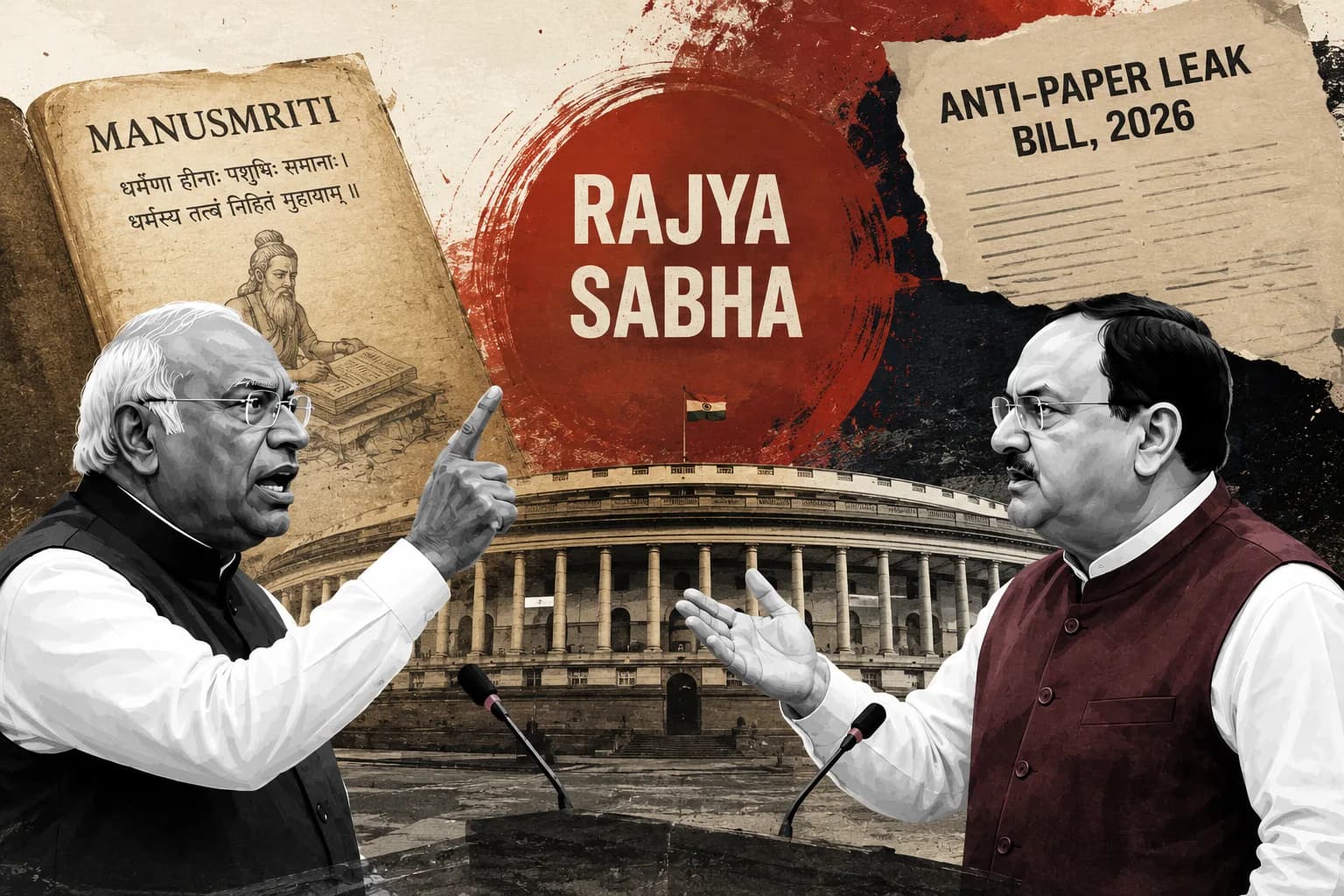
The Rajya Sabha debate on the Public Examinations (Prevention of Unfair Means) Amendment Bill, 2026, turned into a political confrontation on Thursday after Leader of Opposition (LoP) Mallikarjun Kharge invoked the Manusmriti in the course of his remarks.
Kharge referred to the ancient text while arguing that its elements were entering the syllabus, prompting protests from the treasury benches.
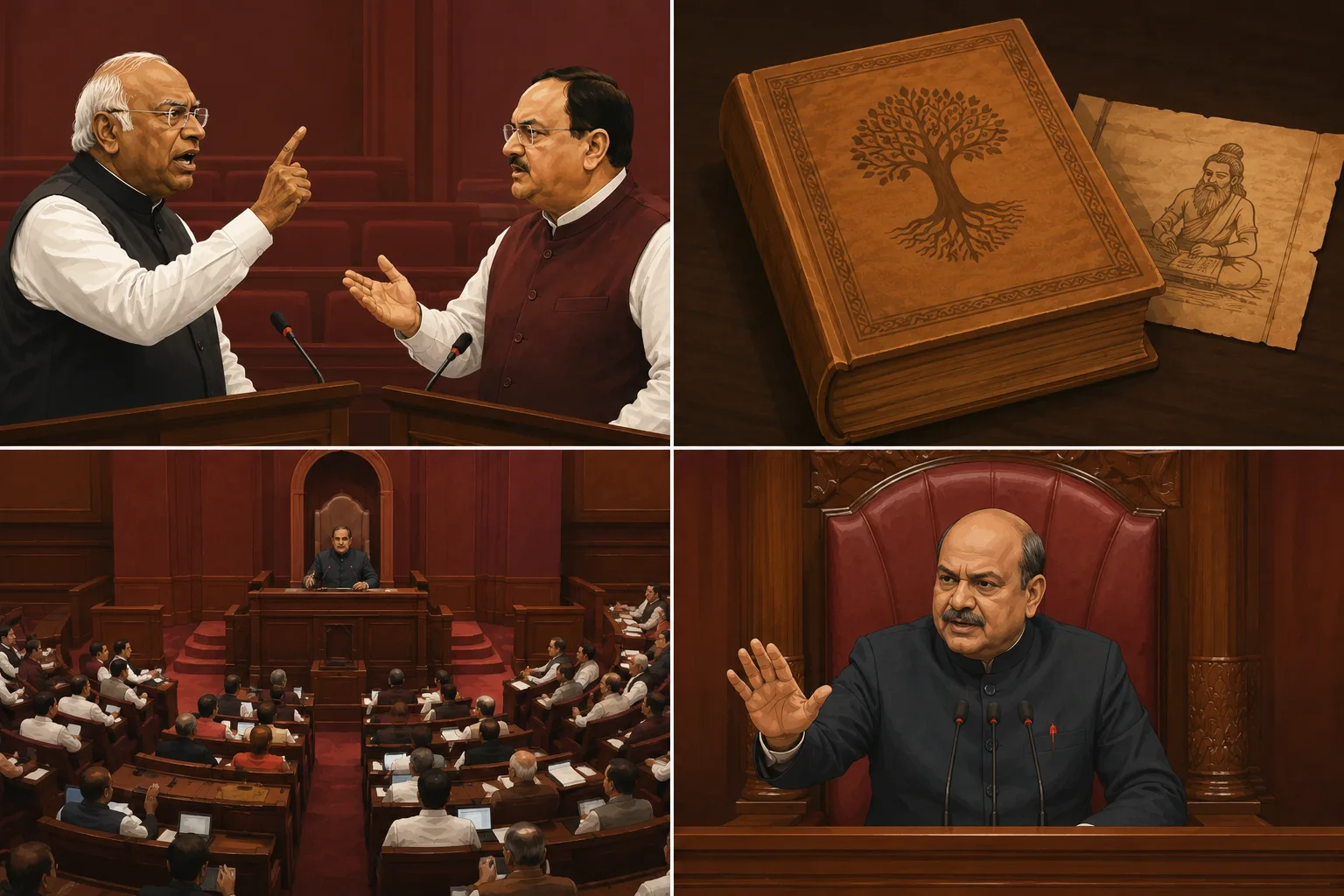
Leader of the House J.P. Nadda objected to the reference and asked that the remarks be authenticated, while the Chair questioned what Manusmriti had to do with the Bill.
The Bill had already been passed by the Lok Sabha on Wednesday before moving to the Upper House.
Also Read | Carrying extra bags on a train? Indian Railways’ July 31 update changes the booking process
When Mallikarjun Kharge, the Leader of the Opposition in the Rajya Sabha, cited verses from the Manusmriti to highlight the atrocities committed against Shudras, BJP MPs became uncomfortable and created an uproar. pic.twitter.com/4wENfrfn6N
— The Dalit Voice (@ambedkariteIND) July 30, 2026
What is the Manusmriti, and why did it come up in the Rajya Sabha?
The Manusmriti, also known as the Manava-Dharmashastra or Laws of Manu, is an ancient Sanskrit Dharmashastra text usually dated by scholars to the second century CE.
It is best understood as a normative text on law, duty and social conduct, not as the single lawbook of Hindu society.
Cambridge emphasises that it should not be mistaken for ‘the’ lawbook of the Hindus, a view that remains central to how historians read the text today.
The Manusmriti is a hot-topic in modern India because some of its passages prescribe a hierarchical social order based on varna (social class).
It outlines social directives regarding the status of women and lower-caste groups.
That was criticised by social reformers, constitutional thinkers and Dalit leaders, including B.R. Ambedkar, who viewed the text as symbolising caste-based discrimination.
Presently, scholars note that the work exists in multiple manuscripts with textual variations. There is little historical evidence to suggest it functioned as a uniformly applied legal code across the subcontinent.
In the House, Kharge alleged that elements of the Manusmriti were finding their way into the education syllabus.
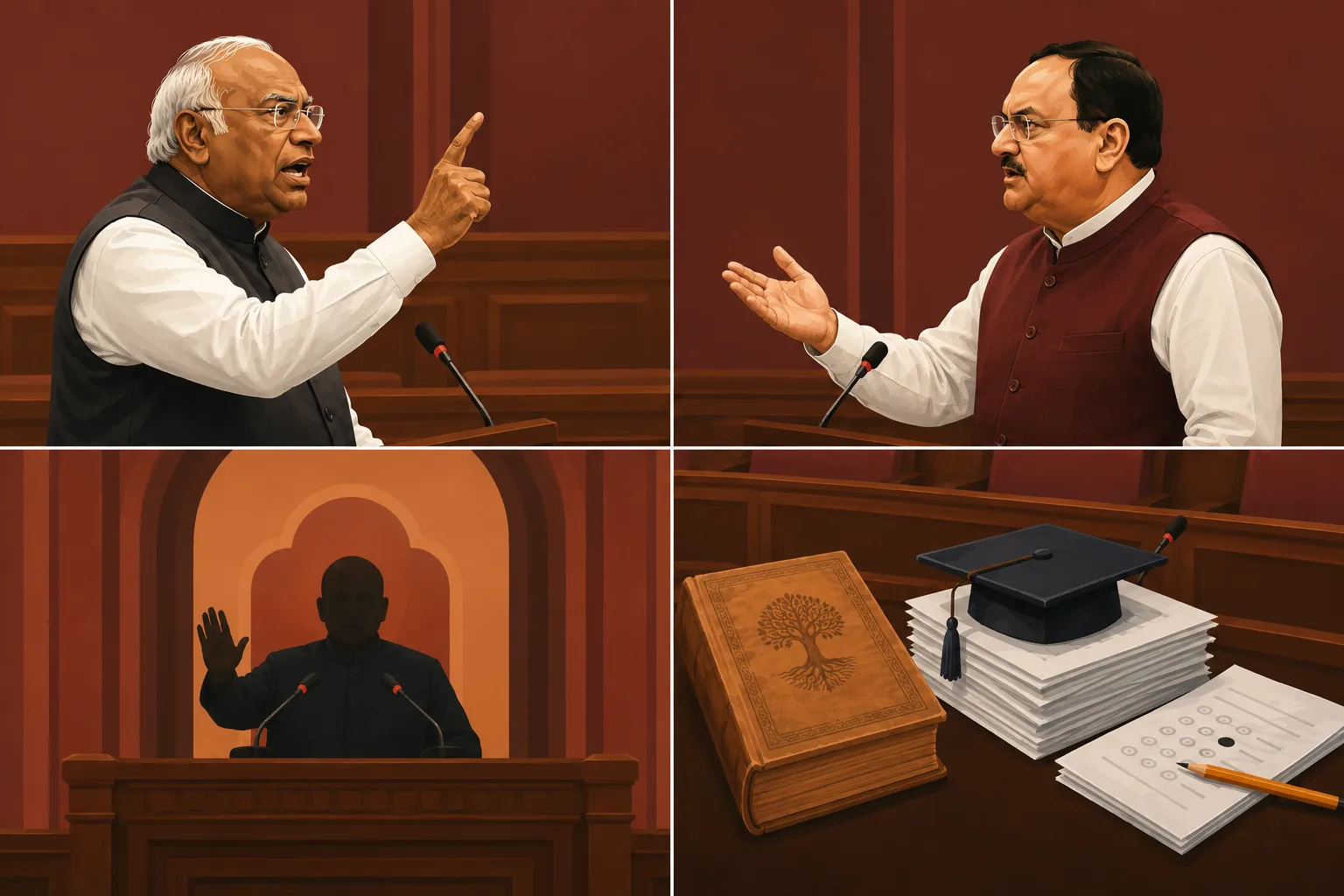
That reference drew protests from the treasury benches, J.P. Nadda objected and asked for the remarks to be authenticated, and the Chair questioned what the Manusmriti had to do with the Bill.
🔴 संसद में मनुस्मृति को लेकर हंगामा
— @PranshuYadav ⭐ (@pranshu_ahir) July 30, 2026
कांग्रेस अध्यक्ष मल्लिकार्जुन खरगे ने संसद में मनुस्मृति का उल्लेख करते हुए कहा कि उसमें ऐसे प्रावधान बताए गए हैं जिनके अनुसार “यदि कोई वेद के अक्षरों का उच्चारण करे तो उसकी जीभ काट दी जाए।”
इस टिप्पणी के बाद सदन में सत्ता पक्ष और विपक्ष के… pic.twitter.com/Eu4TJ9EknU
Opposition questions timing and intent
Kharge’s intervention was not limited to the Manusmriti reference. He argued the proposed law does little to stop leaks before they happen and that the government had taken two years to bring an amendment to the 2024 law.
The LoP questioned, “Why are you doing it now, two years later?” and described the measure as a response to student anger rather than a structural fix.
He also linked the discussion to the broader fallout from examination scandals and student protests, pressing the government to explain why stronger action had not come earlier.
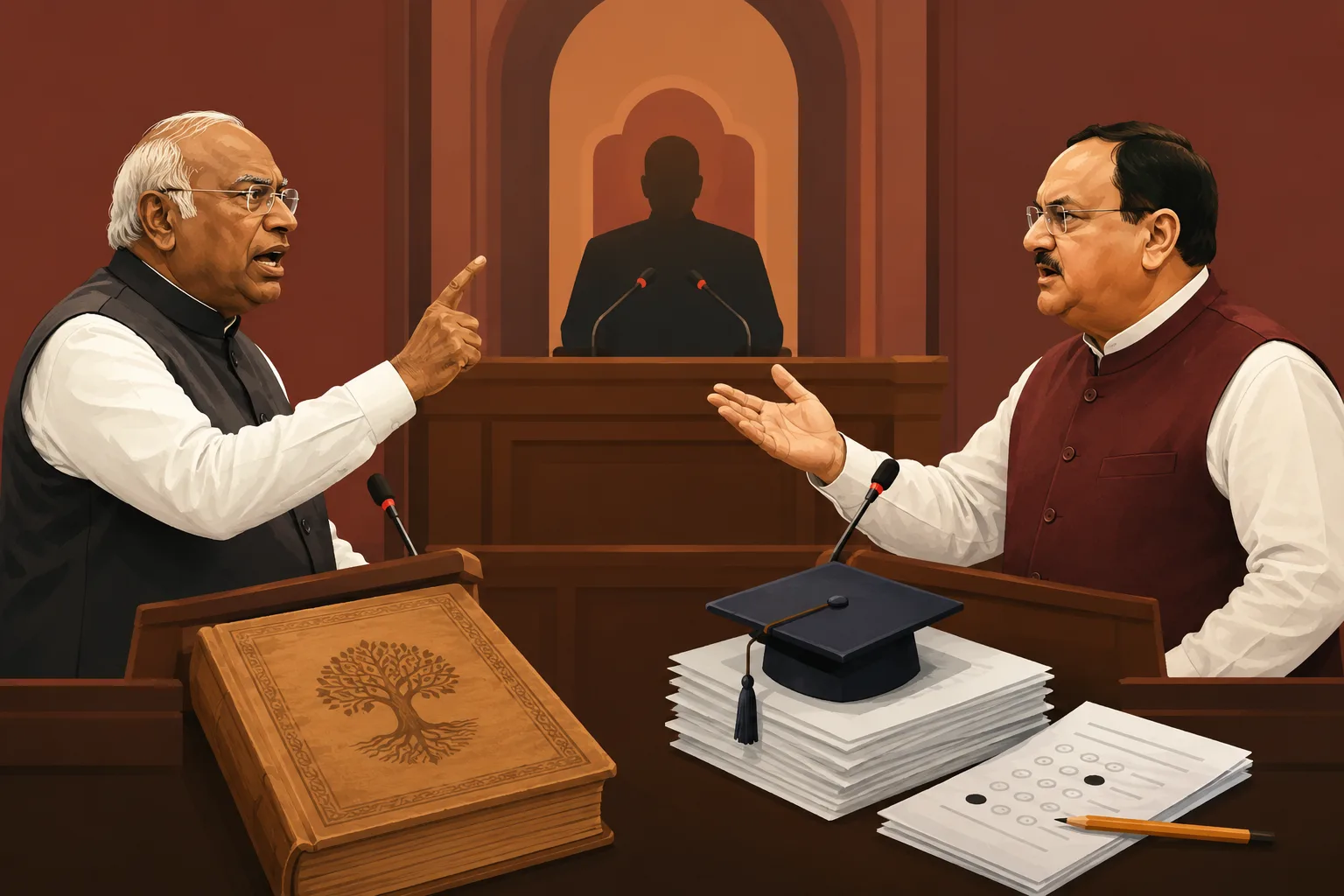
Nadda pushed back, saying the Opposition should only quote the original text in the House and insisted that the remarks were not based on facts.
Also Read | Mallikarjun Kharge targets PM Modi over midnight Instagram message to students
Senior BJP Minister JP Nadda is Openly Defending Manusmriti on the Floor of the Parliament.
— CPI – Communist Party of India (@CPI_National) July 30, 2026
Is there any doubt left that the RSS-BJP abide by the Manusmriti and not our Constitution? pic.twitter.com/bCBipDLCj7
What the amendment seeks to change
The Bill itself is designed to tighten the framework created by the Public Examinations (Prevention of Unfair Means) Act, 2024.
The law applies to public examinations run by bodies such as the UPSC, SSC, Railway Recruitment Boards (RRB), IBPS, the National Testing Agency (NTA), central ministries, and other notified authorities.
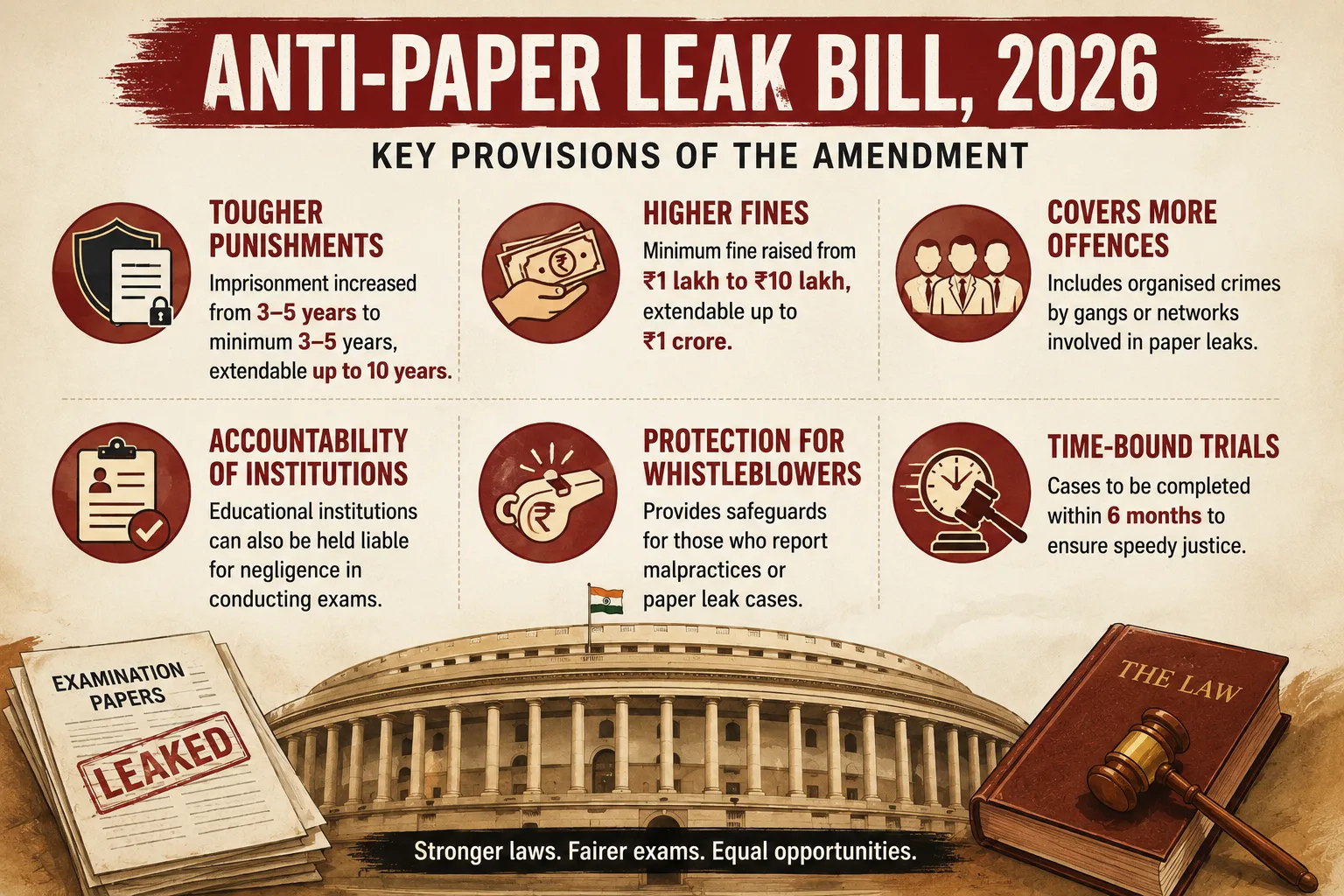
The amendment raises punishment for individuals using unfair means from three to five years’ imprisonment and a fine of up to ₹10 lakh to a proposed 5- to 10-year jail and a fine of up to ₹50 lakh.
For service providers, the maximum fine would rise from ₹1 crore to ₹5 crore, while debarment from conducting examinations would increase from four years to eight years.
In organized crime cases, the minimum jail term would go up to seven years and the minimum fine to ₹10 crore.
यथैवात्मा तथा पुत्रः पुत्रेण दुहिता समा ।
— Fuhrer (@GroFaZ_) July 28, 2026
तस्यामात्मनि तिष्ठन्त्यां कथमन्यो धनं हरेत् ॥
They abuse Manusmriti which gave inheritance rights to girl child thousands of years even before the word feminism was coined
Government’s enforcement push meets Opposition’s scepticism
The government has framed the amendment as a deterrence and enforcement measure. The statement of objects and reasons says the changes are meant to strengthen fairness, improve the credibility of the public examination system, and facilitate speedy investigation and trial.
PIB says the Bill empowers the Centre to refer cases to a special task force, mandates completion of investigation within two months, and provides for Special Fast Track Courts to hear such cases on a day-to-day basis.
Trials are to be completed within three months of the charge sheet, while appeals before the High Court are to be filed within 30 days and disposed of, as far as possible, within three months.
The debate in the Rajya Sabha showed that even as the government seeks to harden the law, the Opposition continues to argue that exam leaks are as much a governance failure as a criminal one.
Also Read | Delhi Metro ridership dropped during Jantar Mantar protests
FAQs
Q1: What is the Manusmriti?
The Manusmriti is an ancient Sanskrit text on law, duty and social conduct. It remains controversial for passages on caste and gender.
Q2: Why did Mallikarjun Kharge’s Manusmriti remarks trigger a row in Rajya Sabha?
Kharge’s reference to Manusmriti during the anti-paper leak Bill debate drew objections from the treasury benches, with J.P. Nadda questioning its relevance and authenticity.
Q3: What does the Public Examinations (Prevention of Unfair Means) Amendment Bill, 2026 propose?
The Bill proposes stricter penalties, faster investigations and special fast-track courts to tackle paper leaks and other examination-related offences.
