



























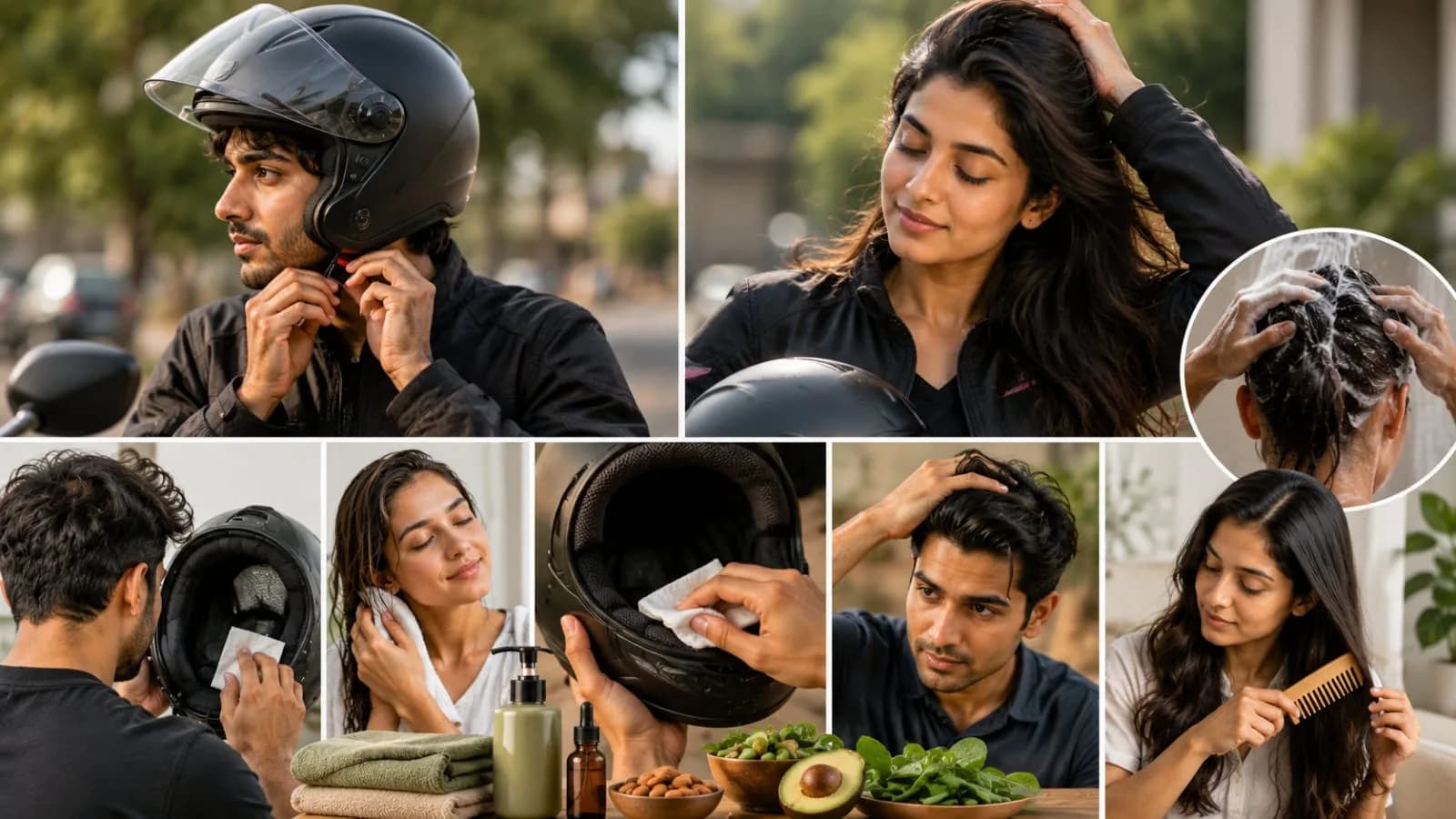
Wearing a helmet every time you ride a bike or scooter is one of the smartest ways to stay safe on the road but it can lead to hair loss. If you wear one often, you may notice your scalp feeling sweaty, oily and itchy after a while.
Many riders also worry that long hours in a helmet might be causing their hair to fall out.
Here’s the thing, helmets by themselves don’t directly cause hair loss. Genetics, diet, stress, hormones and overall scalp health play a much bigger role in that.
That said, helmets can trap heat and moisture against your scalp, and if you’re not keeping up with proper hygiene, this warm, humid environment can lead to scalp discomfort over time.
Never wear a helmet on wet hair
If you’ve just washed your hair, make sure it’s completely dry before putting on your helmet. Damp hair traps moisture inside, creating the perfect environment for sweat buildup, itchiness and dandruff.
Keep your helmet lining clean
According to News 18, the inner padding of your helmet absorbs sweat, oil and dust over time. If it’s not cleaned regularly, that buildup keeps coming into contact with your scalp. If your helmet has a removable liner, wash it every so often. If it doesn’t, simply wipe the interior with a mild cleanser and let it dry completely before your next ride.
Let your hair breathe after every ride
As soon as you take your helmet off, leave your hair open for a few minutes. This lets trapped sweat evaporate and helps your scalp cool down naturally. Try not to tie your hair up right away or cover it with another cap, as this only traps the moisture in again.
Also Read | Healthy relationships start with these 10 everyday green flags
Refresh your scalp if you sweat a lot
In hot, humid weather, sweating a lot while riding is only natural. If your scalp feels sticky once you’re home, just rinse it with clean water.
You don’t need to shampoo daily unless it’s really needed, a simple rinse is often enough to wash away sweat, and you can use a mild shampoo whenever required.
Avoid tight hairstyles under your helmet
Skip tight ponytails or buns before putting your helmet on. Tight hairstyles pull on your hair roots and can lead to more breakage over time. A loose ponytail or braid is a much more comfortable option and puts far less strain on your hair.
Also Read | Gen Z’s 6-7 dating trend: Why stability is winning
Detangle hair gently
Helmet hair is real, and it happens to everyone. Once you take your helmet off, use a wide-tooth comb to gently work out any knots. Avoid brushing too roughly, since tangled hair breaks more easily under pressure.
Maintain a clean scalp
A healthy scalp is the real foundation of healthy hair. Sweat, excess oil and dirt can worsen existing scalp issues if left unchecked. Wash your hair based on what suits your hair type, not too often, and not too rarely, to keep your scalp balanced.
Also Read | What is a placeholder partner? The dating trend explained
Nourish your hair from within
Good hair health actually starts with what you eat. Add protein, iron, vitamins and healthy fats to your diet, drink enough water, get proper sleep and try to manage stress. These everyday habits do far more for preventing hair fall than helmet use ever could.
If you notice excessive hair loss, ongoing itching, redness or any signs of a scalp infection, don’t just rely on home remedies. It’s best to consult a dermatologist or hair specialist who can identify the real cause and suggest the right treatment.
FAQS
Q1. Can wearing a helmet cause hair loss?
Not directly. Genetics, diet, stress and hormones play a much bigger role, though poor helmet hygiene can worsen scalp discomfort.
Q2. Should I wear a helmet on wet hair?
No, always let your hair dry completely first, as damp hair traps moisture and causes itchiness.
