














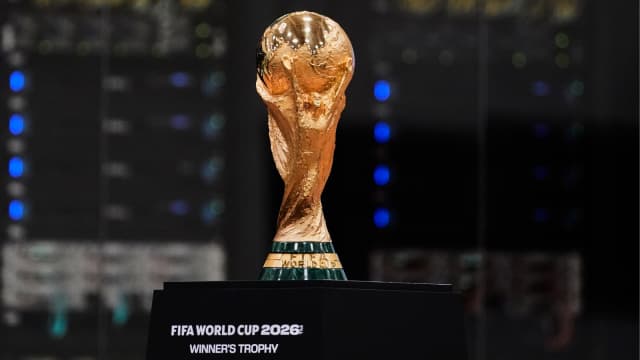







Didier Deschamps’ remarkable 14-year spell as France head coach is coming to an end, but the questions surrounding his tactical legacy remain. After France’s 2-0 defeat to Spain in the FIFA World Cup 2026 semifinal, the same opponent that repeatedly challenged his methods has once again highlighted the strengths and limitations of his approach.
Deschamps will take charge of France for the final time in Saturday’s third-place playoff in Miami, closing one of the most successful managerial eras in international football.
A historic reign filled with consistency
Since taking over France in 2012, Deschamps has delivered an extraordinary run of results at major tournaments. He guided Les Bleus to the UEFA Euro 2016 final, lifted the 2018 FIFA World Cup, reached another World Cup final in 2022, followed that with a Euro 2024 semifinal and then another World Cup semifinal in 2026.
His achievements placed France among the world’s most consistent international teams for more than a decade.
However, despite having one of the strongest attacking pools in world football, featuring Antoine Griezmann, Karim Benzema, Olivier Giroud, Kylian Mbappe, Ousmane Dembele, and later Michael Olise, Bradley Barcola, and Desire Doue, France won only one major title during that period.
Also Read | Spain beat France 2-0 to reach FIFA World Cup Final after 16 years
Spain continued to be France’s toughest challenge
Spain repeatedly proved to be the side that troubled Deschamps the most.
The pattern first became clear during the UEFA Euro 2024 semifinal. France took an early lead through Randal Kolo Muani, but Spain quickly took control as Lamine Yamal and Dani Olmo turned the game around before halftime. Their dominance with the ball exposed the difficulty France faced against teams capable of controlling possession and dictating the tempo.
That defeat prompted Deschamps to rethink his approach.
France changed its style before the 2026 World Cup
Following France’s Olympic silver medal campaign later in 2024, Deschamps gradually moved away from his long-used 4-3-3 formation. He adopted a more attack-minded 4-2-3-1 system that allowed Mbappe, Dembele, Olise and Doue to play together in the same lineup.
The new setup suffered another setback in the 2025 UEFA Nations League semifinal, where France lost a dramatic 5-4 contest against Spain. Despite the defeat, France created numerous chances and matched Spain for long spells, giving Deschamps confidence that the tactical transition was moving in the right direction.
🗣️ Didier Deschamps 🇫🇷 : « Maintenant, moi, je vous demande, et je ne vais pas y répondre : je ne veux pas passer pour une pleureuse parce qu’on a perdu, mais est-ce que l’arbitre de ce soir, avait le niveau pour arbitrer une demi-finale de Coupe du monde ? » pic.twitter.com/XAYrU8s0I0
— Mercato Blaugrana (@MercatoBlaugra) July 14, 2026
That belief carried into the 2026 World Cup.
France won all three group matches before defeating Sweden, Paraguay and Morocco in the knockout rounds. Entering the semifinal, they were the tournament’s highest-scoring team.
Spain once again controlled the game
The semifinal followed a familiar script. Spain’s midfield trio of Rodri, Fabian Ruiz and Dani Olmo dominated possession and limited France’s ability to launch quick attacks. Mbappe, Dembele, Olise and Barcola rarely found the space they had enjoyed throughout the tournament.
France managed only three shots on target, with their first effort on target arriving as late as the 81st minute. Spain goalkeeper Unai Simon had little to do because France struggled to break through Spain’s organised defensive structure.
Also Read | Who is performing at the FIFA World Cup 2026 closing ceremony? Full list inside
Deschamps attempted to change the flow of the game by dropping Olise deeper, introducing Manu Kone at halftime, and later bringing on Rayan Cherki. None of the adjustments altered Spain’s control, and Pedro Porro eventually doubled Spain’s lead after exploiting the space left behind by France’s attacking setup.
A legacy that will continue to be debated
For years, Deschamps faced criticism for favouring defensive balance over attacking flair. This World Cup appeared to be his response, with France playing a more adventurous brand of football built around its young attacking stars.
Yet the semifinal against Spain showed the same reality that had challenged France before. Individual quality was not enough against a side whose collective structure controlled every phase of the game.
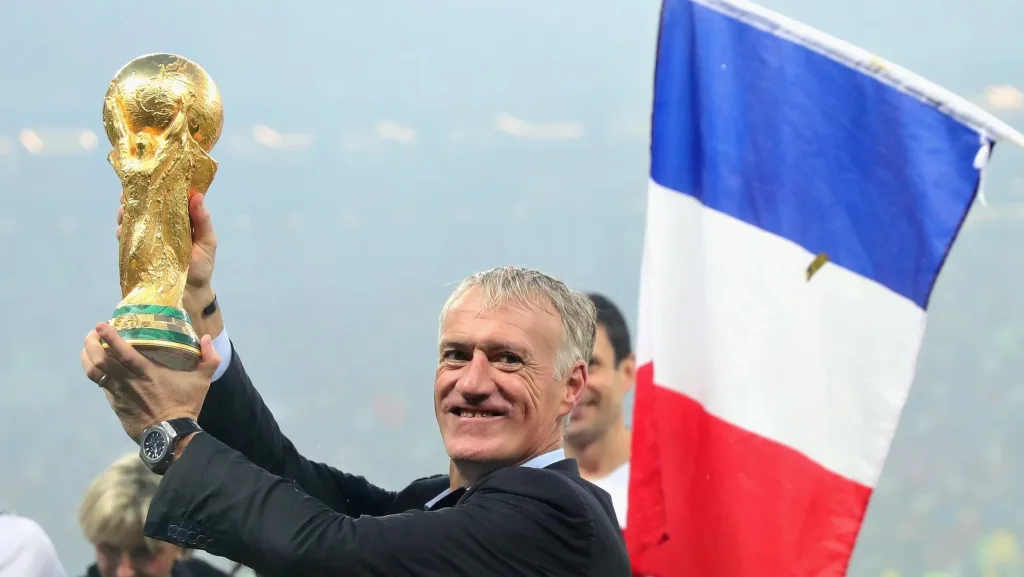
Deschamps leaves France having restored the nation to the top level of international football and delivering its second FIFA World Cup title. His record guarantees his place among the game’s most successful international coaches.
Still, one question will continue to shape discussions about his tenure: “Did his pragmatism maximise France’s chances of winning? Or did it ultimately prevent arguably the greatest generation of French footballers from building an even greater legacy?”
FAQs
Why was Spain a difficult opponent for Didier Deschamps’ France?
Spain consistently controlled possession and dominated midfield, limiting France’s attacking strengths in key knockout matches.
After how many years will Didier Deschamps be leaving as France head coach?
Deschamps will step down after France’s third-place playoff at the FIFA World Cup 2026, ending his 14-year tenure.
