
























Containing Lionel Messi has challenged the world’s best coaches for more than two decades. His ability to score from impossible angles, create chances with precise passing and dictate matches makes him one of football’s most difficult players to defend.
As Spain prepare to face Argentina in the FIFA World Cup 2026 final, one of the most successful methods of limiting Messi’s influence comes from Germany’s approach in the 2014 World Cup final.
Rather than relying on one defender to follow Messi across the pitch, Germany built a disciplined defensive structure that denied him both time and space. That tactical blueprint could offer Spain valuable lessons ahead of the title clash.
Messi 2014 WC finalinde 2 penaltısı verilmedi ağlamadı. Arkadaşı yüzde yüzleri kaçırdı bir şey demedi
— Bilgehan 🇦🇷 (@bilgehanyntr) July 14, 2026
Rakibine hep saygı gösterdi tebrik etti. O zamanda da tarihin en iyisiydi ama dünyası yıkıldı sonraki 5 yıl da korkunçtu
Ama hikayenin sonu güzel kalbine göre oldu yine olacak pic.twitter.com/Nlaz4W0VjT
Why does man marking rarely work against Messi?
Many teams have attempted to stop Messi by assigning a single player to track him throughout the game. The problem with that strategy is Messi’s movement. He frequently drifts into different areas, pulling defenders out of position and creating spaces for teammates to exploit.
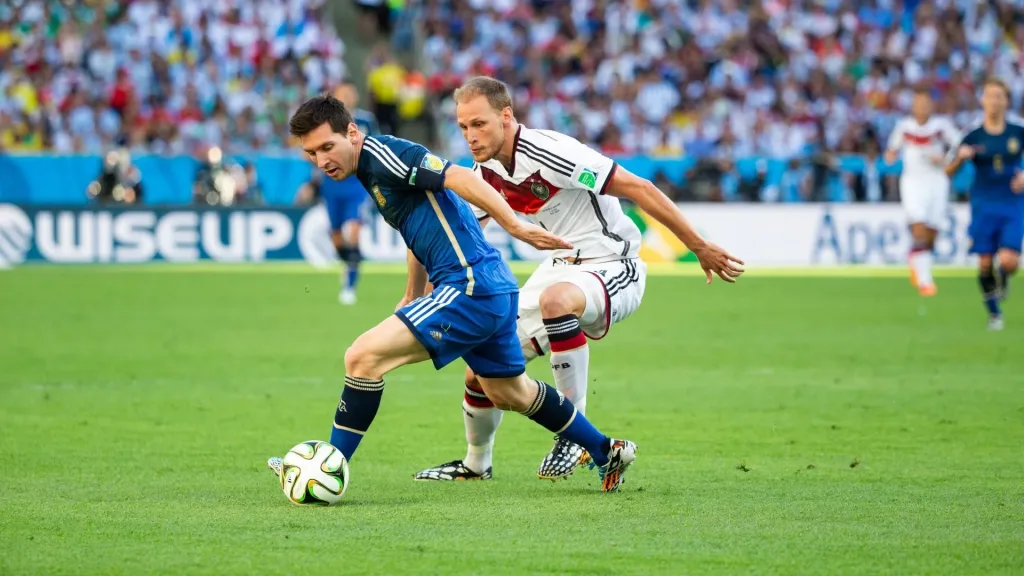
Germany avoided that trap in the 2014 final. Instead of chasing Messi everywhere, the German players defended zonally. Whenever he entered a particular area, the nearest defender stepped forward to apply pressure while two or three teammates immediately moved into supporting positions.
This created a constantly shifting defensive block around Messi, limiting his passing options and reducing the time available for him to turn and attack.
Cutting off Messi’s favourite areas
One of the biggest reasons behind Germany’s success was preventing Messi from receiving possession in dangerous attacking zones.
The Argentina captain is at his most effective when operating in the central attacking areas or drifting into the right half-space before cutting inside onto his stronger left foot.
Germany recognised that threat early. Bastian Schweinsteiger played a vital role by shielding the defensive line and disrupting passes into Messi. Rather than waiting for the Argentine captain to receive the ball, he focused on stopping the supply from deeper midfield positions.
Whenever Messi managed to collect possession, Schweinsteiger quickly closed him down and turned every duel into a physical contest.
Germany had no idea what beating Messi in 2014 would cost them. They’ve never looked the same since. pic.twitter.com/fQ304ydmWz
— FootyCuler💙❤️ (@barca_supremacy) June 29, 2026
Germany forced Messi away from goal
Germany also paid close attention to Messi’s preferred direction of attack. Knowing that his left foot creates most of his biggest moments, the German defenders consistently showed him towards the touchline instead of allowing him to move inside.
Deploying Benedikt Howedes at left back alongside Mats Hummels added defensive solidity on that side. Their positioning reduced the space available for Messi to cut onto his stronger foot while forcing him into wider areas with fewer attacking options.
The approach helped Germany limit both his shooting opportunities and his creative passing into central areas.
Why could Rodri be Spain’s most important player?
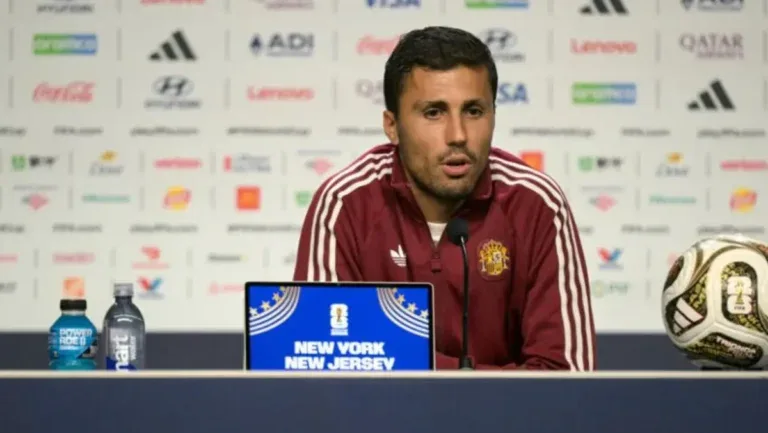
Spain now have a midfielder capable of performing a similar role in Rodri. The Spain captain has been one of the standout performers throughout the tournament, combining defensive awareness with excellent ball retention.
Also Read | Lionel Messi sends emotional message to Argentina before FIFA World Cup 2026 final against Spain
His primary responsibility in the final could be preventing passes into Messi before the Argentina captain even receives possession.
Messi thrives in the spaces between midfield and defence. Rodri’s positioning allows him to close those passing lanes while protecting Spain’s back four without abandoning his own defensive shape. Stopping Messi is not only about tackling him. It also means preventing the ball from reaching him in areas where he can influence the game.
Discipline could decide the World Cup final
Even the strongest tactical plan can fail without discipline. Germany’s success in 2014 came from every player understanding their defensive role and maintaining the team’s shape throughout the match.
Spain will likely need the same level of concentration if they hope to contain Messi.
Argentina are dangerous in transition, with Rodrigo De Paul and the midfield often working quickly to find their captain after winning possession. Spain’s players surrounding Messi must remain organised and avoid being drawn into unnecessary physical confrontations that could disrupt their structure.
Argentina are dangerous in transition, with Rodrigo De Paul and the midfield often working quickly to find their captain after winning possession. Spain’s players surrounding Messi must remain organised and avoid being drawn into unnecessary physical confrontations that could disrupt their structure.
Messi will become the oldest outfield player to ever play in a World Cup final 🔥 pic.twitter.com/hQr32lqaJK
— ESPN FC (@ESPNFC) July 18, 2026
If Rodri and his teammates succeed in limiting Messi’s touches, closing central passing lanes and controlling possession, Spain will give themselves the best possible chance of reducing the influence of Argentina’s biggest match winner.
For Spain, the objective is not simply to stop Messi once he has the ball. The greater challenge is ensuring he receives it as little as possible in the areas where he is capable of deciding another FIFA World Cup final.
Also Read | Kylian Mbappe says World Cup goals record means little after France missed the final
FAQs
How did Germany stop Lionel Messi in the 2014 World Cup final?
Germany used a disciplined zonal defensive system, blocked passing lanes and denied Messi space instead of man-marking him.
Why is Rodri crucial for Spain against Lionel Messi?
Rodri can limit Messi’s influence by cutting off passing lanes, controlling possession and protecting Spain’s defensive structure.
