






















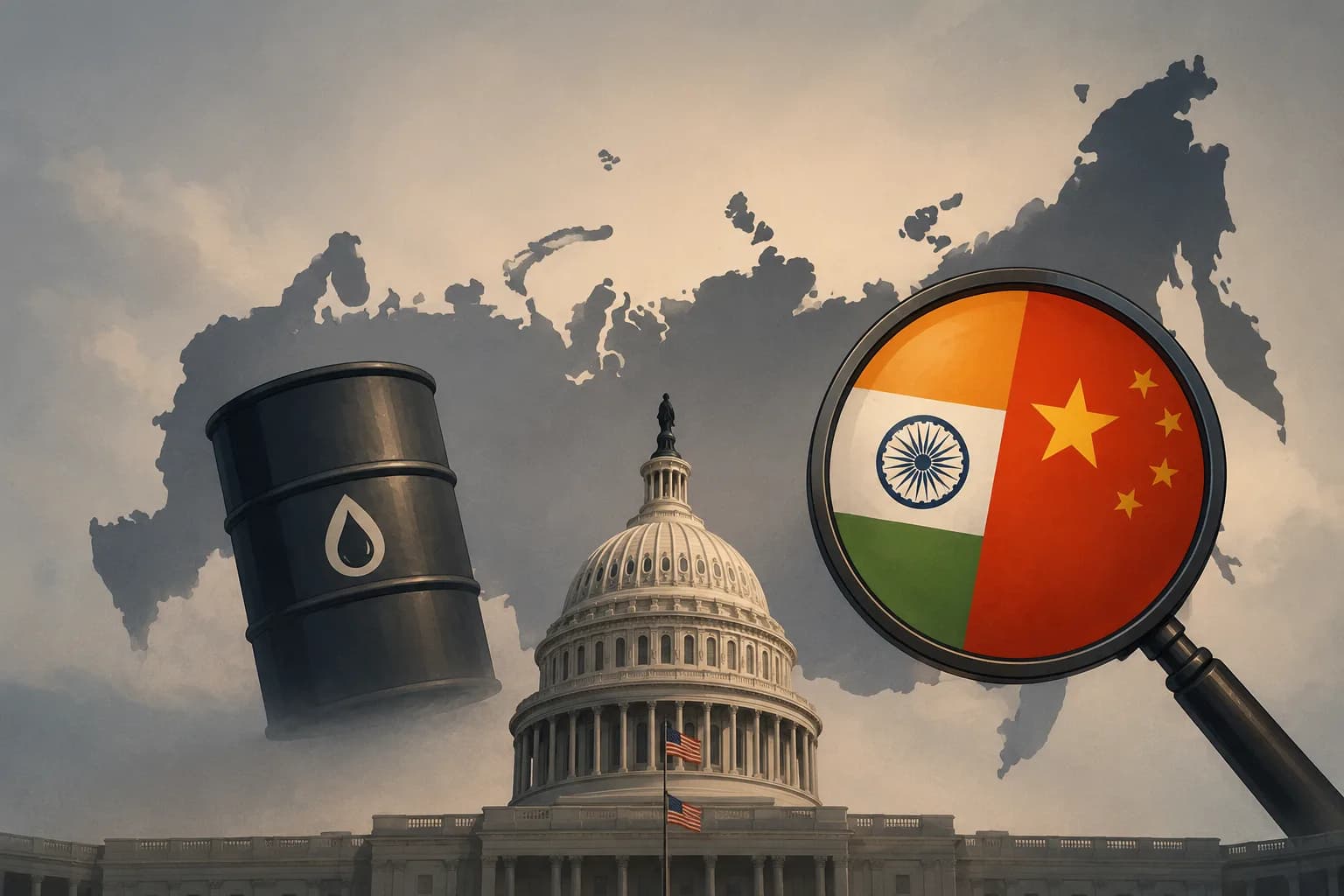
The US Senate on Tuesday advanced sweeping legislation aimed at tightening sanctions on Russia, with the measure drawing sharp attention for the tariff powers it could hand President Donald Trump against countries that continue buying Russian oil and gas.
The procedural vote passed 86-12, with the bill seeking sanctions on Russian officials and allowing tariffs of up to 100% on major consumers of Russian energy, including India and China.
US Senate advances Lindsey Graham’s Russia sanctions legislation in 86-12 vote
— Politics & Poll Tracker 📡 (@PollTracker2024) July 29, 2026
Senators who voted no
⬜️🟦Bernie Sanders
🟦Elizabeth Warren
🟦Massie Hassan
🟦Jon Ossoff
🟦Lisa Blunt Rochester
🟦Andy Kim
🟦Mazie Hirono
🟦Ed Markey
🟦Alex Padilla
🟦Ron Wyden
🟥Rand Paul pic.twitter.com/N2owplv0bS
The move marked an important early step, but the bill still faces additional Senate votes and, if it clears those, a House of Representatives review when lawmakers return in September.
Also Read | Zelensky backs US Russia sanctions bill that could hit India with 100% tariffs
Breaking: India, China will be targeted by upto 100% tariffs for buying Russian energy while Europe gets a free pass, admits US Senator
— Shashank Mattoo (@MattooShashank) July 29, 2026
"This bill is carefully crafted to make sure we are not hitting our allies and that we are hitting India and China" pic.twitter.com/N1wDBdjBBw
More than a vote, if the omens hold
The legislation is formally titled the Lindsey O. Graham Sanctioning Russia and Iran Act of 2026, named after the late Republican senator from South Carolina, whose funeral took place on the same day as the vote.
Ukrainian President Volodymyr Zelenskiy was in Washington to meet Trump and to watch the Senate action from the Capitol, calling the measure a strong signal of support for Ukraine.
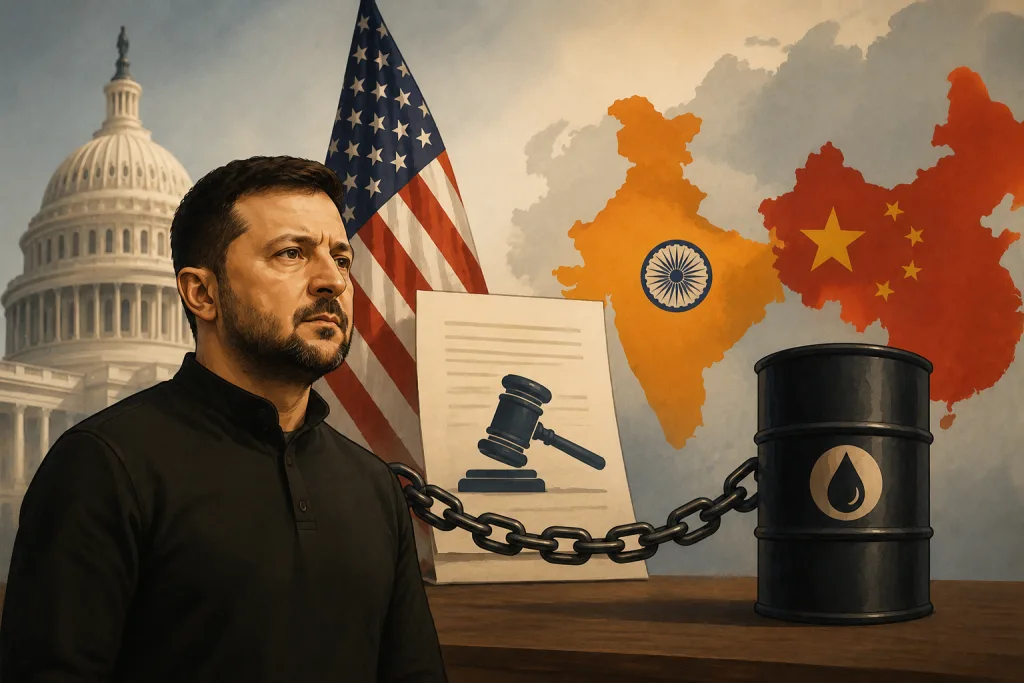
He said the sanctions would be “a big signal to Europe, a big signal to Ukraine, and big support of our people.”
Democratic Senator Richard Blumenthal, one of the bill’s co-sponsors, also expressed confidence after the vote, saying, “This bill is the one that will pass. This bill is the one that the president will sign.”
Breaking: Ukraine President Zelensky thanks US Senators for bill that threatens India and four other countries with up to 100% tariffs for buying Russian oil and gas pic.twitter.com/jHXeB9URH1
— Shashank Mattoo (@MattooShashank) July 29, 2026
The diplomatic gloves come off
The political message behind the bill was reinforced by Republican Senator Roger Wicker, who told reporters that the measure was designed to avoid hitting US allies while focusing on India and China.
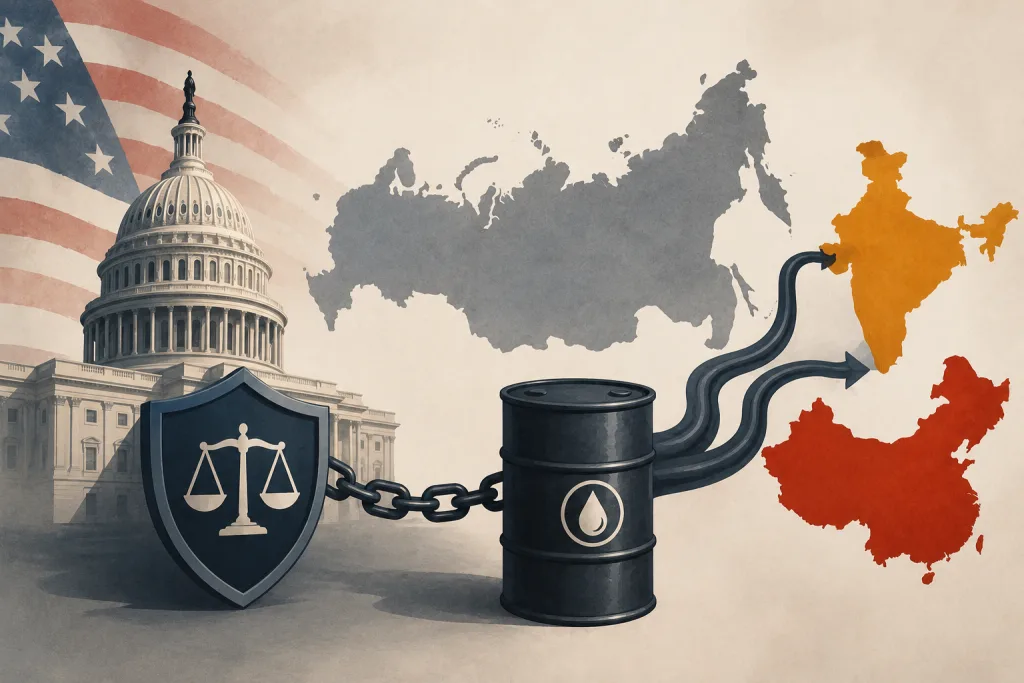
“China and India are the main culprits here,” he said.
Wicker added that the legislation was “carefully crafted” to make sure the United States was “not hitting our allies” while still targeting countries that buy the bulk of Russian oil and gas.
The measure would authorize stiff tariffs on China, India, and other countries to reduce dependence on Russian energy. Trump has said he would support the bill after asking for Iran sanctions to be added.
🇺🇸🇷🇺🇮🇷 U.S. Senate just advanced a major Russia and Iran sanctions bill by a massive 86-12 vote.
— Mario Nawfal (@MarioNawfal) July 29, 2026
It’s the Lindsey O. Graham Sanctioning Russia and Iran Act.
Gives the president power to slap tariffs of up to 100% on countries buying Russian energy, hits the shadow fleet,…
Not over the finish line just yet
Despite the strong Senate margin, the bill is not yet on a glide path. Some Democrats are uneasy about the tariff authority the legislation would give Trump, warning that it could raise import costs and expand presidential trade power in ways they oppose.
The bill must still survive further procedural steps in the Senate before any final passage and then face the House, where lawmakers are not expected back until September.
Supporters of the measure argue it is meant to choke off revenue that helps fund Moscow’s war effort and to tighten pressure on Iran as well, but its path forward will depend on whether lawmakers can keep together a coalition broad enough to move it from symbolic momentum to enacted law.
Also Read | US Senate’s new immigration bill could be a game-changer for Indian H-1B workers
FAQs
Q1: Why are India and China mentioned in the US-Russia sanctions bill?
India and China are among the largest buyers of Russian oil, making them key targets under the proposed sanctions and tariff provisions.
Q2: Has the US-Russia sanctions bill become law?
No, the bill has only cleared an initial Senate procedural vote and must pass both chambers of Congress before becoming law.
