









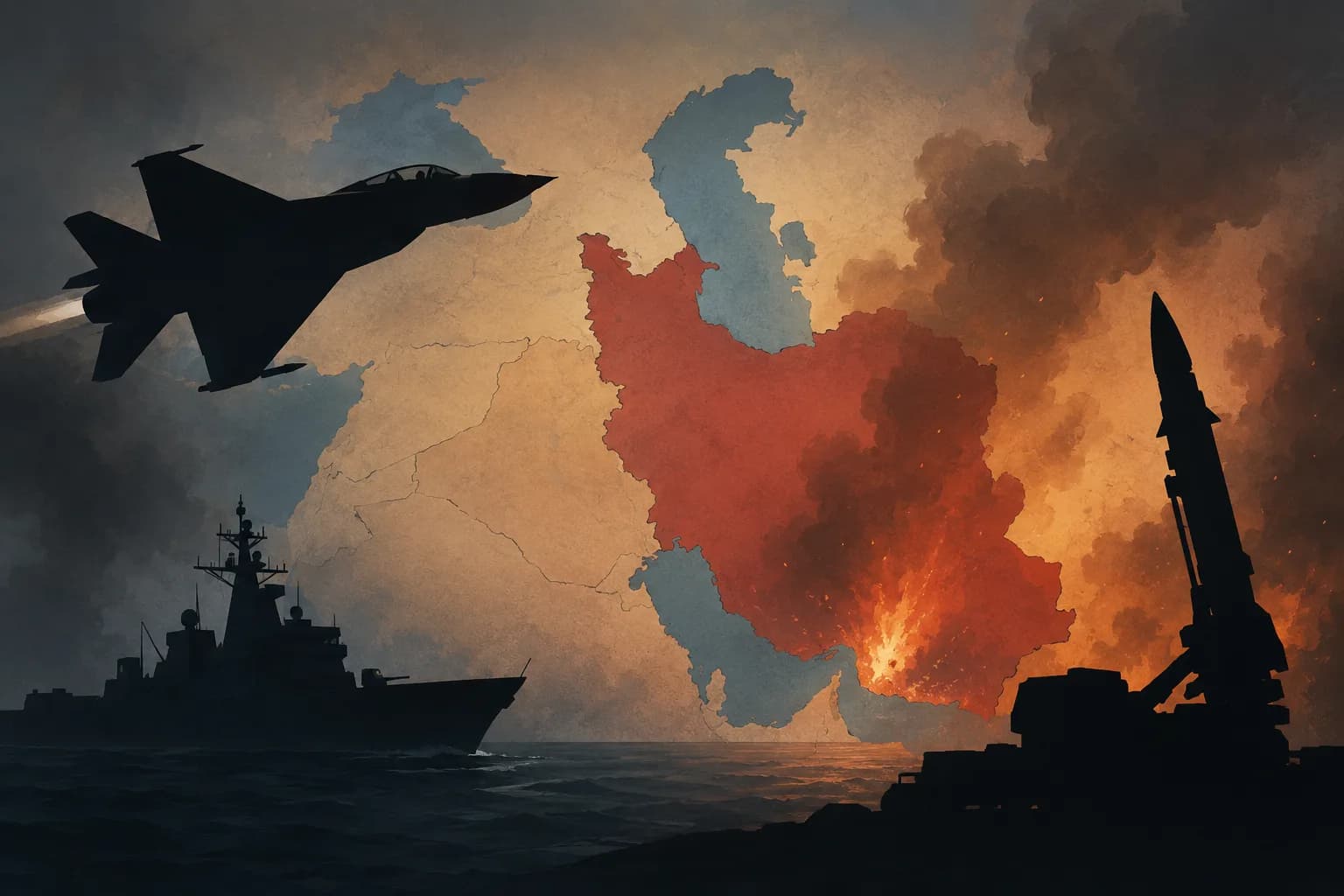













Iran said on Sunday that the memorandum of understanding it signed with Washington had “entered a stage of crisis”. The United States carried out strikes for a second day, and Tehran responded with attacks on US allies in the Gulf.
The developments came as the latest round of fighting revived fears over the Strait of Hormuz, the narrow waterway through which a major share of global oil trade passes, and pushed crude prices higher.
Also Read | World Population Day 2026: Get to know the most populous countries
BREAKING: US President Donald Trump says Washington is reinstating a naval blockade against Iran — but also says the US will demand a 20% fee on all cargo shipped to guarantee the Strait of Hormuz is open to other countries (on first reading, that equals to ~$15 per barrel!!!!) pic.twitter.com/ktpdkjrUOl
— Javier Blas (@JavierBlas) July 13, 2026
A parchment of promise, now under strain
The dispute centres on a 14-point interim pact that the White House sent to Congress in June. The pact outlined a 60-day negotiation window and a phased arrangement to halt the war, reopen the Strait of Hormuz and address harder issues such as Iran’s nuclear programme and sanctions relief.
Both sides said the memorandum would be signed in Switzerland and that traffic through the strait would begin reopening once it was signed, with further talks to follow over the next two months.
"We are reinstating the THE IRANIAN BLOCKADE, so named because it is only stopping Iran’s ships or customers from entering or leaving… The U.S.A. will be, from this point forward, known as “THE GUARDIAN OF THE HORMUZ STRAIT,”" – President Donald J. Trump 🇺🇸 pic.twitter.com/9iKOWCPq06
— The White House (@WhiteHouse) July 13, 2026
Diplomacy keeps a stiff upper lip
Iranian foreign ministry spokesman Esmaeil Baqaei said Tehran’s position remained based on “commitment in exchange for commitment” and warned that the MoU had entered “a crisis phase”.
He added that “as long as the other party continues to violate its commitments, the Islamic Republic of Iran will, in turn, refrain from fulfilling the obligations it has undertaken”, while also saying diplomacy remained “an available tool” and that mediators should keep working to stop the escalation.
On Friday, US President Donald Trump said the two sides had agreed to continue talks but declared in a Truth Social post that the “Ceasefire is OVER!”
Can diplomacy survive another round of strikes?
The military picture worsened over the weekend. US Central Command said American forces struck about 140 Iranian military targets on Saturday, including missile and drone sites, naval capabilities, ammunition storage facilities, communication networks and coastal surveillance locations.
The strikes followed Iran’s closure claim over the strait after a commercial vessel came under attack. The US responded by insisting that commercial vessel transits continued and that the strait remained open to lawful shipping.
Iranian state media reported two deaths in US strikes that hit areas in southern and western Iran, including Qeshm Island, Bandar Abbas and Khuzestan province.
A widening quarrel with global stakes
The standoff has also spilt into the Gulf. Iran’s Revolutionary Guards announced strikes on Bahrain, Jordan and Kuwait.
The United States demanded a public Iranian pledge to stop attacks on ships in the Strait of Hormuz and to keep all lanes open with no tolls. Vessel movements through the strait had slowed to a five-week low as shipping operators grew more cautious amid the fighting.
With both sides continuing to trade blows and accusations, the interim deal that was meant to cool the conflict now appears increasingly fragile.
Baqaei still viewed diplomacy as usable, but the latest strikes, counterstrikes and competing claims over the strait have left the agreement under severe strain.
Also Read | What is Russia’s Tu-214PU? The ‘doomsday’ aircraft flown to Iran
FAQs
Q1: Why does the Strait of Hormuz matter in the Iran-US conflict?
The Strait of Hormuz is a key global oil shipping route, making any disruption there significant for energy markets and international trade.
Q2: Why does Iran say the US-Iran memorandum has entered a crisis stage?
Iran says repeated US military strikes have violated commitments under the interim memorandum, putting the agreement under severe strain.
