












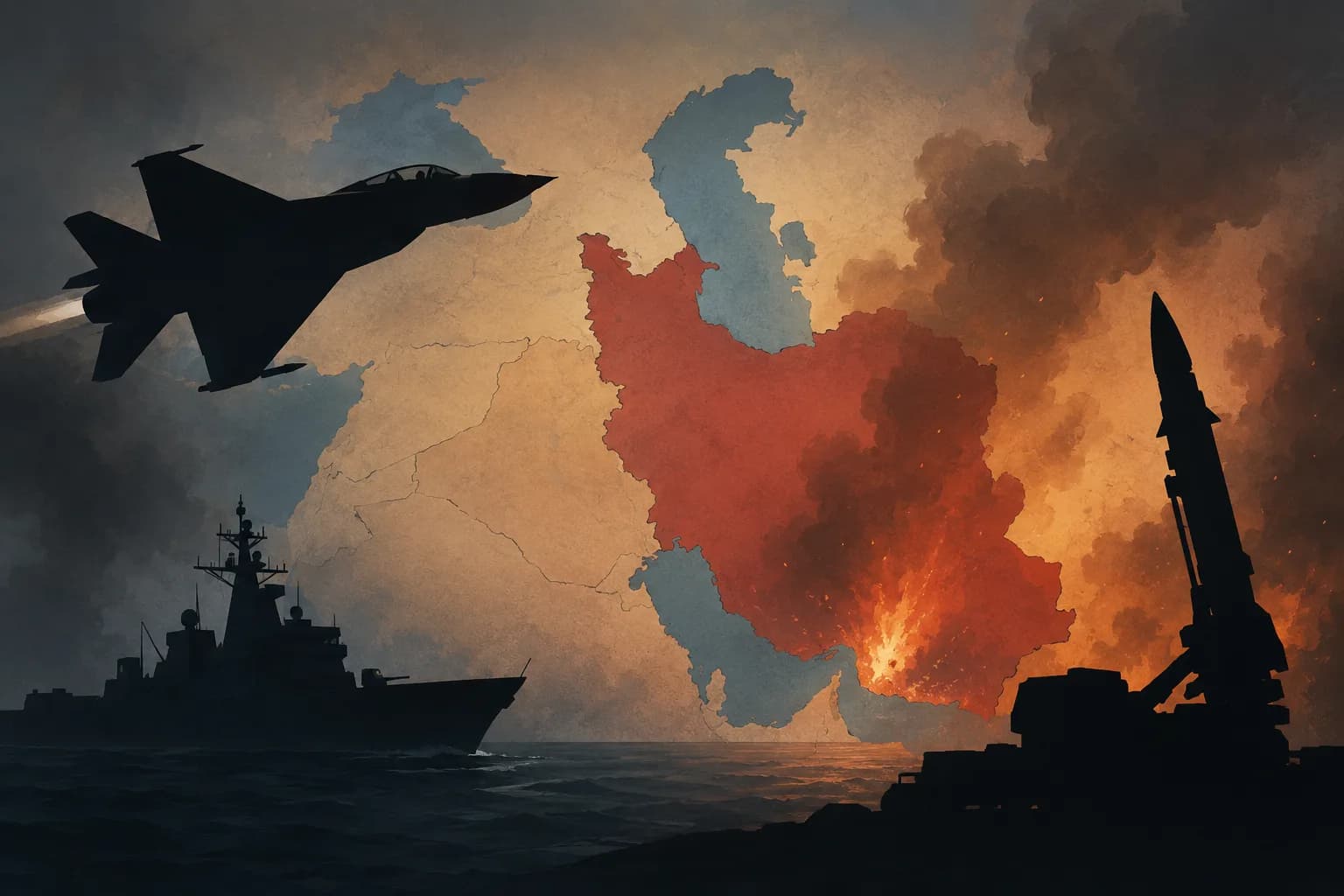















Commercial traffic through the Strait of Hormuz has dropped sharply after renewed clashes between the US and Iran unsettled one of the world’s most important energy corridors.
On Thursday, only three commodity vessels crossed the strait, the fewest daily transits since May, according to shipping data.
Most ships either stopped or turned back after recent Iranian attacks on vessels and the resumption of a US blockade on Iran-related shipping, leaving Hormuz largely choked once again.
The slowdown comes at a time when the strait remains central to global oil and gas flows, and the disruption has already fed concerns about higher energy prices.
Also Read | Chabahar tower collapses in fresh US strikes on Iran, visuals surface online
🚨 JUST IN: Iran is REELING after President Trump ordered CENTCOM to begin targeting infrastructure targets, causing power outages and destruction of bridges
— Eric Daugherty (@EricLDaugh) July 17, 2026
"The war planners [are] bombing ROADS AND BRIDGES around Bandar Abbas!" 🔥
The IRGC is getting CUT OFF from key supply… pic.twitter.com/KWlY12wdso
Fewer sails, greater unease
The scale of the drop is stark. On Wednesday, 11 vessels crossed Hormuz, still far below the average of about 125 daily transits before the war.
There were no very large crude carriers or liquefied natural gas tankers passing through for a second day on Thursday. Two VLCCs did reappear on AIS tracking outside the strait, each carrying about 2 million barrels of crude: the Colombia Prosperity, laden with Saudi oil and bound for Okinawa in Japan; and the Costa Rica Prosperity, carrying Iraqi Basra Medium crude and headed for Turkey.
Kpler data also showed that the sanctioned tanker Miraan, carrying fuel oil, and the small LPG carrier Norita exited via the Iranian route before stopping at the Gulf of Oman, while another tanker, Arolia, made a U-turn after leaving the strait.
U.S. Marines from the 11th Marine Expeditionary Unit conduct a verification boarding aboard M/T Wen Yao in the Gulf of Oman, July 16.
— U.S. Central Command (@CENTCOM) July 16, 2026
As of today, American forces have redirected 3 commercial vessels trying to run the blockade, disabled 1 that didn’t comply, and boarded 1 to… pic.twitter.com/vbjArHuLaO
The sabres are out, and so are the warnings
Iran has sharpened the pressure further. The Islamic Revolutionary Guard Corps said on Thursday that no oil or gas would be exported through the Strait of Hormuz as long as US attacks continued.
In a parallel warning carried by Iran’s IRNA, a spokesperson for the central military command said that if the US targeted Iranian infrastructure, “everything that has remained intact so far due to Iran’s nobility will be smashed to pieces — that is, all the infrastructure in the region”.
The IRGC also warned that it could target “all other export corridors that benefit the US and its allies”, adding, “Regional energy exports are either shared by all or denied to all.”
Tehran has signalled it could prod its Houthi allies in Yemen to close the Bab al-Mandab Strait at the mouth of the Red Sea if Washington strikes Iran’s infrastructure.
A long voyage beckons if the gates close
That threat matters because Bab al-Mandab is another critical passage for global trade. The waterway connects the Red Sea with the Gulf of Aden and, through it, the Indian Ocean.
Roughly 12% of global trade transits it and the Suez Canal route. A simultaneous shutdown of Hormuz and Bab al-Mandab would force shipping to reroute around Africa, leaving commercial carriers with essentially one long alternative between Asia and Europe.
The wider conflict has already disrupted about a fifth of the world’s oil shipments, and Brent crude has risen to around $85 a barrel, up roughly 12% this week, underscoring how quickly the fighting is rippling through global energy markets.
Also Read | Trump revives ‘public charge’ rule: Can Medicaid use affect your Green Card?
FAQs
Q1: Why is the Strait of Hormuz important to global oil markets?
The Strait of Hormuz is a key maritime chokepoint through which a significant share of the world’s crude oil and liquefied natural gas exports passes.
Q2: Why does the Bab al-Mandab Strait matter for global trade?
The Bab al-Mandab connects the Red Sea to the Gulf of Aden and is a vital shipping route linking Europe, Asia, and the Middle East.
