
























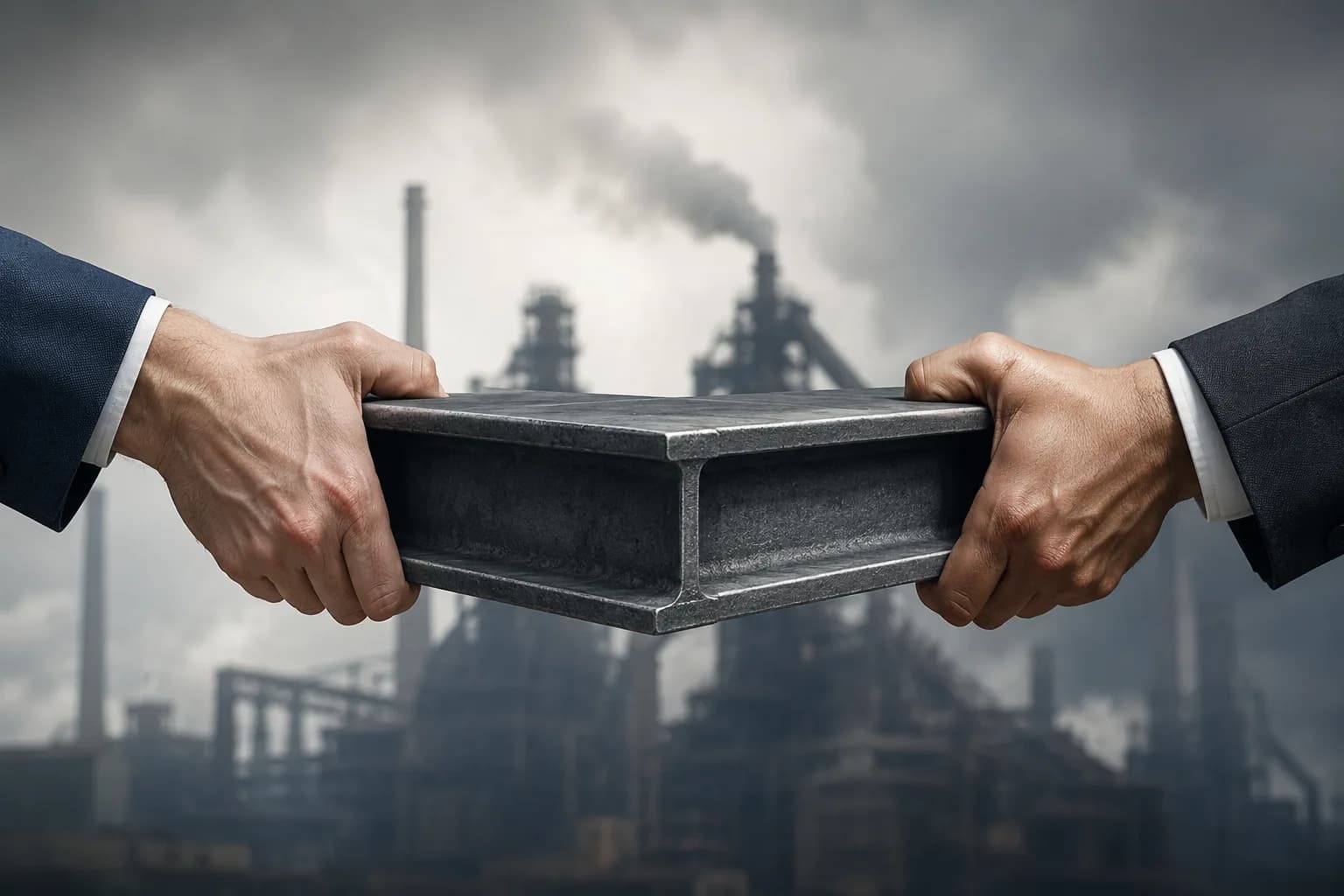
The UK’s decision to nationalise British Steel has opened a fresh dispute with China, with Jingye Group calling on London to compensate it for losses linked to the takeover.
The Chinese company said the British side should stop “trampling on international investment rules” and provide compensation for what it described as investment losses after the government moved to take full control of the company.
China “firmly opposes and strongly disapproves” of the nationalisation, while Jingye is asking for compensation after the move.
Also Read | Trump orders fresh Iran strikes after 2 US troops killed in Jordan
BREAKING: British Steel now belongs to the British people. pic.twitter.com/ndF0rBdeZt
— Department for Business and Trade (@biztradegovuk) July 16, 2026
A furnace worth its weight in steel
Britain nationalised British Steel on Thursday, saying the move was necessary to protect domestic steelmaking and the future of the Scunthorpe plant in northern England.
According to Reuters, the company had been loss-making and had previously been owned by Jingye. The Scunthorpe site is the last in the UK to make “virgin steel” from raw materials.
The plant employs nearly 2,700 people and produces about three million tonnes of steel a year, making it a strategically important asset in Britain’s industrial base. UK ministers have argued that taking control was needed to safeguard jobs and ensure supplies of steel for construction and defence.
China supports enterprises in safeguarding their legitimate rights and interests through legal means, said a Foreign Ministry spokesperson, adding that China is closely following the developments after the UK nationalized British Steel and will do what is necessary to protect its… pic.twitter.com/ETNeXj8GgL
— CCTV+ (@CCTV_Plus) July 19, 2026
Across the channel, tempers harden
Beijing responded sharply. China’s commerce ministry said Britain had “forcibly” taken over the company and “disregarded” Jingye’s contributions to the British economy and society.
The ministry said the move “seriously damaged” Jingye’s legitimate rights and interests and would undermine the confidence of Chinese firms considering investment in Britain.
China’s Ministry of Commerce also warned it would closely monitor developments and take appropriate measures to safeguard legitimate rights and interests if needed.
China’s foreign ministry pointed to the investment protection agreement between the two countries, saying investors’ lawful rights must be protected in accordance with the law.
Can London and Beijing avert a bigger investment showdown?
The dispute is likely to keep pressure on UK-China economic ties at a sensitive moment for both sides. The bilateral investment treaty signed in 1986 includes protection from arbitrary expropriation without compensation, a clause Jingye is now invoking in its claim.
Britain, meanwhile, has insisted the nationalisation was a necessary step to protect steelmaking capacity and the national interest.
Business Secretary Peter Kyle said, “British Steel now belongs to the British people,” while Prime Minister Keir Starmer told Parliament the company is “a cornerstone of Britain’s industrial strength”.
The next phase is likely to hinge on whether the two sides can agree on compensation terms or whether the matter escalates further.
Also Read | Why Balochistan’s independence claim poses a bigger challenge for Pakistan than PoK
FAQs
Q1: Why is Jingye seeking compensation from the UK?
Jingye says the UK’s nationalisation of British Steel caused investment losses and argues it is entitled to compensation under international investment protections.
Q2: Why did the UK nationalise British Steel?
The UK government said it took control of British Steel to protect domestic steel production, safeguard jobs and secure a strategically important industry.
