



















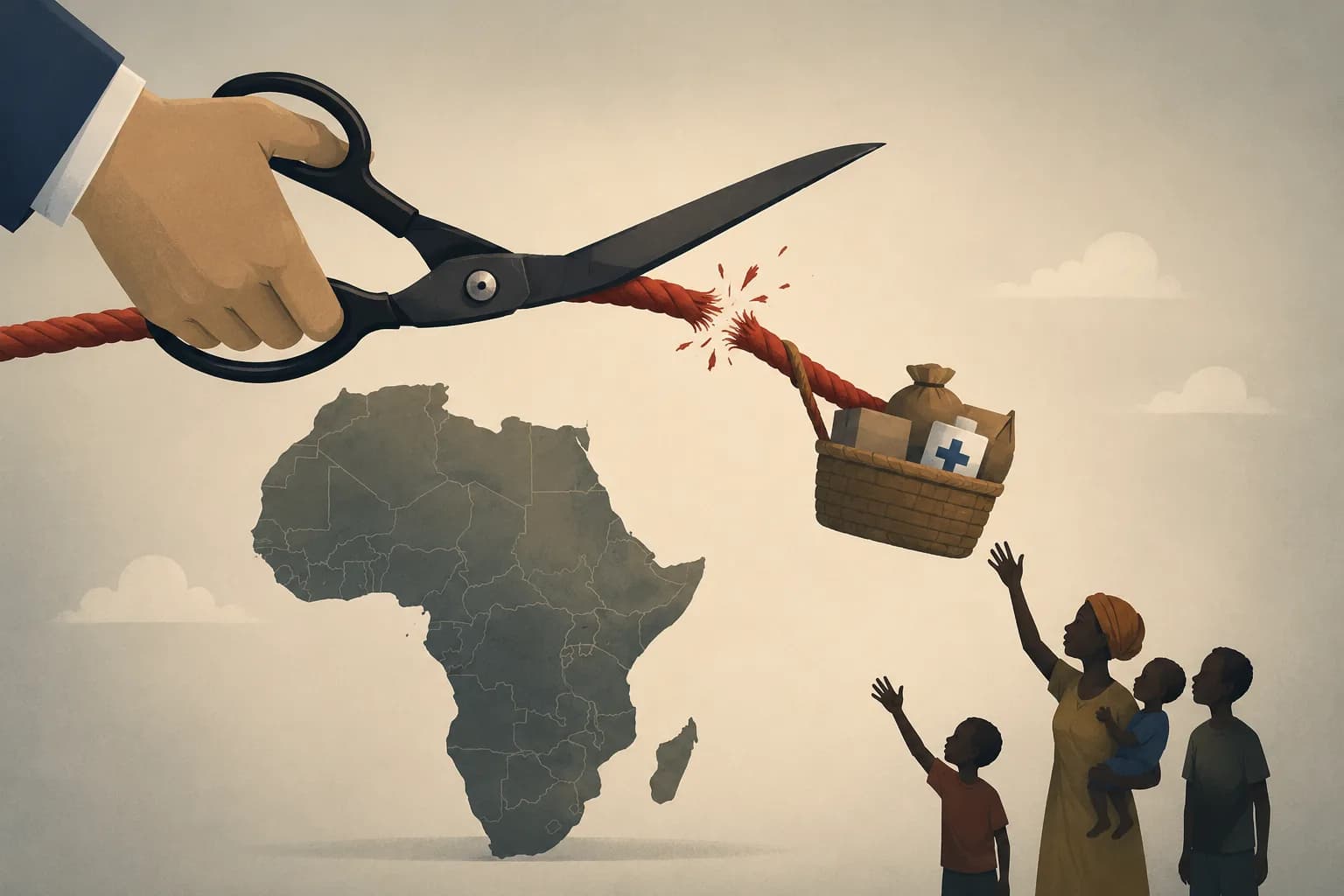
The UK government is set to cut bilateral aid to several African countries by as much as 90% over the next three years, according to Foreign Office allocations released alongside the FCDO annual report.
The figures show bilateral support to African countries falling from £1.6bn to under £700m, with Kenya, Tanzania, Mozambique, Malawi and Zambia among the hardest hit.
The documents were published on Thursday as ministers laid out how the aid budget will be redistributed through 2028-29.
Also Read | ‘Take off the uniform and come into politics’: Fazlur Rehman dares Pakistan army chief Asim Munir
The UK Govt has just published its country spending plans and they include some brutal cuts.
— Ian Mitchell (@EconMitch) July 16, 2026
In 10 of the UK's 17 African partners the budget is being cut to a de minimis level.
The UK is giving up meaningful influence and heading for an all-time low in international assitance pic.twitter.com/NpCSqwBhtN
The axe falls with vigour
Bond, the umbrella body for development charities, said the reductions leave some long-standing UK partners with aid relationships that are “virtually eliminated” or cut to £5m or less.
Its analysis says Kenya’s aid will fall by 93%, Tanzania’s by 91%, Mozambique and Malawi’s by 90%, and Zambia’s by 88%.
Bond also said Rwanda and Sierra Leone will see cuts of more than 80%, while Somalia faces a 49% reduction. The group warned that the changes amount to a sharp retreat from countries that have relied on British bilateral support for years.
Today we have seen just how hard countries around the world will be hit by UK aid cuts. Chair @SarahChampionMP has said the announced allocations show a fundamental inconsistency in government policy.
— International Development Committee (@CommonsIDC) July 16, 2026
Find out more: https://t.co/U4UeReZq2u pic.twitter.com/ouB8btvEzu
Where defence gains, development yields
The cuts stem from Labour’s decision last year to reduce overseas aid spending from 0.5% to 0.3% of gross national income in order to help fund higher defence spending, a move that led to the resignation of development minister Anneliese Dodds.
In a written statement earlier this year, Foreign Secretary Yvette Cooper said the government would transition away from high levels of grant aid in some countries while seeking to deliver through “modernised partnerships” and make “the most of what the UK has to offer”.
The Foreign Office has argued that channelling more money through multilateral institutions such as the World Bank is a more efficient use of tighter resources.
🚨 New report: UK aid spending is set to fall by 42% over four years, along with a profound shift in how the UK approaches development.
— ICAI (@icai_uk) July 16, 2026
Humanitarian assistance will be prioritised while traditional bilateral programmes are scaled back.
Read more: https://t.co/xo5uodSbBN pic.twitter.com/b4SCLgldGC
A sobering reckoning for Britain’s aid plans
The Independent Commission for Aid Impact (ICAI) said UK aid spending is expected to fall by around 42%, or £6.5bn, from a record high in 2023 to a historic low in 2027-28.
In its analysis of FCDO spending plans, the watchdog said traditional bilateral development programmes are being phased out in many places. It added that a group of 11 longstanding UK partners, including Kenya, Tanzania, Rwanda and Malawi, will see allocations reduced sharply, in some cases by 80% to 90% over three years, to around £5m per year by 2028-29.
ICAI also said humanitarian aid will dominate in the countries that continue to receive direct UK support.
The Government has announced the details of its reduced UK aid budget, outlining the funds allocated to each country.
— Monica Harding MP (@monicabeharding) July 16, 2026
The latest figures make grim reading, with a 56% cut to Africa, 39% to Afghanistan and 55% to Syria…
UK aid and development saves lives, promotes Britain’s…
Who will bear the heaviest cost of Britain’s aid cuts?
Aid agencies and charities said the scale of the cuts will hit vulnerable communities already facing conflict, hunger and climate stress.
Bond chief executive Romilly Greenhill said the reductions risked “abandoning communities on the frontlines of conflict and the climate crisis,” while Oxfam accused the government of “taking a sledgehammer to aid spending.”
The dispute lands as ministers defend a shift away from long-term country programmes and towards broader multilateral funding, even as critics argue that the cuts will weaken Britain’s role in development policy and undermine projects built over many years.
Also Read | Trump caps US student visas at four years, journalist visas at 240 days
FAQs
Q1: Why is the UK cutting aid to African countries?
The UK government says it is reducing overseas aid to help fund higher defence spending and is shifting more support through multilateral institutions.
Q2: Which African countries are most affected by the UK aid cuts?
According to the Foreign Office allocations, Kenya, Tanzania, Mozambique, Malawi and Zambia are among the countries facing the steepest reductions in bilateral UK aid.
