

























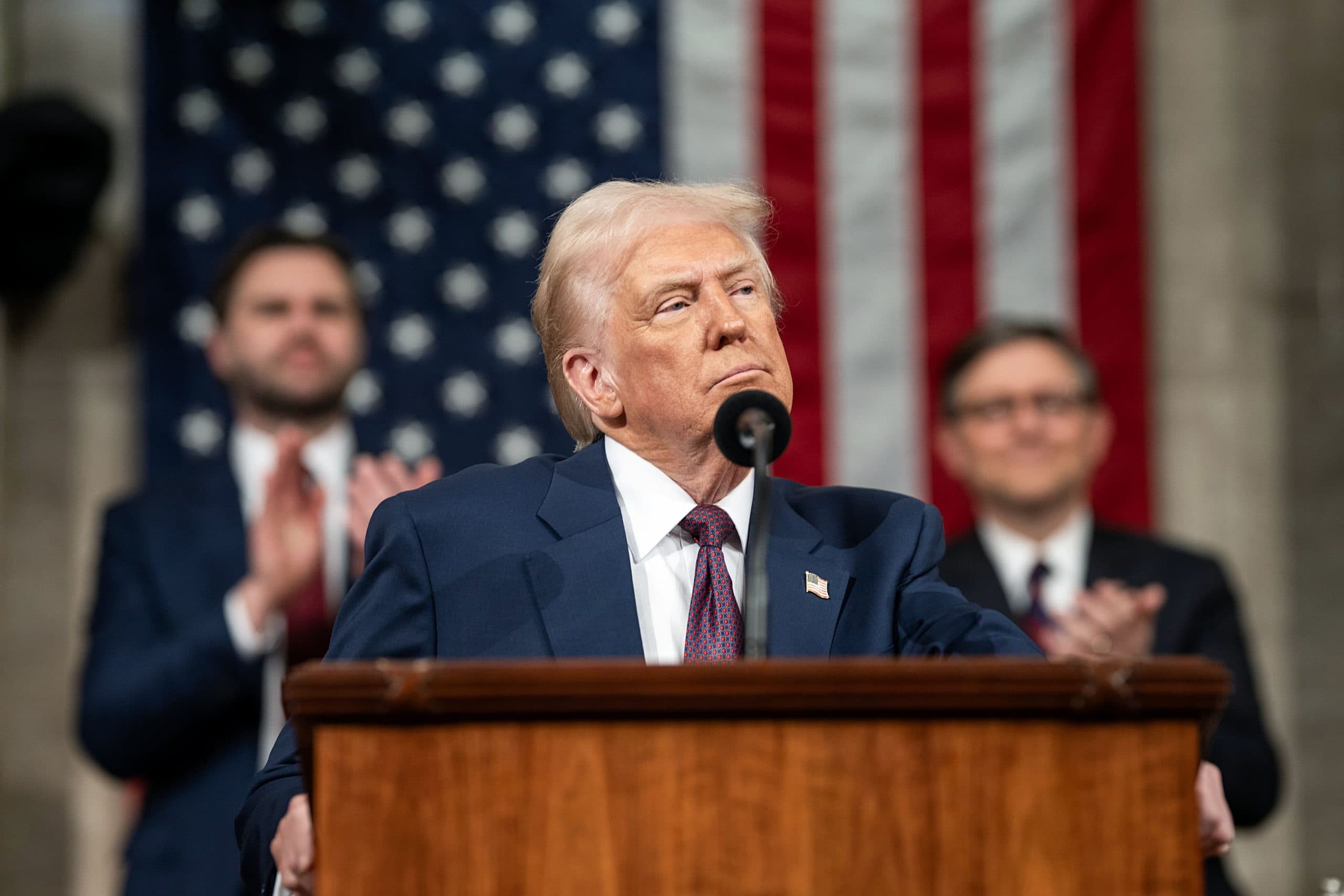
US President Donald Trump has approved a civilian nuclear cooperation agreement with Saudi Arabia that could allow the kingdom to develop uranium enrichment capabilities as part of its nuclear energy programme, according to an Associated Press (AP) report citing two people familiar with the matter.
The agreement is expected to be announced publicly as early as Wednesday and will reportedly remain in force for 30 years. It also includes participation by US companies in developing Saudi Arabia’s civilian nuclear programme.
What does the Saudi nuclear deal include?
The agreement could pave the way for the construction of a uranium enrichment facility in Saudi Arabia following a joint US-Saudi feasibility study.
Also Read | Australia spent ‘$9m’ per asylum seeker, but Nauru refugees say they cannot afford food
The White House has not officially commented on the reported approval.
Both the Trump and Biden administrations had previously pursued civilian nuclear cooperation with Saudi Arabia as part of broader strategic engagement with the kingdom.
Why are experts concerned?
Although the proposed agreement is intended for civilian nuclear energy, non-proliferation experts have cautioned that domestic uranium enrichment capability could create the technical foundation for a future weapons programme if political circumstances change.
The concerns have gained attention following earlier remarks by Saudi Crown Prince Mohammed bin Salman, who indicated that the kingdom could seek nuclear weapons if Iran were to acquire one.
Saudi Arabia and Pakistan signed a mutual defence pact following recent regional tensions. Pakistan’s defence minister subsequently said the country’s nuclear programme would be available to Saudi Arabia if required, a statement widely viewed as a strategic warning to Israel.
Experts note that uranium enrichment alone does not enable the development of nuclear weapons. Additional technologies and capabilities are required for weaponisation. However, enrichment remains one of the most sensitive stages of the nuclear fuel cycle.
How does this compare with the UAE model?
The report highlights that the United Arab Emirates signed a “123 Agreement” with the United States for its Barakah nuclear power project without seeking uranium enrichment rights.
Also Read | Pakistan urges Canada to back Indus Waters Treaty restoration, India holds its ground
That approach has often been described by non-proliferation experts as the international “gold standard” for civilian nuclear cooperation because it limits the risk of future weapons development.
The proposed Saudi agreement differs by potentially allowing domestic uranium enrichment, making it a more closely watched arrangement.
FAQs
Q1. Has the US officially approved Saudi Arabia’s nuclear deal?
According to an Associated Press report, President Donald Trump has approved the agreement, although the White House had not officially announced it at the time of publication.
Q2. Why is uranium enrichment in Saudi Arabia controversial?
While enrichment can be used for civilian nuclear energy, experts say it could also provide the technical capability needed for a future nuclear weapons programme if policy changes.
