

























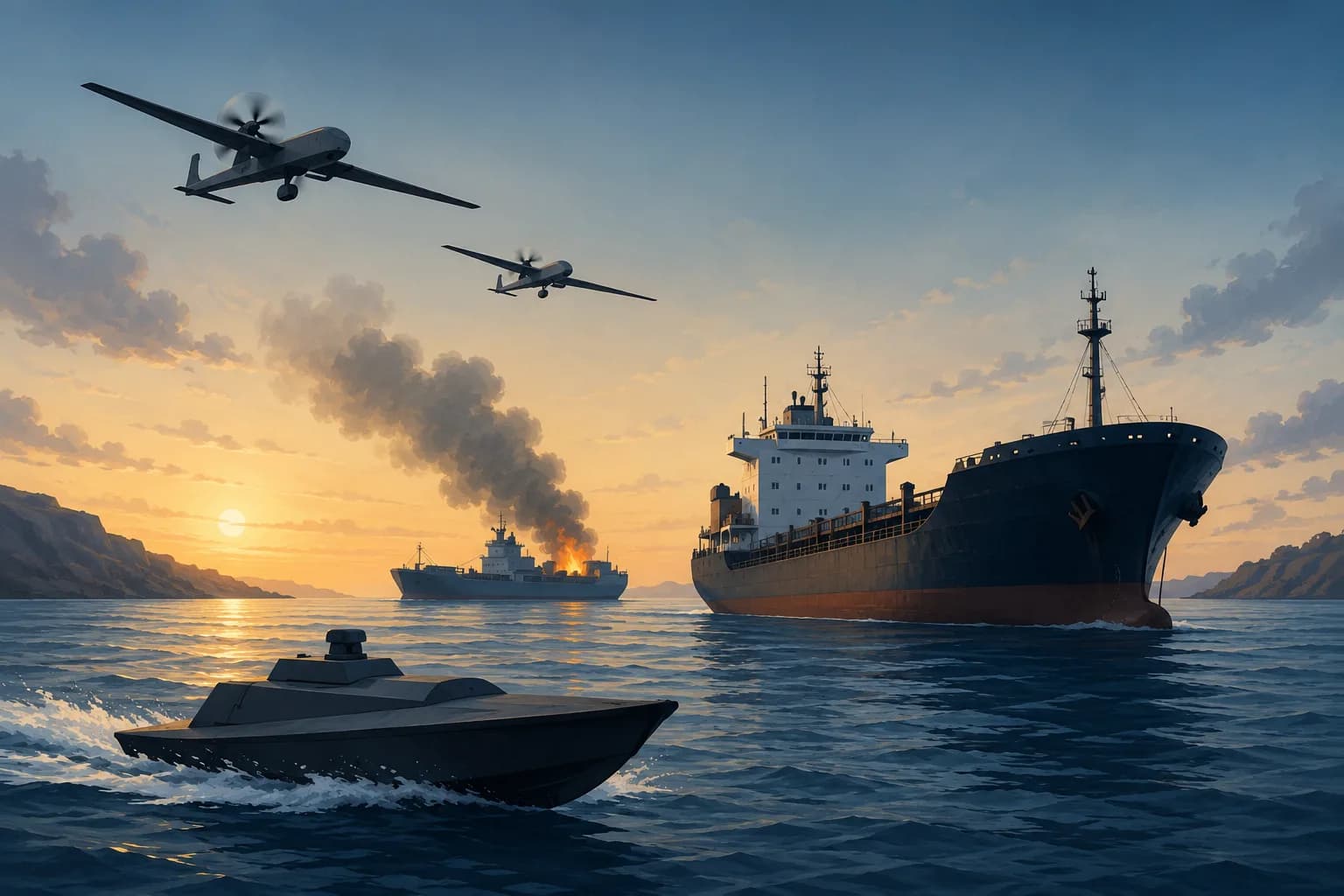
Russia and Ukraine’s maritime war is widening in the Sea of Azov, where Kyiv’s drone campaign has forced Moscow to confront fresh disruptions to a route that is central to grain exports, commercial shipping, and military logistics.
Russian officials and state-linked outlets say the attacks have targeted vessels in an area that borders southern Russia and Russian-occupied parts of Ukraine, turning the inland sea into a new pressure point in the conflict.
Also Read | What is Iran’s Pickaxe Mountain? The underground nuclear site Trump wants to hit
Ukrainian forces struck 20 Russian ships in the Azov Sea last night, 17 oil tankers, 2 LNG transports and one tug boat.
— (((Tendar))) (@Tendar) July 15, 2026
We are now at 136 struck Russian ships in 9 days. pic.twitter.com/7zqDORIUdl
Trouble sails into vital waters
Ukraine has stepped up drone attacks on Russian shipping in recent days, with a reported strike on 116 vessels over the past nine days.
The attacks triggered fuel shortages in parts of Russia and prompted Moscow to suspend traffic through the Sea of Azov by shutting the Don-Azov Channel and the Kerch Strait, the latter linking the sea to the Black Sea.
Russia’s agriculture ministry has acknowledged it is looking for alternative shipping routes, while insisting the situation would not affect domestic food supplies or export capacity.
Ukraine has opened the Black Sea chapter of russian maritime ass-kicking.
— UAVoyager🇺🇦 (@NAFOvoyager) July 15, 2026
For the first time, 20 russian vessels were hit in a single night — not in the Sea of Azov, but in the Black Sea.
Glory to Ukrainian sanctions. pic.twitter.com/90jgkfMHDz
The rhetoric turns razor sharp
Russia has accused Ukraine of terrorism over the escalating strikes on shipping vessels in the Sea of Azov, which Moscow considers important because it handles a quarter of the country’s grain exports.
Russian foreign minister Sergei Lavrov said, “What the Ukrainian regime is doing goes beyond even piracy. Pirates, at least, plunder and keep the spoils for themselves,” and added, “It is terrorism, pure and simple.” He also said Ukraine’s aim was to cause damage and intimidate.
Footage of strikes on Russia's shadow fleet in the Black Sea – 20 vessels hit overnight.
— Anton Gerashchenko (@Gerashchenko_en) July 15, 2026
❗️In total, the USF struck 136 vessels of Russia's shadow fleet between July 6 and 15:
▪️116 in the Sea of Azov;
▪️20 in the Black Sea: 17 oil tankers, two LNG carriers, and one tugboat. https://t.co/YypJtlrzUX pic.twitter.com/WnrpmESKUI
Why these waters matter so dearly?
The Sea of Azov is a strategically important inland sea connected to the Black Sea through the Kerch Strait, bordered by southern Russia and Russian-occupied parts of Ukraine.
The route is a vital corridor for Russia’s grain exports, commercial shipping, and military logistics. It also provides ocean access to the Russian port of Rostov-on-Don.
A Ukrainian military source told TOI that Kyiv strikes only targets that contribute to Russia’s combat capability, and civilian cargoes are not among them.
Grain, trade and a tightening noose
The latest escalation comes at a time when grain and shipping routes have become central to the wider war.
Russia and Ukraine are among the world’s largest producers of wheat and other grains, making their exports critical to global food supplies. The disruption has affected Russian exports, particularly food shipments to African nations.
Lavrov maintained that Moscow would continue to fulfill food obligations to “our African friends.”
Russia’s union of grain exporters and producers said the country would fully meet its grain export commitments despite the situation in the Sea of Azov. Authorities in Rostov said they were trying to minimize the impact of logistical difficulties on the sale of the new harvest.
No calm waters in sight
Ukraine’s maritime drone campaign has also added pressure on Russia’s logistics network at a moment when Moscow is trying to keep wartime supply lines and agricultural exports moving.
Ukrainian drone forces commander Robert Brovdi said on Telegram that 11 Russian vessels were struck overnight, including five tankers, five dry cargo vessels, and one tugboat, and claimed the total over nine days had reached 116.
Reuters had independently noted that several grain-carrying vessels were hit on July 13 and July 14 and caught fire.
On the Russian side, officials and grain exporters have framed the disruption as temporary, but the closure of key chokepoints suggests the Sea of Azov is becoming an increasingly contested theater in the war.
Also Read | Who is Peter Michael Larsen? Man arrested after Muslim kiosk worker stabbed 15 times in alleged hate attack
FAQs
Q1: Why is the Sea of Azov important to Russia?
The Sea of Azov is a key maritime corridor for Russia’s grain exports, commercial shipping and military logistics, connecting to the Black Sea through the Kerch Strait.
Q2: Why has the Sea of Azov become a new flashpoint in the Russia-Ukraine war?
The area has seen intensified Ukrainian drone attacks on Russian-linked shipping, prompting disruptions to vessel movement and increasing tensions over a strategically important waterway.
