


























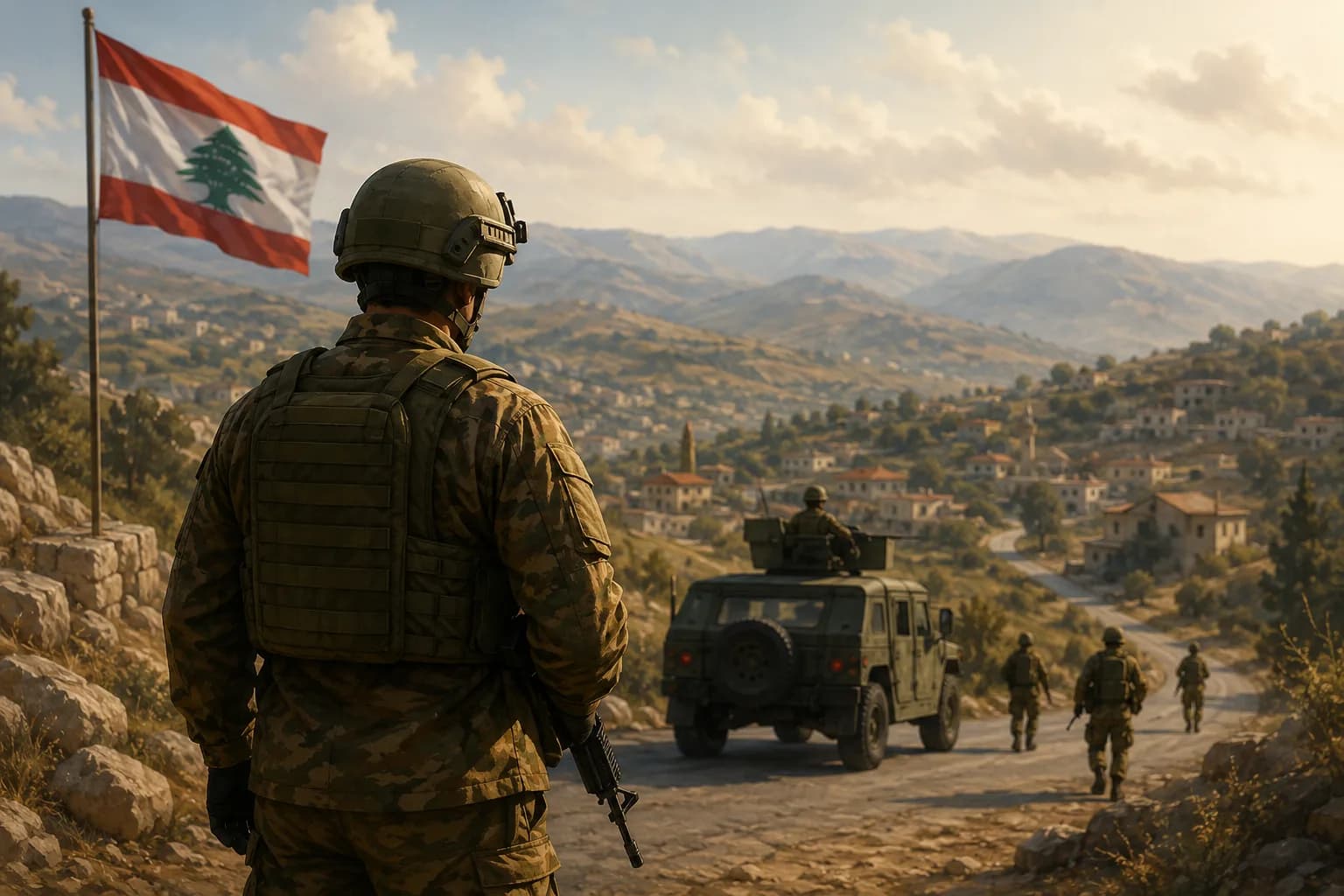
The Lebanese army has begun taking charge of security in three villages in southern Lebanon—Froun, Srifa, and Zawtar al-Gharbiya—in what the United States described as the start of “pilot zone operations” under a trilateral framework involving Lebanon, Israel, and the US.
The development was confirmed on Monday by the US State Department and reported by several regional and international outlets.
Also Read | Hamas has a new chief, but who is Khalil al-Hayya?
🇺🇸 | 🇮🇱 🇱🇧 | Yesterday in Washington, @LBpresidency Joseph Aoun held a high-level meeting with Secretary of State @SecRubio , where the implementation of the Lebanon security agreement was a central topic of discussion. Today, President Aoun is expected to meet @POTUS Trump at… https://t.co/BT0TKOltFT pic.twitter.com/fAJVMXbykN
— Antoine D (@AD1968F) July 20, 2026
The first move in a carefully laid design
According to the State Department, the move was “a direct outcome” of last week’s talks in Rome, and Washington said it would continue working with both sides to bring the framework to completion.
Under the arrangement, Israeli forces are meant to withdraw in phases from areas they occupy in southern Lebanon, after which the Lebanese army will take over security responsibilities and oversee the disarmament of Hezbollah.
Lebanon launches first step to replace Israeli troops in the south
— JIMMYTALKSTV (@JimmyDailyNews) July 20, 2026
The U.S. announced Lebanese Army operations have begun in the pilot zones of Froun, Srifa, and Zawtar al-Gharbiya. The goal is for the Lebanese Army to take full control, disarm Hezbollah, and pave the way for a… pic.twitter.com/lrCscAe9q0
Not quite plain sailing just yet
Froun and Srifa are part of the first pilot zone, which lies outside Israel’s six-mile buffer zone. Zawtar al-Gharbiya is inside that zone and would require an Israeli withdrawal before Lebanese forces can fully move in.
Local officials said conditions on the ground had not visibly changed; the mayor of Froun said, “There have been no new developments,” while Srifa’s mayor said, “Nothing has changed; today is the same as yesterday.”
The waiting game carries on
Questions remained over the timing of the rollout. A security source said the Lebanese army had not yet deployed to Zawtar al-Gharbiya because Israeli forces had not withdrawn from the occupied outskirts of the town. US media outlet Axios suggested the withdrawal from the pilot zones could begin on Tuesday.
The framework itself does not set a timetable for Israel to vacate the areas it occupies in Lebanon.
Pact now faces its sternest examination
The agreement was reached on June 26 after six rounds of face-to-face negotiations, and it is being treated as the first test on the ground of a deal aimed at securing an Israeli withdrawal from south Lebanon and the disarmament of Hezbollah.
Hezbollah has rejected the deal, demanding that Israel leave Lebanon unconditionally.
Also Read | Houthis declare naval blockade on Saudi Arabia, warn of wider Red Sea escalation
FAQs
Q1: What are the pilot zones in southern Lebanon?
The pilot zones are designated areas where the Lebanese army is set to assume security control as Israeli forces withdraw under a US-backed framework.
Q2: Why is the Lebanese army’s deployment to the pilot zones significant?
The deployment marks the first on-the-ground implementation of a US-mediated plan aimed at transferring security responsibilities to the Lebanese army and reducing tensions in southern Lebanon.
