


























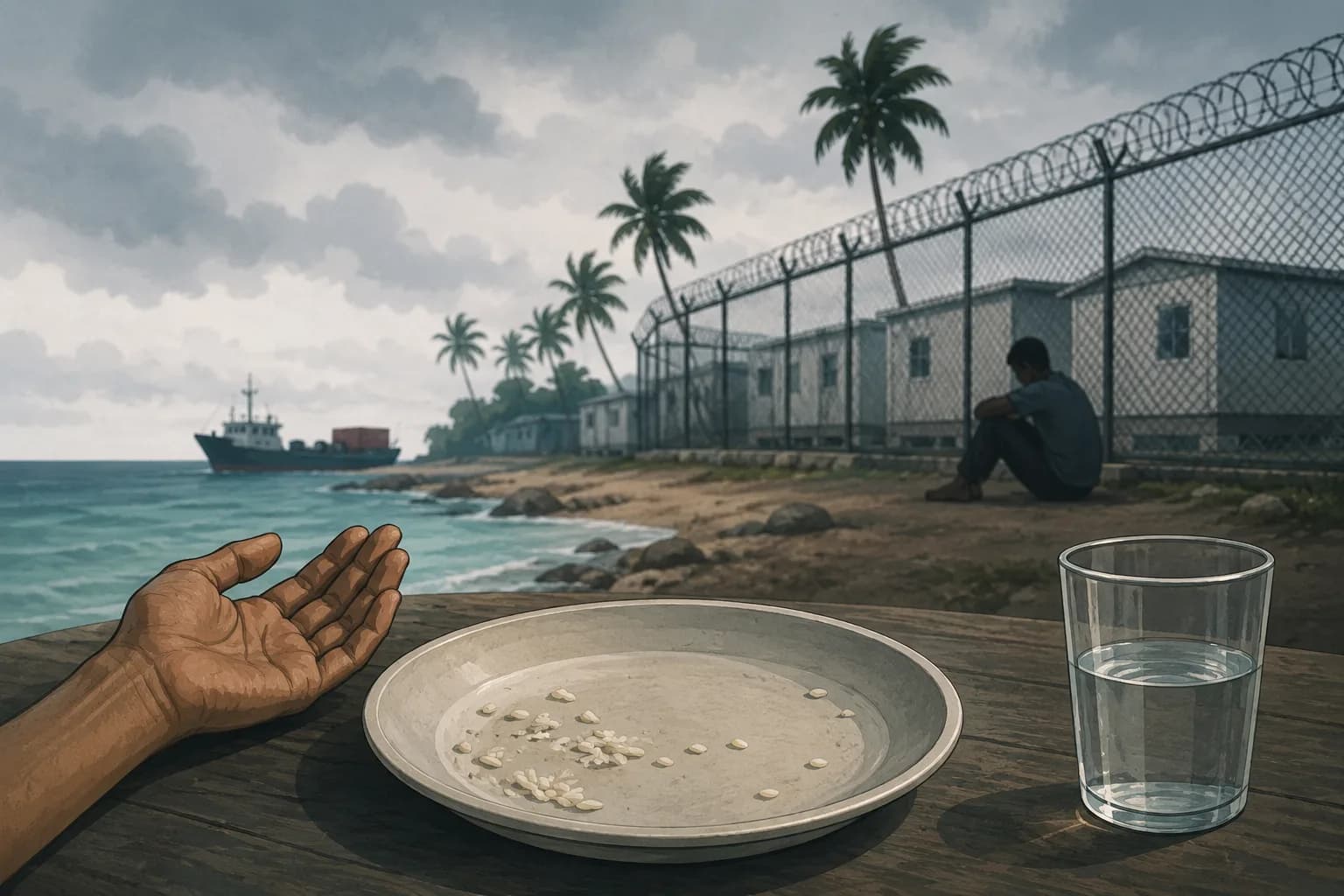
Most refugees and asylum seekers held in Nauru’s detention arrangements say they cannot afford enough food or access clean drinking water.
According to a new Asylum Seeker Resource Centre (ASRC) survey published by Guardian Australia, the government spending on the programme was calculated at the equivalent of more than $9m per person in the 2025-26 financial year.
The group now numbers a little over 100 people, all of them waiting indefinitely on the tiny Pacific island while their claims are processed.
There had been scrutiny of Australia’s offshore processing system.
Also Read | Sinaloa cartel co-founder El Mayo Zambada gets life sentence in US court
Australia spent more than $9m for each asylum seeker held on Nauru last year – so why can’t they afford to buy food? | Nauru | The Guardian
— Cory (@corymedia) July 20, 2026
We don’t mind spending so much money to keep people in disgusting conditions. 🤬 https://t.co/3eqXbwho9s
When the sums simply refuse to add up
The survey, which covered 78 people between February and April, found that all but one respondent said the Australian government’s $260 fortnightly payment was not enough to keep them from going hungry.
The allowance is meant to cover food, drinking water, supplies, phone credit and internet service. The minimum 28GB monthly data plan with Digicel costs $112, which eats into a large share of that stipend.
One person quoted in the report, Rakib, said he had been on Nauru for more than two years without being allowed to work and felt at a “breaking point”; he added, “I think it would be better if they killed us, or if we died,” and, “Because, you know, like when you die, you get peace.”
An island where every shipment counts
The living conditions are shaped by Nauru’s geography and supply chain constraints. The island, with a population of about 13,000, relies heavily on imported goods. More than 90% of food consumed is imported, and prices can swing with shipping disruptions.
Vegetables such as tomatoes, capsicums and onions were reported to cost about $18 a kilo, while Rakib said the price of a banana had risen from $1.50 to about $4.
He also said rice shortages had become a serious problem, saying through a translator, “We have been told that it might take two to three months for the next ship with rice to arrive, so we don’t know how we will survive in the meantime.”
The ASRC report also said 82% of respondents did not have access to clean drinking water.
The machinery rolls on, unhurried as ever
The asylum seekers and refugees on Nauru mostly come from China, Bangladesh and Pakistan and arrived by boat after 2023.
Under a longstanding bipartisan policy, they are not to be permanently resettled in Australia even if they are found to be refugees; instead, they must wait for Australia to strike a resettlement deal with another country.
Australia spent $971.6m on offshore management for unauthorised maritime arrivals in the 2025-26 financial year. MTC Australia is due to receive $791.2m over five years to run the offshore processing centre, alongside $106.5m over three years for medical services.
In response, a home affairs spokesperson said the management of individuals, including refugee-status determinations, is Nauru’s responsibility.
He added payments are “reviewed regularly to ensure they remain fit for purpose” and that people are treated “with respect and dignity and in accordance with human rights standards”.
Also Read | Trump says Iran will ‘pay many times over’ after deaths of US troops
FAQs
Q1: Why are asylum seekers on Nauru struggling to afford food?
According to a recent survey, many asylum seekers say the government allowance does not cover the high cost of food, drinking water and other essentials on the island.
Q2: How much does Australia spend on offshore processing in Nauru?
Australia spent about A$971.6 million on offshore processing in 2025-26, which works out to more than A$9 million per person based on the current population on Nauru.
