



























Pakistan has sought Canada’s support for the restoration of the Indus Waters Treaty (IWT), with Deputy Prime Minister and Foreign Minister Ishaq Dar urging Ottawa to back Islamabad’s call for the immediate revival of the decades-old water-sharing agreement with India.
Dar appealed during a joint press briefing in Islamabad on Monday alongside Canadian Foreign Minister Anita Anand, who is on a two-day official visit to Pakistan.
The Indus Waters Treaty, signed in 1960 with the World Bank as its broker, regulates the sharing of water from the six rivers of the Indus basin. Under its terms, India controls the three eastern rivers, while Pakistan receives the waters of the three western rivers, with certain permitted uses granted to India.
Pakistan urges Canada to back restoration of Indus Waters Treaty
During the media interaction, Dar criticised India’s decision to suspend the treaty, linking it to the region’s already fragile security environment.
Also Read | Australia spent ‘$9m’ per asylum seeker, but Nauru refugees say they cannot afford food
“India has added a new dynamic into an already volatile security situation by announcing in April 2025 to hold the Indus Waters Treaty in abeyance,” Dar said.
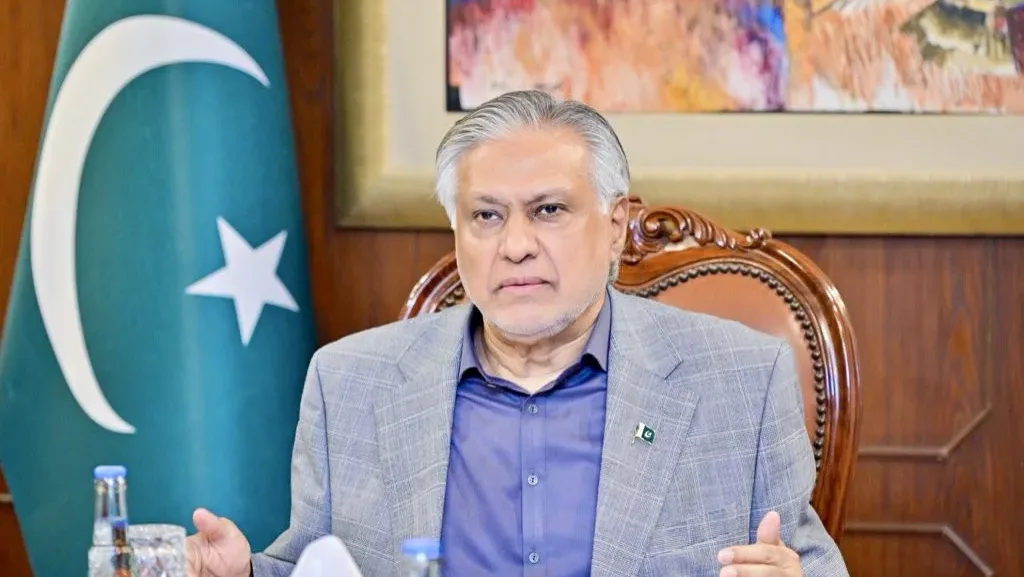
He also appealed to Canada and other friendly nations to support Pakistan’s demand for the agreement’s revival.
“We seek the support of our friendly countries, including Canada, towards India’s immediate restoration of the IWT, ending the weaponisation of water and upholding international law and treaty obligations as per international law and practices,” Dar said.
Anita Anand was in Islamabad as part of a two-day official visit when the remarks were made.
Why India suspended the Indus Waters Treaty
India placed the Indus Waters Treaty in abeyance in April 2025, a day after the Pahalgam terror attack in Jammu and Kashmir that claimed 26 lives.
At the time, New Delhi said the agreement would remain suspended until Pakistan takes “credible” action against cross-border terrorism.
The move marked one of India’s strongest diplomatic responses following the attack and signalled a significant shift in its approach towards the long-standing treaty.
India signals Treaty may not return in its existing form
According to a report by The Times of India, India has further hardened its position on the Indus Waters Treaty and no longer considers the existing framework suitable for its interests.
The report, quoting official sources, said India is not currently planning to withdraw from the World Bank-brokered agreement. However, it does not believe the treaty should continue in its present form.
Also Read | Sinaloa cartel co-founder El Mayo Zambada gets life sentence in US court
A source cited in the report said that if any future arrangement on river water sharing is considered, it would have to be under a new framework and “not in the present form.”
The report further stated that India sees no timeline for lifting the suspension. Officials reportedly maintain that the treaty will stay in abeyance until Pakistan “credibly and irrevocably” ends its support for cross-border terrorism.
According to the report, Indian officials also argue that Pakistan’s core challenge is water management rather than water availability. They maintain that India will continue to use its legitimate share of the Indus basin waters through scientific basin management and infrastructure modernisation.
FAQs:
Why did India suspend the Indus Waters Treaty with Pakistan
India suspended the Indus Waters Treaty after the April 2025 Pahalgam terror attack, saying it will remain in abeyance until Pakistan takes credible action against cross-border terrorism.
Why is Pakistan seeking Canada’s support on the Indus Waters Treaty?
Pakistan has urged Canada to back the immediate restoration of the Indus Waters Treaty and support its call to uphold international law and treaty obligations.
