



























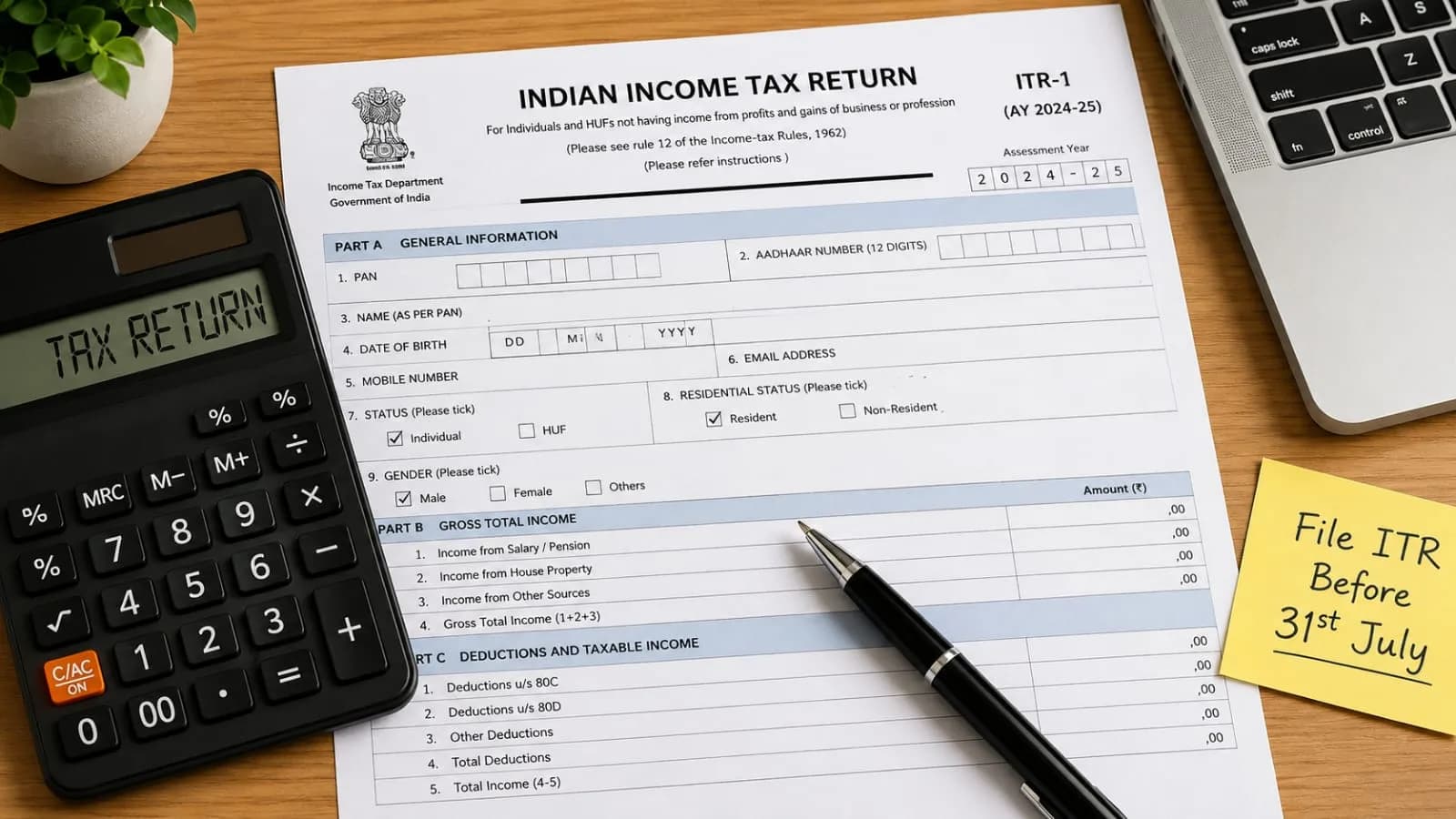
With the final date for filing an Income Tax Return (ITR), which is governed by the Income Tax Act, 1961, for assessment year 2026-27 being July 31, about 2.77 crore ITRs have been filed so far.
The full assessment year of 2025-26 saw the filing of 6.97 crore ITRs. However, missing the deadline this time would invite a fine of up to ₹5,000. However, it is not for all taxpayers.
Also Read | Heavy rain halts Char Dham Yatra in Uttarakhand
Who needs to file ITR?
News 18 reported that Taxpayers eligible to file ITR-1 and ITR-2 are required to submit their income tax returns by July 31. This category includes salaried individuals and those with capital gains or losses.
Resident individuals with long-term capital gains (LTCG) of up to Rs 1.25 lakh, along with salary income and subject to other eligibility criterias, can file ITR-1.
Those with LTCG exceeding Rs 1.25 lakh or taxable short-term capital gains generally need to file ITR-2, if they do not have business income.
Taxpayers with business or professional income that is not subject to tax audit have until August 31 to file their ITR.
Depending on the nature of income and eligibility, they should file either ITR-3 or ITR-4. Taxpayers whose accounts are required to be audited have until October 31 to file their income tax returns as the tax audit deadline is September 31.
What if you miss the deadline?
For taxpayers with business or professional income have time till August 31 (for non-audit cases) or October 31 (for cases requiring a tax audit) to file their returns without attracting late-filing consequences.
However, for taxpayers required to file ITR-1 or ITR-2, missing the July 31 deadline can result in several consequences, including a late filing fee, according to News 18.
Under Section 234F of the Income Tax Act, the late filing fee depends on the taxpayer’s income:
Total income above Rs 5 lakh: Late fee of Rs 5,000.
Total income up to Rs 5 lakh: Late fee of Rs 1,000.
Income below the basic exemption limit: No late filing fee is payable.
Apart from the late filing fee, missing the July 31 deadline can also have other financial consequences:
Interest on unpaid taxes: If you have any outstanding tax liability, interest at 1% per month or part of a month on the unpaid tax amount from the due date until the tax is paid can be charged under Section 234A.
Delay in tax refunds: If you are eligible for a tax refund, filing your return after the due date may delay the processing of your return and, subsequently, the receipt of your refund.
Loss carry-forward restriction: Filing the ITR after the deadline generally means you cannot carry forward business losses or capital losses to future years to offset taxable income. Certain exceptions, such as house property losses and unabsorbed depreciation, continue to apply.
From next year, the ITR filing will be governed by the Income Tax Act, 2025.
Also Read | Government explores ethanol as a cooking fuel alternative to LPG
FAQs
1) Which law currently governs ITR filing?
ITR filing is currently governed by the Income Tax Act, 1961.
2) What is the deadline for filing Income Tax Return for Assessment year 2026-27?
The deadline for filing Income Tax Return for Assessment year 2026-27 is July 31, 2026.
