
























Parliament on Thursday cleared the anti-paper leak amendment after the Rajya Sabha approved it by voice vote a day after the Lok Sabha passed it.
The Upper House vote came after Opposition parties led by the Congress walked out during the debate, while the government pressed ahead with the Public Examinations (Prevention of Unfair Means) Amendment Bill, 2026 as a response to repeated allegations of paper leaks and exam malpractice.
Also Read | Delhi Metro ridership dropped during Jantar Mantar protests
देश के युवाओं के भविष्य के साथ खिलवाड़ करने वालों पर अब होगी कड़ी कार्रवाई।
— Jairam Thakur (@jairamthakurbjp) July 30, 2026
राज्यसभा में Anti Paper Leak विधेयक पारित होना करोड़ों छात्रों के हितों की रक्षा की दिशा में एक ऐतिहासिक कदम है। यह कानून पारदर्शी, निष्पक्ष और भ्रष्टाचार मुक्त भर्ती व्यवस्था सुनिश्चित करेगा।
छात्र… pic.twitter.com/GJHIOaPKwE
A sharper attire
At its core, the Bill strengthens the legal framework that was first created under the Public Examinations (Prevention of Unfair Means) Act, 2024.
That law applies to public examinations conducted by bodies such as the UPSC, SSC, Railway Recruitment Boards (RRB), IBPS, the National Testing Agency (NTA), and central government departments and attached offices.
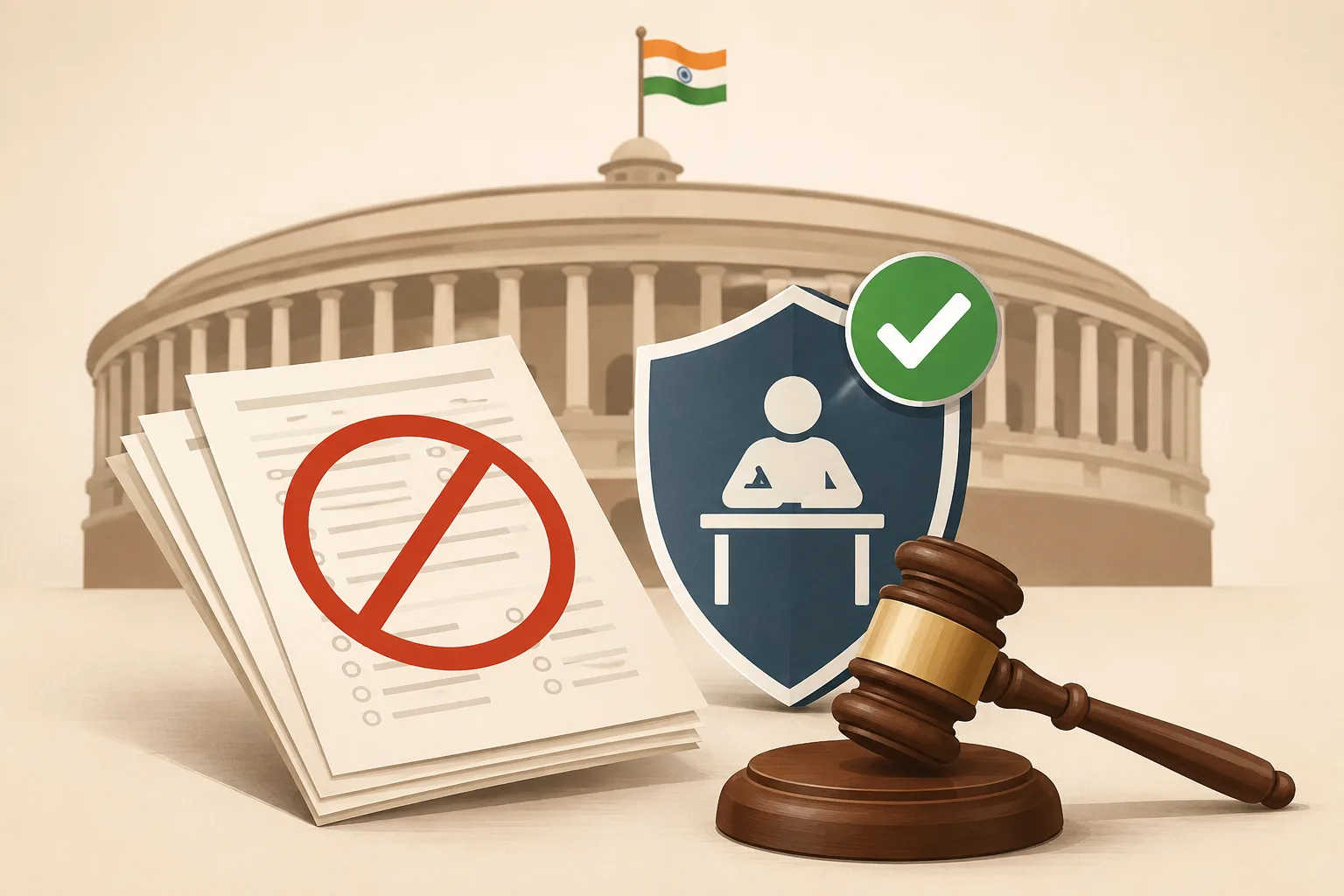
The government wants to “further strengthen the fairness,” improve the credibility of the public examination system, and ensure time-bound investigation and speedy trial in cases involving unfair means.
The Public Examinations (Prevention of Unfair Means) Amendment Bill, 2026, has been passed in the Rajya Sabha. pic.twitter.com/UsXfOrKD5U
— ANI (@ANI) July 30, 2026
A costlier gamble for those who cheat
The biggest change is in punishment. Under the existing law, a person found using unfair means faces imprisonment of three to five years and a fine of up to ₹10 lakh.
The amendment raises that range to five to 10 years and the maximum fine to ₹50 lakh. For service providers involved in malpractice, the fine rises from ₹1 crore to ₹5 crore, while the debarment period for future exam-related work goes up from four years to eight.
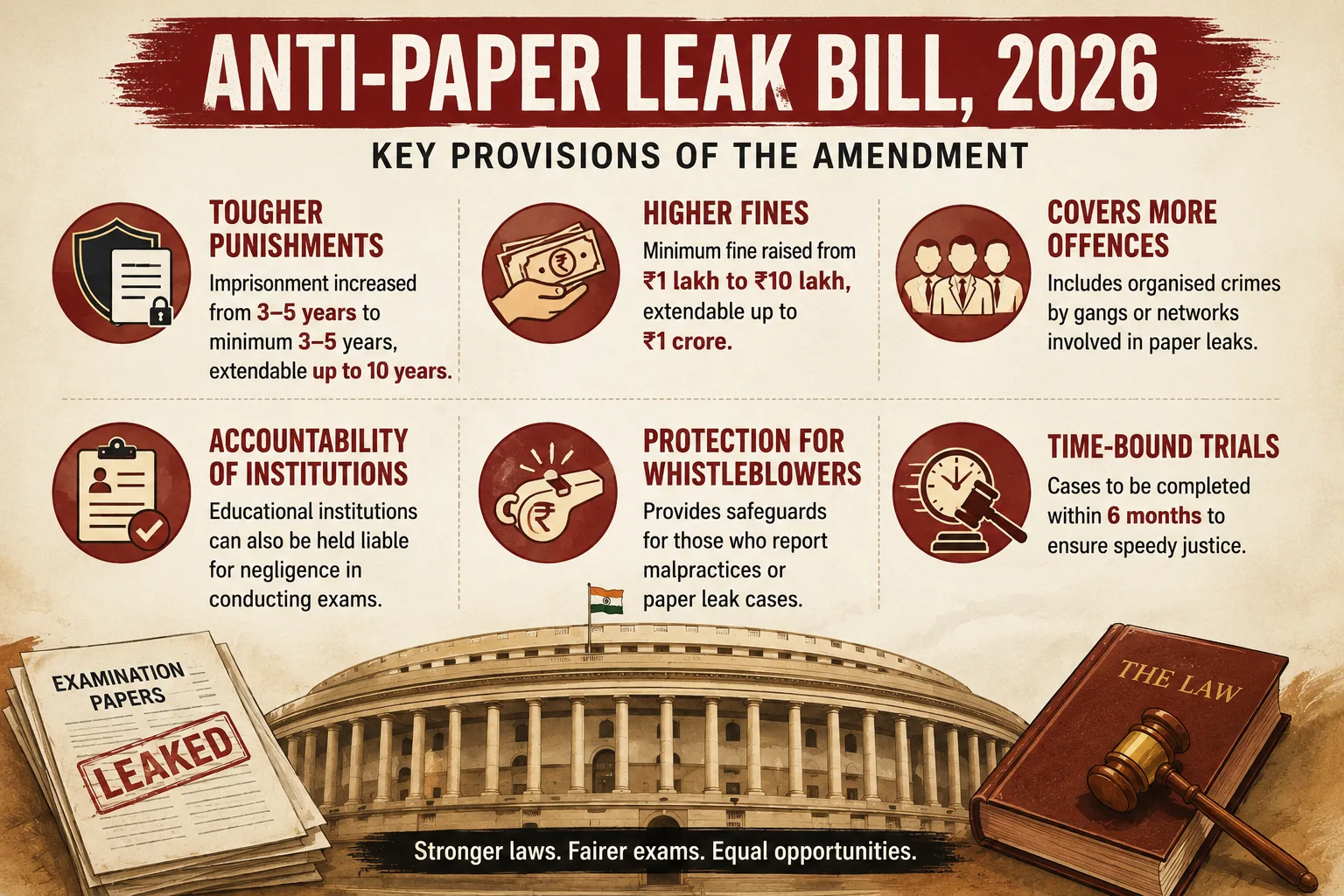
Where the offence is linked to organised crime, the minimum jail term is increased to seven years and the minimum fine to ₹10 crore.
#WATCH🔗https://t.co/vijdZMpS01
— DD India (@DDIndialive) July 30, 2026
Top Headlines | DD India Live
🔶 Rajya Sabha discusses Public Examinations Prevention of Unfair Means Amendment Bill 2026
🔶 Jitendra Singh highlights key features of the anti-paper leak legislation
🔶 US says dozens of IRGC targets hit in major… pic.twitter.com/a2DhkIpHNw
Justice is asked to keep brisker time
The Bill also tries to speed up enforcement, which is one of its central goals.
It empowers the Centre to constitute a special task force to investigate offences, requires investigations to be completed within two months, and asks every state and Union Territory to designate a Court of Session as a Special Fast Track Court for such cases.
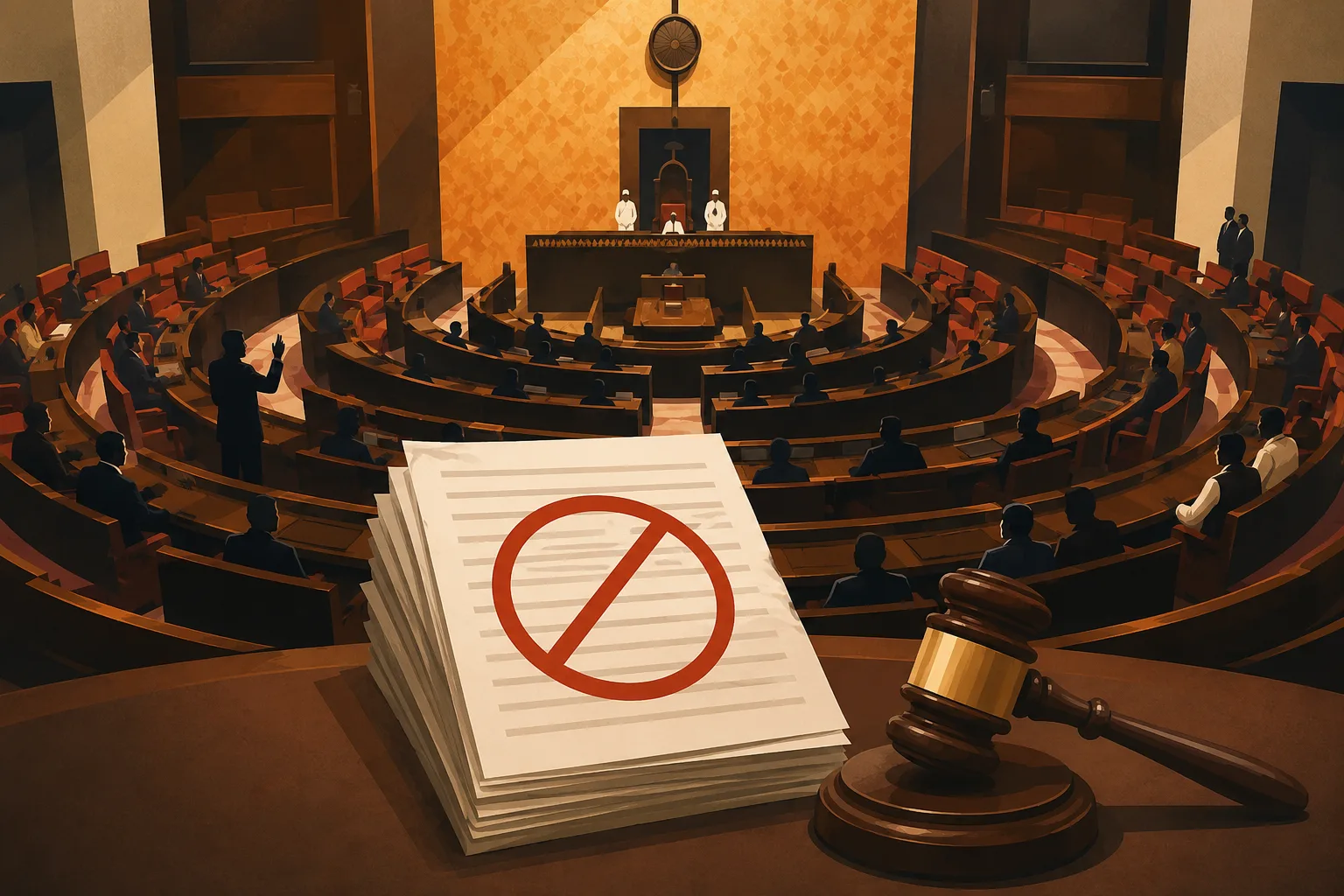
Those courts will hear the matter on a day-to-day basis, and trials are meant to conclude within three months of the filing of the chargesheet.
Appeals against judgments, orders, or sentences from these courts will lie before a bench of two judges of the High Court and, as far as possible, are to be disposed of within three months of admission.
VIDEO | Delhi: BJP Rajya Sabha MP Manan Mishra says, "If boycotting, spreading anarchy, and misleading the public are all that remain of the opposition's job, then the public has already shown them their place long ago. That is why they are sitting in the opposition, and will… pic.twitter.com/9tdSFKEc6K
— Press Trust of India (@PTI_News) July 30, 2026
No quiet affair
The debate in the Rajya Sabha quickly moved beyond the text of the Bill to the politics around it.
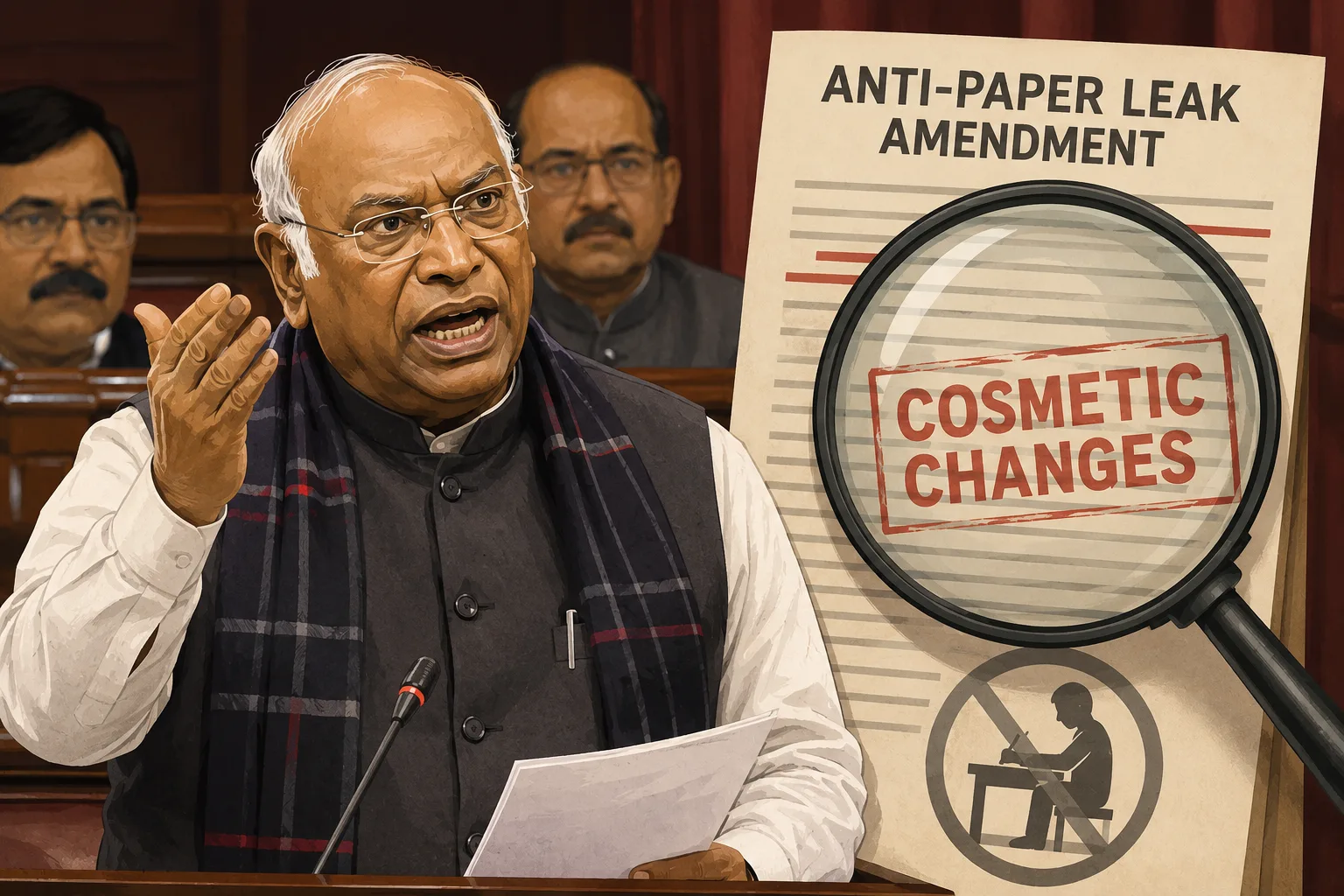
Congress leader Mallikarjun Kharge said the government had made only “cosmetic changes” and argued that the proposed amendments would not be enough to curb malpractices in public examinations.
Shortly before the walkout, Congress MP Pramod Tiwari demanded Home Minister Amit Shah’s presence in the House and said, “Home Minister Amit Shah would come, but he is not coming.”
Leader of the House JP Nadda hit back, saying the Opposition had “lost the issue” and accusing it of showing no respect for parliamentary procedure.
The amendment now stands as Parliament’s latest attempt to build a tougher framework around examination integrity, with the government arguing that stricter punishment and faster trial timelines are necessary to deter leaks and organised malpractice.
Also Read | What is Manusmriti? Why Kharge’s remarks triggered a Rajya Sabha confrontation
FAQs
Q1: What is the Anti-Paper Leak Amendment Bill, 2026?
The Anti-Paper Leak Amendment Bill, 2026 strengthens India’s public examination law by increasing penalties, mandating faster investigations and creating fast-track courts for paper leak cases.
Q2: What are the new penalties under the Anti-Paper Leak Amendment Bill?
The amended law raises imprisonment to up to 10 years and fines to ₹50 lakh for individuals, with harsher penalties for organised crime and service providers involved in exam malpractice.
