


























Delhi witnessed its hottest day of July in two years on Thursday, with soaring temperatures and high humidity making outdoor conditions especially uncomfortable. According to the India Meteorological Department (IMD), the maximum temperature reached 39.2 degree Celsius, the highest recorded in the month since July 30, 2024, when it touched 39.3 degrees.
The day’s maximum was 4 degree Celsius above the normal of 35.2 degree Celsius for the July 15-19 period. With little rainfall over the past few days, the city also experienced a sharp rise in the heat index, commonly referred to as the “real-feel” temperature.
Also Read | Vikram-1 launch: India’s first private space mission takes off July 18

Heat and humidity continue to dominate
The IMD has issued a yellow alert for isolated hot and humid conditions on Friday and Saturday. Rain is expected to return on Saturday, prompting another yellow alert for light showers and gusty winds in parts of the city.
The weather department has forecast the maximum temperature to remain between 38 degree Celsius and 40 degree Celsius on Friday before dropping to 35 degree Celsius to 37 degrees on Saturday if the expected rainfall materialises.
The minimum temperature on Thursday settled at 30.2 degree Celsius, which was 3 degree Celsius above normal for this time of year. It was also the warmest July night recorded since July 31, 2024, when the minimum touched 30.4 degree Celsius.
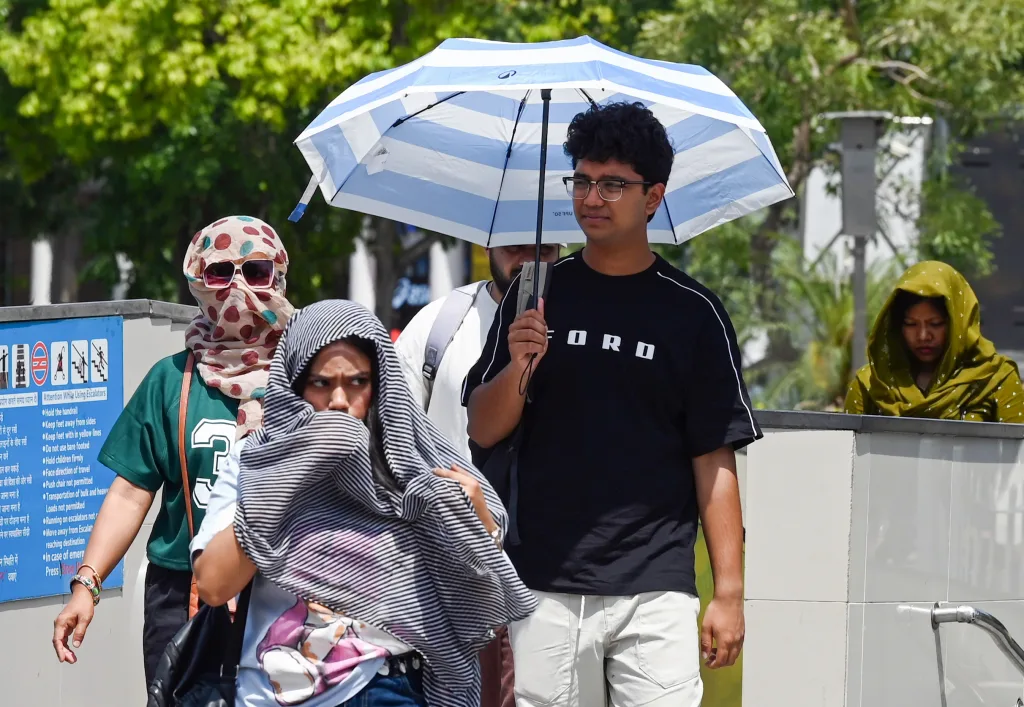
Why did it feel much hotter?
While the actual temperature during the afternoon was 38.2 degree Celsius, the heat index climbed to 48 degree Celsius at 2.30 pm, highlighting the impact of high moisture levels in the air.
Also Read | How climate change is quietly affecting India’s sleep
The heat index combines air temperature with relative humidity to indicate how hot it feels to the human body. Higher humidity reduces the body’s ability to cool itself through sweating, making conditions feel far more oppressive than the thermometer suggests.
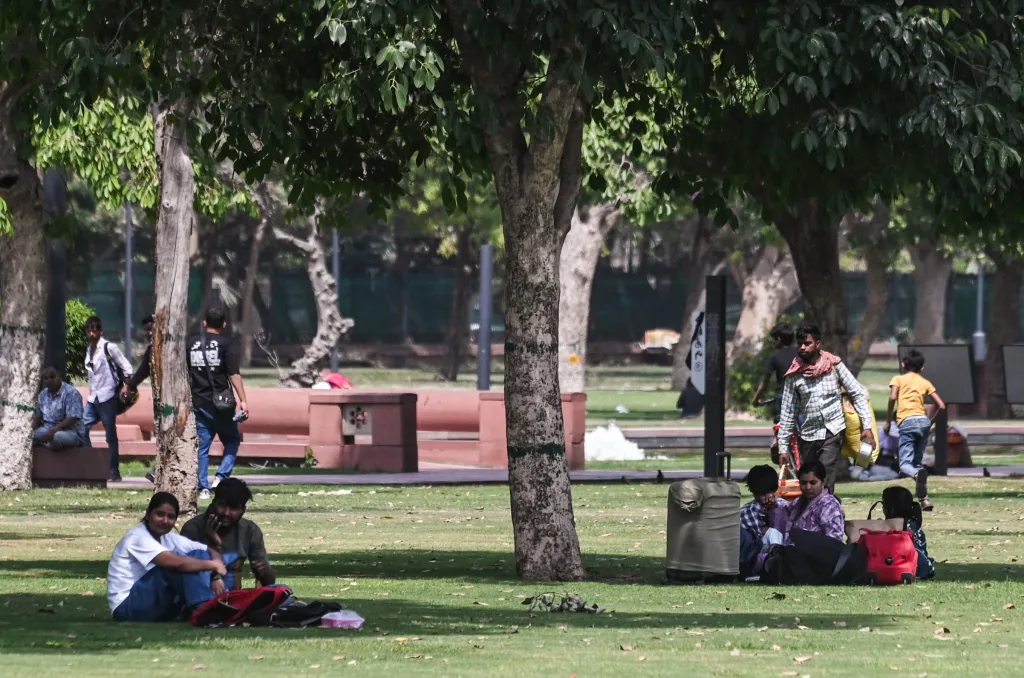
Explaining the current weather pattern, Mahesh Palawat, Vice President of Skymet Weather, told Hindustan Times, “There has been no significant rain for the past few days, and dry westerly winds have been prevailing. Additionally, southwestern winds from the Arabian sea are blowing at the lower level, increasing humidity.
For rain to be induced, a significant weather system needs to develop over the city, such as the monsoon trough, which is currently at the foothills, returning to Delhi.”
According to the IMD forecast, relief is expected over the weekend as light rain and strong winds are likely to bring down temperatures across parts of the national capital.
FAQs:
What was Delhi’s maximum temperature on Thursday?
The IMD recorded a maximum temperature of 39.2°C, the highest in July in two years.
Why did Delhi feel as hot as 48°C?
High humidity combined with the air temperature pushed the heat index, or “real-feel” temperature, to 48°C.