





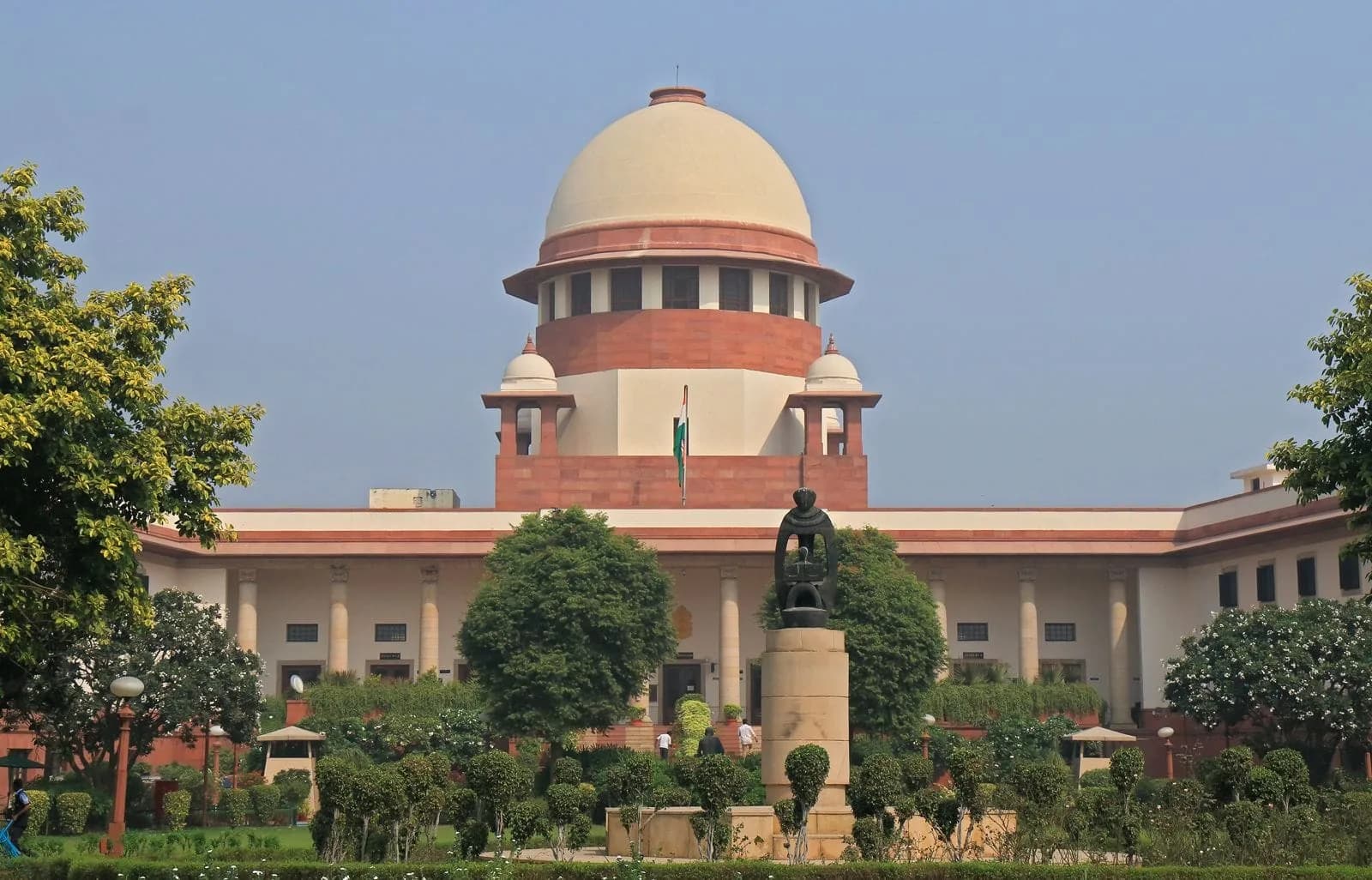



















The Supreme Court has introduced new guidelines for litigants appearing without lawyers following last week’s courtroom disruption that interrupted judicial proceedings. The decision was taken during a full court meeting of all Supreme Court judges on Wednesday and formally announced a day later.
The move comes days after a litigant allegedly created chaos inside a courtroom by throwing papers, using abusive language and resisting security personnel, prompting police action.
Virtual appearance to be encouraged
Under the new arrangement, individuals appearing in person will generally be encouraged to argue their cases through virtual mode during their interaction with the registrar under the Supreme Court Rules, 2013.
Also Read | ‘Very bad, stressful’: Supreme Court questions CBSE’s Class 9 third-language rule
However, those who choose to appear physically will face an additional condition. According to the official statement, “no live-streaming shall be done and video-recording of the proceedings shall also not be permitted”, per a report by Hindustan Times.
The decision is aimed at maintaining courtroom discipline while continuing to provide litigants with access to the judicial process. It also seeks to prevent disruptive incidents from being widely circulated through live broadcasts.
Decision follows recent courtroom incident
The policy change follows the events of July 10 in Court No. 13, where petitioner-in-person Prabal Pratap allegedly referred to judges as “judicial servants”, hurled papers, used abusive language and resisted security personnel before being removed from the courtroom.
The bench led by Justice KV Viswanathan chose not to initiate contempt proceedings, noting that it was refraining from doing so in view of the petitioner’s condition. Delhi Police later arrested Pratap and another law student, Chander Bhan, on charges that include assaulting a public servant and obstructing judicial proceedings.
The latest measures also come after another security incident in October 2025, when a 71-year-old lawyer allegedly attempted to throw a shoe at then Chief Justice Bhushan R Gavai. At the time, the court had stressed the need for preventive safeguards instead of punitive action.
Also Read | Is starting a school in India a costly affair? A complete guide to costs, licences and approvals
Fresh push to reduce case backlog
Apart from the new courtroom rules, the full court also approved several administrative measures to reduce pending cases.
Around 100 bunch matters, which together account for nearly 9,177 pending cases, will be listed for out-of-turn final hearing before appropriate benches. Once these matters are decided, the court plans to take up the oldest pending cases on designated working days.
The judges also agreed to simplify the daily cause list, form a committee to improve case listing, continue the practice of obtaining advance timelines for oral arguments, and participate in the Samadhan Samaroh, which will conclude with a special Lok Adalat scheduled for August 21, 22 and 23, 2026.
FAQs:
What new rule has the Supreme Court introduced for litigants-in-person?
The court will ordinarily encourage virtual appearances, while physical appearances will not be live-streamed or video-recorded.
Why did the Supreme Court change the rules?
The decision follows a recent courtroom disruption involving a litigant-in-person that interrupted judicial proceedings.
