





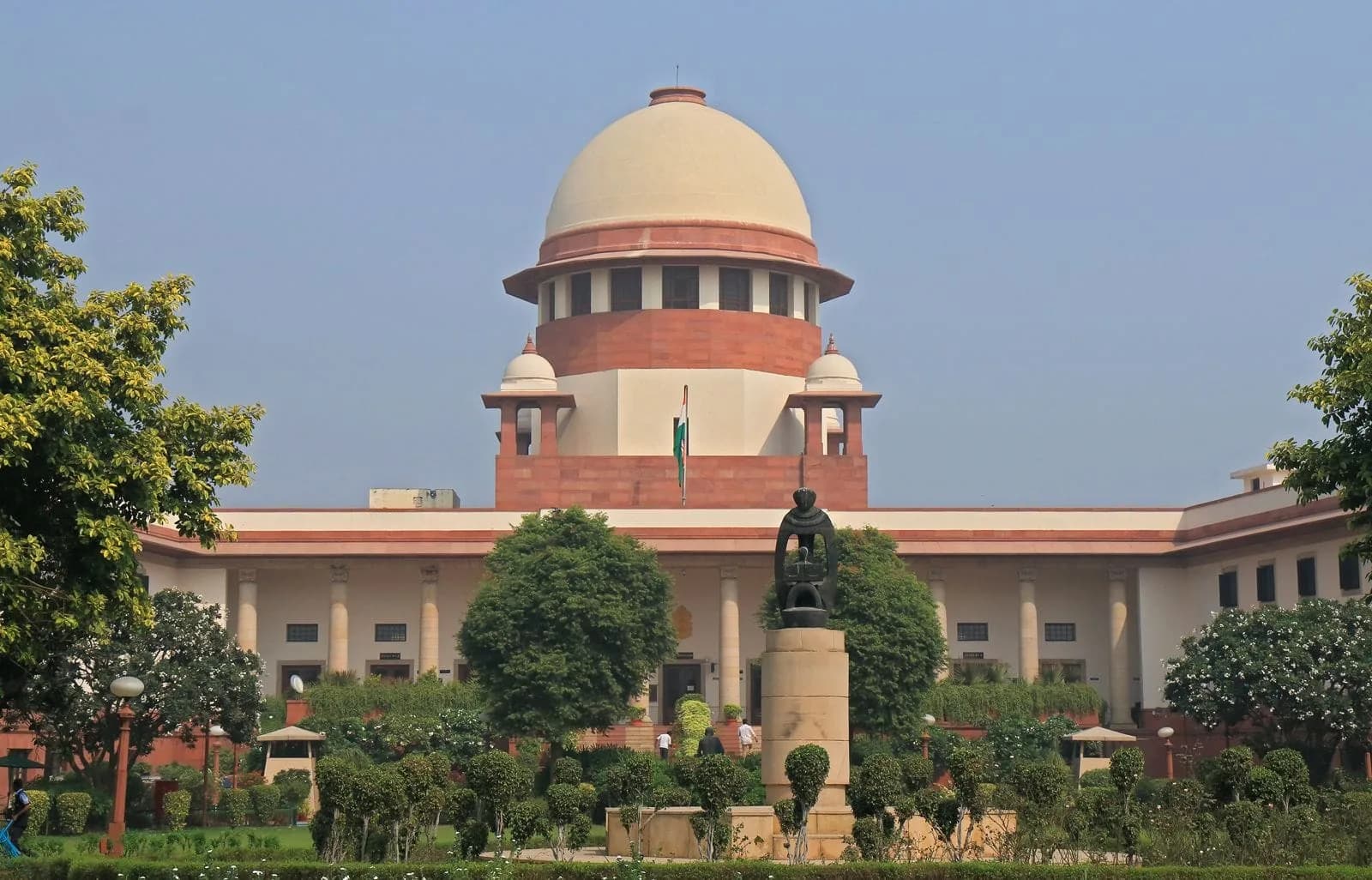






















The Supreme Court on Monday said it will direct the Central Board of Secondary Education (CBSE) to implement nationwide an Orissa High Court order requiring APAAR (Automated Permanent Academic Account Registry) ID consent forms to clearly allow parents to refuse consent or opt out of the scheme.
A bench headed by Chief Justice of India Surya Kant, along with Justices Joymalya Bagchi and V. Mohana, was hearing a petition challenging the constitutional validity of the Aadhaar-linked student identification system. The petition argued that although the APAAR scheme is described as voluntary, students are effectively being compelled to enrol, raising concerns over privacy and data protection.

Also Read | Bar Council of India issues circular prohibiting social media; bans courtroom reels
The court said a detailed order would follow.
Why did the Supreme Court intervene?
Senior advocate Indira Jaising, appearing for parents of four students, argued that children were being compelled to register under a non-statutory scheme despite the Supreme Court’s 2019 Aadhaar judgment, which held that children cannot be forced to obtain Aadhaar.
She contended that schools were insisting on Aadhaar-linked APAAR IDs for examination-related purposes, making the voluntary nature of the scheme ineffective in practice.
Jaising, assisted by advocate Paras Nath Singh, also argued that the consent process violated provisions of the Digital Personal Data Protection Act, 2023, because parents were not given a meaningful choice to refuse consent or exercise control over their children’s personal data.
Relying on the Orissa High Court’s December 2025 judgment, she urged the apex court to extend the same safeguards across the country.
Accepting the broad submission, the bench observed that since the Union government had not challenged the Orissa High Court ruling, CBSE should implement those directions nationwide.
What did the court say about privacy concerns?
While acknowledging concerns over consent, the Supreme Court observed that the APAAR scheme appeared to serve a legitimate educational purpose by creating a unique academic identity for students and improving record management.
“Let us not doubt everything in the country with a suspicious eye; it is a welcome step,” the bench observed, adding that the country’s data protection law safeguards personal information and that collected data cannot be used beyond its intended purpose.
Also Read | Bill to raise Supreme Court judges’ strength to 38 tabled
In addition to this, the petition had asked the court for directions to make sure that students who do not apply for an APAAR ID are not barred from being admitted to schools or registering for examinations or not receiving their mark sheets and certificates or any other educational benefit.
The court had also asked the board to make sure that any processing of student data should be in accordance with the Digital Personal Data Protection Act, 2023.
FAQs
Q1. What did the Supreme Court say about APAAR IDs?
The Supreme Court stated that it would issue directions to CBSE to include an option for parents to opt out in APAAR ID consent forms in India.
Q2. Are students allowed to refuse enrollment in APAAR ID program?
The court indicated that parents should have the option to refuse consent or opt out, in line with the Orissa High Court’s safeguards, while a detailed order is awaited
