

























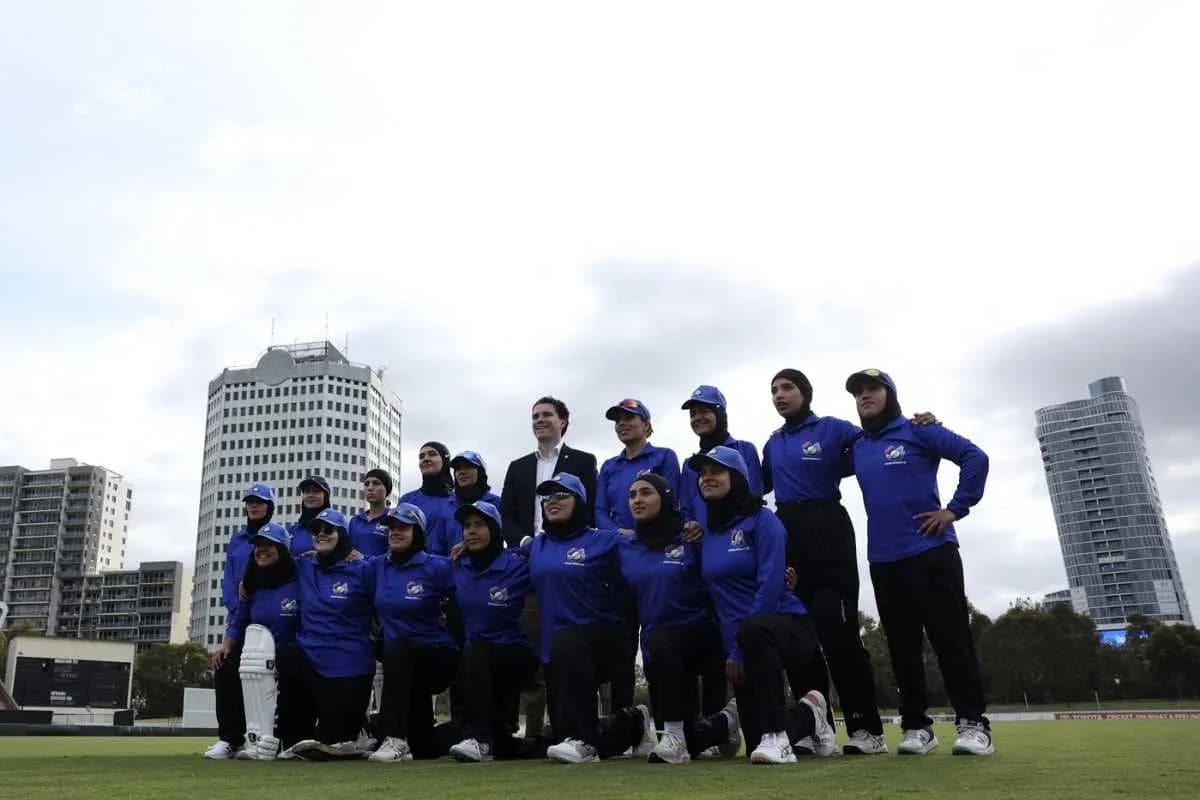
The International Cricket Council (ICC) has unveiled a long-term plan to integrate the Afghan refugee women’s cricket team into its global qualification structure by 2030, marking a major step in supporting players displaced after the Taliban regained control of Afghanistan in 2021.
The proposal was approved during the ICC Annual Conference in Edinburgh, where the Board also agreed to continue its Development Pathway Programme. A newly reconstituted Special Taskforce will oversee the initiative and prepare a roadmap to help the refugee team become eligible for ICC qualification tournaments by the end of the decade.
ICC to make a new pathway for Afghanistan refuge girls
Rather than offering immediate international recognition, the ICC aims to build a sustainable development programme for the team. The pathway will include high-performance coaching, regular training camps, competitive fixtures, fitness support and access to world-class cricket facilities.
Good news! The ICC has officially approved a long term development and support program for the Afghanistan Women’s Cricket Team. This is an important step in supporting athletes who were denied their right to play for years.
— Jahanzib Wesa (@jahanzibwesa) July 13, 2026
Today, Afghanistan’s women cricketers are back on the… https://t.co/XzZvkI5hkx pic.twitter.com/dAks5uAU6X
The objective is to ensure the players are fully prepared to compete at an international level before entering ICC qualification events. The governing body believes a gradual approach will provide the team with the best opportunity to succeed on the global stage.
The refugee players have welcomed the announcement, describing the 2030 target as a realistic goal that gives them renewed purpose after years of uncertainty.
ICC fresh start after forced displacement
Afghanistan’s women’s cricket programme collapsed after the Taliban imposed restrictions on women’s participation in sports. Several national players fled the country, with many settling in Australia, where they have continued training with support from Cricket Australia, local organisations and the ICC.
👏 A BIG STEP FOR AFGHAN WOMEN'S CRICKET. ❤️🏏
— Akaran.A (@Akaran_1) July 14, 2026
– The ICC has approved a development pathway for Afghan refugee women cricketers, aiming to help them compete in ICC qualification pathways by 2030. A significant initiative under ICC Chairman Jay Shah. 🫡#ICC #JayShah #Cricket pic.twitter.com/l7EJaaa3QI
Although the refugee side is not yet recognised as an official international team, the ICC’s latest commitment represents its strongest effort so far to create a competitive future for the players.
If the roadmap progresses as planned, the Afghan refugee women’s team could enter the ICC qualification pathway by 2030. The move would not only restore international opportunities for the displaced cricketers but also stand as a significant milestone for women’s cricket and the sport’s commitment to inclusivity.