



























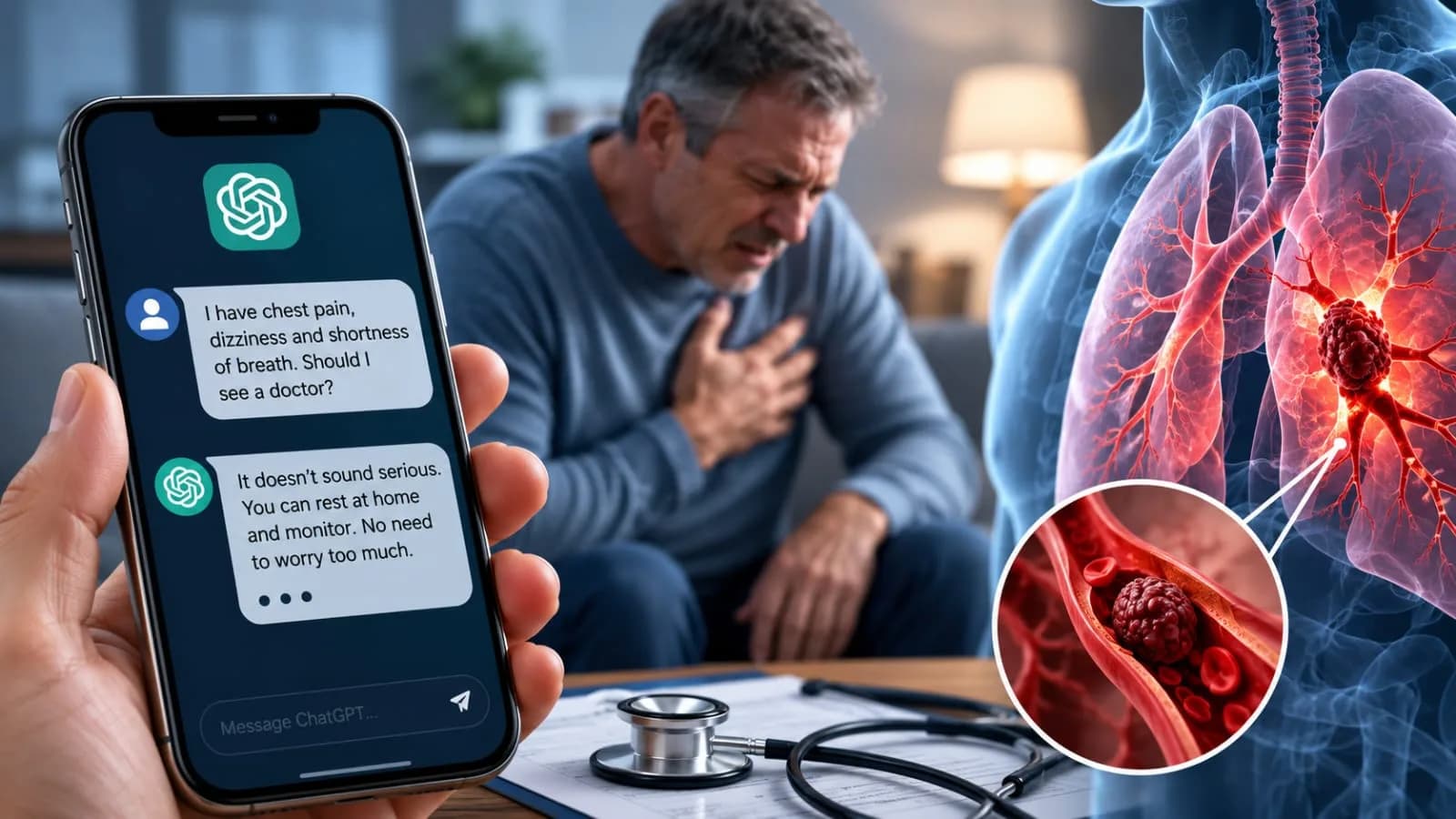
A Florida pastor has filed a lawsuit against OpenAI and its CEO Sam Altman, alleging that medical guidance from ChatGPT delayed him from getting life saving treatment and contributed to a near fatal pulmonary embolism.
The case has renewed debate about people using AI chatbots for health advice and how much trust they place in these tools.
Scott Winters, a 55 year old pastor, claims ChatGPT repeatedly reassured him about his symptoms and advised him against seeking medical care.
Weeks later he was diagnosed with a massive pulmonary embolism caused by multiple blood clots in both lungs, a condition doctors reportedly said was made worse by prolonged immobility.
Also Read | New Speedometer feature introduced by Google; how will it affect Android users?
What the lawsuit claims
The lawsuit was filed in San Francisco County Superior Court on July 21. It states that Winters had become a regular ChatGPT user and increasingly turned to it for medical advice after experiencing recurring dizziness, blood pressure fluctuations, progressive weakness, and reduced mobility.
According to the complaint, ChatGPT played down how serious his symptoms were and encouraged him to stay home rather than go to the emergency room.
Also Read | Inside Telangana’s digital election battlefield: The rise of political narratives
The filings also allege the chatbot brought up Winters’ Christian faith while reassuring him, which his lawyers argue made him trust it even more and kept him from going to a hospital, even though his family repeatedly urged him to.
What is a pulmonary embolism
A pulmonary embolism happens when one or more blood clots block the arteries that carry blood to the lungs. It is a medical emergency needing immediate treatment, since it can lower oxygen levels, put strain on the heart, and turn fatal if not treated. Common warning signs include
Sudden shortness of breath
Chest pain that gets worse with breathing
A fast heartbeat
Coughing, sometimes with blood
Dizziness or fainting
Unexplained swelling or pain in one leg
Anyone with these symptoms should get emergency medical help right away.
Why self diagnosing with AI can be risky
AI chatbots can share general health information and help people understand medical terms or prepare questions for a doctor.
They cannot examine a patient, check vital signs, or fully interpret clinical findings the way a doctor can. AI tools also rely completely on whatever information the user chooses to share, can miss subtle but dangerous warning signs, and can sometimes give inaccurate or misleading answers.
Also Read | Facebook down? ‘Account temporarily unavailable’ error hits thousands of users
Something that seems minor when described online could actually be a serious emergency in real life.
OpenAI’s response
OpenAI spokesperson Drew Pusateri responded by stating that ChatGPT is not a doctor and should never replace professional healthcare.
The company acknowledged that many people already search online for health information, and said AI can help them organize questions and prepare for conversations with qualified healthcare professionals, but should not replace those professionals.
OpenAI’s terms of use also warn users not to rely on ChatGPT as their only source of truth for major decisions involving medical care, legal issues, finances, employment, or other high stakes situations.
When you should always see a doctor
Doctors recommend getting immediate medical attention if you experience
Chest pain
Difficulty breathing
Sudden weakness
Persistent dizziness or fainting
Severe abdominal pain
High fever along with confusion
Sudden trouble with vision or speech
These symptoms need prompt medical evaluation and should never be handled only through online advice or AI chatbots.
Can AI still be useful in healthcare
Yes, but only within its limits. AI tools can help people understand common medical terms, learn about possible causes of symptoms, prepare questions before a doctor’s visit, stay on track with medication, and access reliable health education.
Even so, these tools should support, not replace, proper clinical evaluation by a qualified healthcare professional.
This lawsuit is a reminder of the risks that come with depending entirely on AI chatbots for medical decisions.
Also read | How can scammers be prevented from WhatsApp? Here are 4 security settings
While artificial intelligence can be a helpful educational resource, it cannot diagnose illness or judge when emergency treatment is needed. If you develop symptoms that are persistent, worsening, or potentially life threatening, the safest step is to see a qualified healthcare professional right away rather than relying only on an AI assistant.
FAQS
1.ChatGPT diagnose medical conditions?
No. ChatGPT is not a doctor and cannot examine patients, check vital signs, or replace professional medical judgement.
2.What should I do if AI tells me my symptoms are not serious but I still feel unwell?
Trust your body over the chatbot. If you have symptoms like chest pain, difficulty breathing, sudden weakness, or persistent dizziness, seek medical attention immediately rather than relying on reassurance from an AI tool.
