

















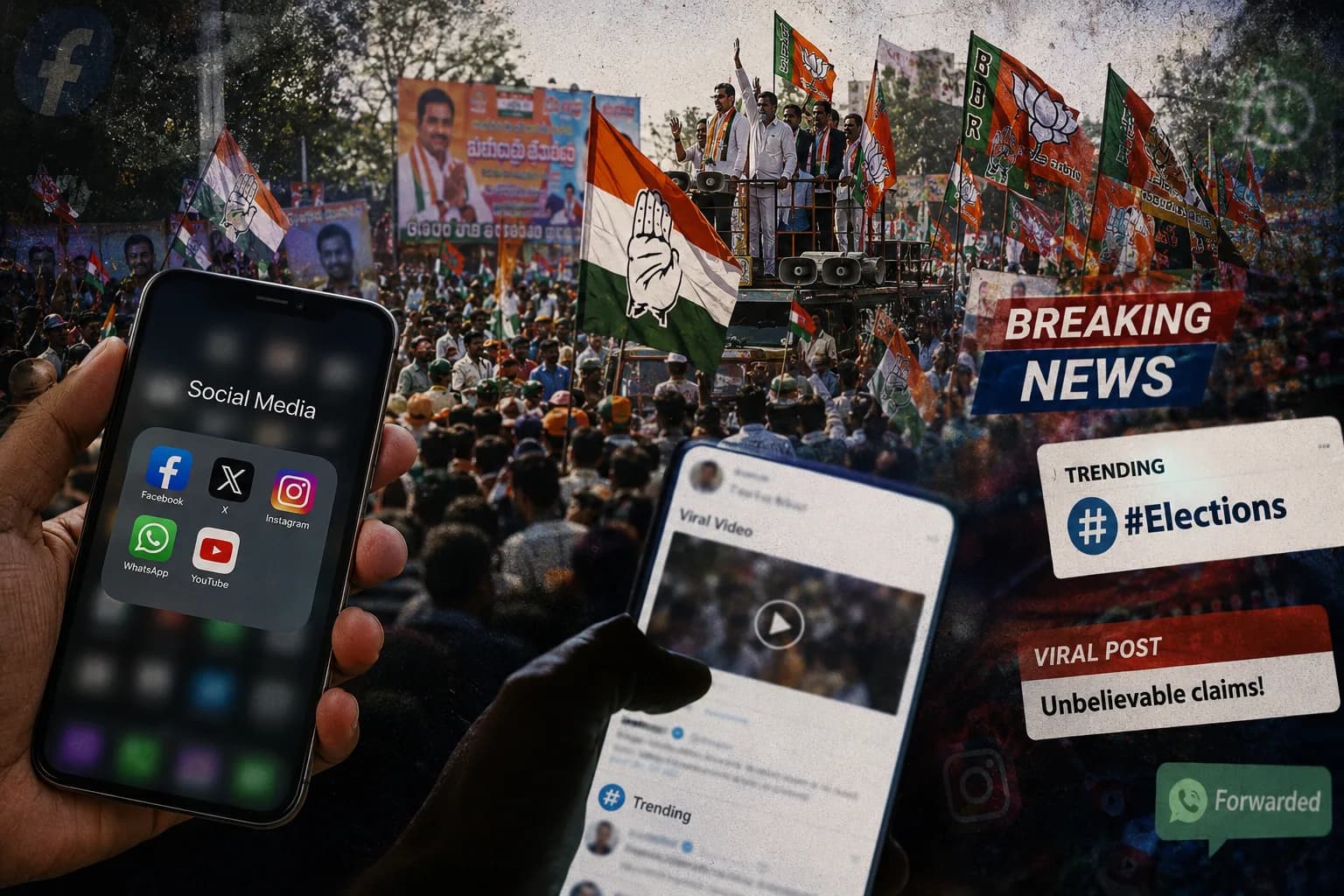
Elections in India are increasingly being fought on two fronts: on the ground through rallies, campaigns and public meetings, and online through social media platforms where narratives can spread within minutes. In Telangana, this shift has become particularly evident over the past few election cycles, with political debates unfolding simultaneously across Facebook, X, Instagram, WhatsApp and YouTube.
Political messaging today extends beyond manifestos and speeches. Viral videos, edited clips, screenshots, hashtags and influencer-led campaigns frequently shape public conversations before official agencies or courts have an opportunity to establish facts. As a result, digital perception has become an increasingly important factor in modern election campaigns.
How social media became the new battleground for Telangana politics
Political parties across Telangana, including the BJP, Congress and Bharat Rashtra Samithi (BRS), have significantly expanded their digital outreach in recent years. Social media is now used not only to promote policies and campaign messages but also to respond to criticism, mobilise supporters and influence public opinion.
Communication experts note that digital platforms reward speed and engagement rather than verification. Content that evokes strong emotional reactions often travels faster than carefully verified information, making online discourse an increasingly influential part of election campaigns.
Also Read | Facebook down? ‘Account temporarily unavailable’ error hits thousands of users
While digital platforms have widened democratic participation by enabling direct communication between political leaders and voters, they have also created space for misinformation, misleading edits and selective presentation of information.
The growing power of digital narratives in politics
Researchers studying political communication have observed that online narratives frequently develop independently of official investigations or judicial proceedings.
In many cases, allegations receive extensive attention immediately after they surface, while subsequent clarifications, corrections or legal developments attract comparatively less visibility. This creates a gap between the pace of social media discussions and the slower processes of institutional fact-finding.
Political analysts argue that this phenomenon affects leaders across party lines and has become one of the defining features of contemporary election politics.
Bandi Sanjay’s controversies became part of the digital debate
Among the recent examples discussed in Telangana’s political landscape are controversies involving Union Minister of State for Home Affairs and Karimnagar MP Bandi Sanjay Kumar and members of his family.
Bandi Sanjay has emerged as one of the BJP’s prominent leaders in Telangana, having risen through the party organisation before serving as Karimnagar MP and later joining the Union Council of Ministers after the 2024 Lok Sabha elections. His political prominence has also brought increased public scrutiny.
One controversy involved allegations against his son in a criminal case. The matter remains pending before the competent court, and he has been granted regular bail while legal proceedings continue. Since the case is sub judice, no findings regarding guilt or innocence have been reached.
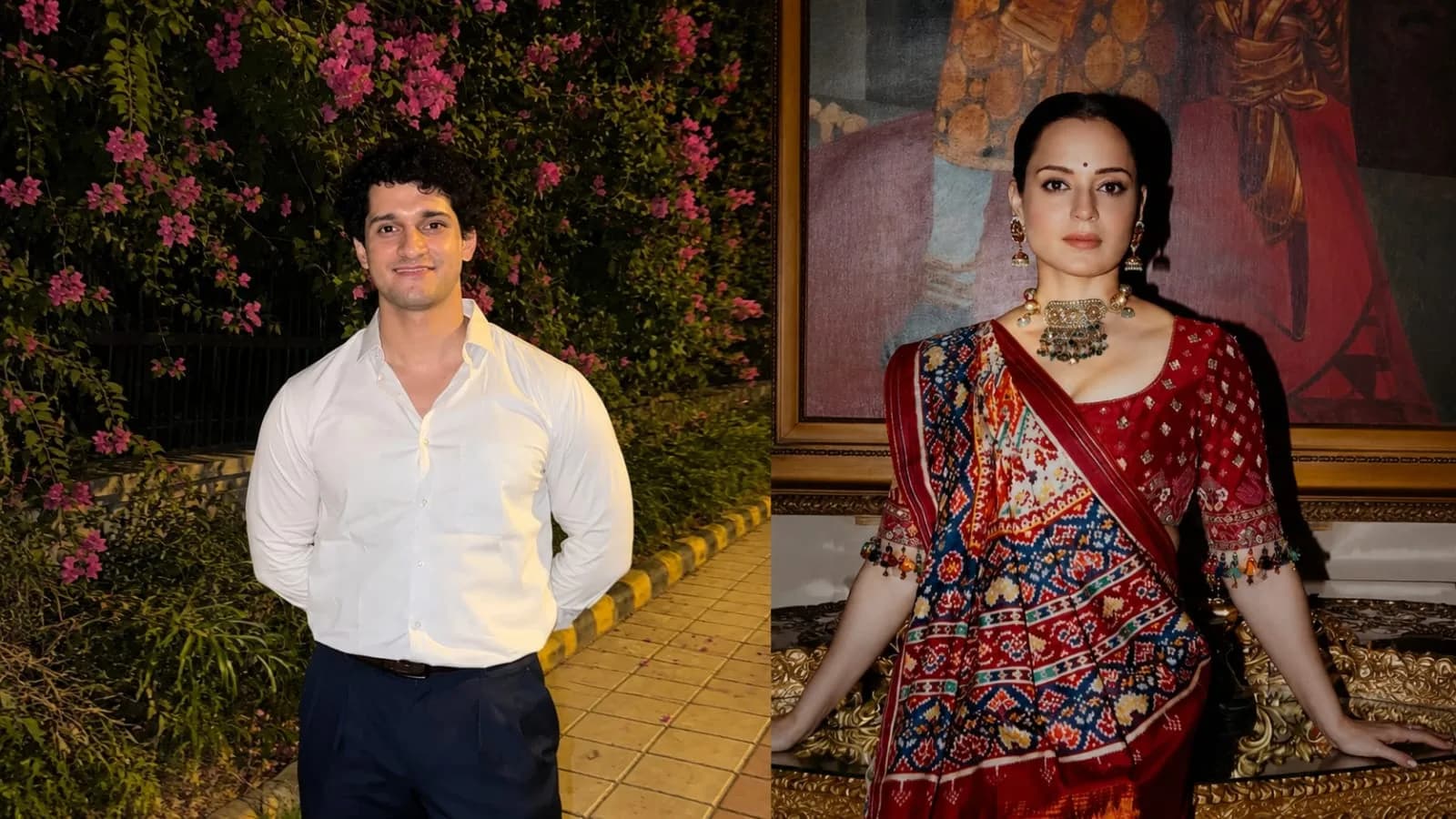
Another controversy involved allegations circulated on social media concerning Bandi Sanjay’s nephew. The claims spread rapidly across multiple platforms and became part of wider political discussions in Telangana.
Later, one of the individuals who had uploaded a widely shared video reportedly removed the content and issued a clarification stating that the information provided to him had been incorrect. The clarification circulated online but received considerably less attention than the original allegations.
Political parties continue to battle over online narratives
The controversies also became part of the broader political contest in Telangana.
BJP leaders alleged that the circulation of allegations formed part of a sustained effort to politically target Bandi Sanjay by focusing on members of his family. Some party leaders publicly accused individuals associated with the digital ecosystem of opposition leaders of amplifying these narratives.
Among those named by BJP functionaries was BRS leader and former IPS officer RS Praveen Kumar, who has been a vocal critic of the BJP. However, allegations regarding any organised online campaign remain political claims. There has been no judicial finding or official investigation establishing responsibility for coordinating such activity.
Separately, videos from programmes organised under RS Praveen Kumar’s Swaero movement also became the subject of political debate after they went viral on social media. While some BJP leaders criticised the content, RS Praveen Kumar and the Swaero movement maintained that their work is centred on education, constitutional values and the empowerment of marginalised communities.
The exchanges illustrated how political disagreements increasingly unfold through competing digital narratives rather than remaining confined to traditional campaign platforms.
Viral claims often spread faster than clarifications
Communication researchers have consistently highlighted that misinformation and emotionally charged content tend to receive greater engagement than later corrections.
Once a claim becomes widely shared, clarifications or retractions often struggle to reach the same audience. As a result, public perception may be influenced by incomplete or disputed information even before authorities verify the facts.
This pattern has become increasingly visible during election campaigns, where online engagement can rapidly shape political conversations.
Courts and social media operate at different speeds
Legal proceedings and digital discussions follow very different timelines.
An FIR marks the beginning of an investigation rather than proof of guilt. Similarly, the grant of bail safeguards an individual’s liberty while proceedings continue and does not amount to a judicial determination on the merits of the allegations.
Social media, however, operates almost instantly. Public debate often reaches its peak long before courts examine evidence or investigators complete their work, creating a disconnect between legal processes and public perception.
The Telangana experience reflects a larger national trend
The developments in Telangana reflect a broader transformation in Indian politics, where digital communication has become central to election campaigns.
Political parties across ideological lines increasingly rely on social media to engage voters, promote campaigns and respond to criticism. At the same time, all major parties have, at different points, alleged that misleading or selectively presented online content has been used against them.
Also Read | How can scammers be prevented from WhatsApp? Here are 4 security settings
Whether particular controversies emerge organically or are amplified through coordinated political activity can only be determined through credible evidence and, where applicable, official investigation.
What is clear is that digital platforms now play a defining role in shaping political perception during elections. As Telangana’s political landscape continues to evolve, maintaining a clear distinction between allegations, political messaging and verified facts will remain essential for informed public debate and democratic accountability.
