



























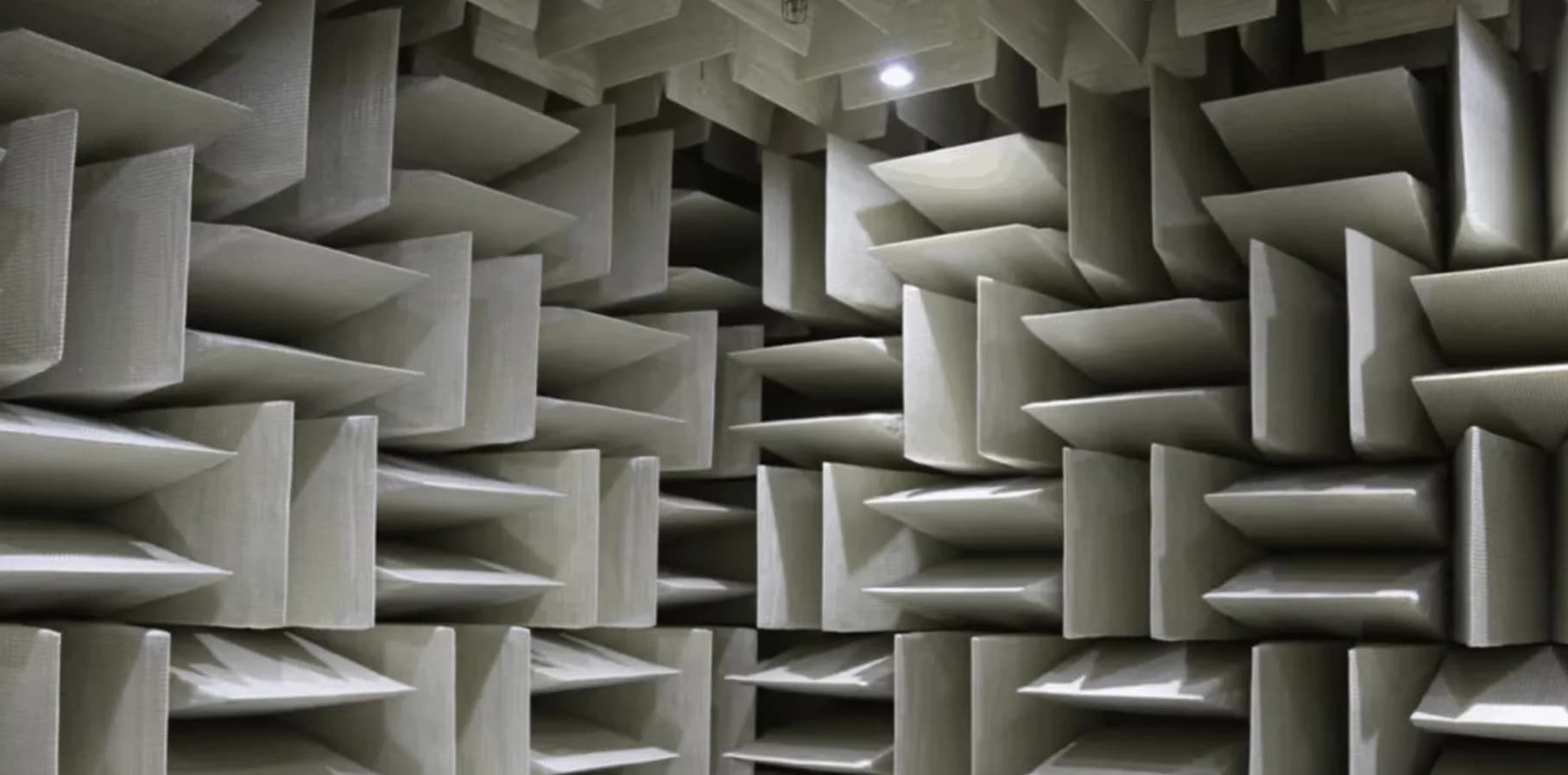
Silence is often associated with peace, but inside Microsoft’s record-breaking Microsoft anechoic chamber, silence becomes something entirely different. Hidden inside Building 87 at the company’s headquarters in Redmond, Washington, the room has earned recognition as the world’s quietest place, recording an astonishing sound level of minus 20.35 decibels. While it represents a triumph of acoustic engineering, spending time inside it can be an unsettling experience, with many visitors struggling to remain there for long.
Why the Microsoft anechoic chamber feels so unsettling
Unlike ordinary rooms where sound waves bounce off walls and ceilings, the Microsoft anechoic chamber absorbs nearly every sound that enters it. Massive fiberglass wedges covering every surface eliminate echoes, leaving the human brain without the environmental audio cues it naturally depends on.
As external sounds disappear, the body becomes the loudest source of noise. Visitors often report hearing their heartbeat, breathing, blood circulation and even the movement of their joints with surprising clarity. Without background sound to process, the brain amplifies these internal noises, making the experience feel deeply unnatural.
The Microsoft anechoic chamber has become a fascinating example of how humans rely on ambient sound without even realizing it.
Also Read | X algorithm update gives more visibility to friends’ posts and conversations

How engineers created the world’s quietest room
Constructing the Microsoft anechoic chamber required years of specialised engineering. The room is enclosed within multiple layers of concrete and steel that isolate it from outside noise. It also rests on vibration-dampening springs that prevent movement from nearby roads, plumbing systems or even footsteps elsewhere in the building from entering the chamber.
Instead of a conventional floor, visitors walk on a suspended steel cable mesh positioned above additional sound-absorbing wedges. Every design element works together to eliminate reflections and vibrations, creating an environment that approaches the theoretical limit of silence.
Microsoft uses the facility to test microphones, speakers, laptops, gaming hardware and artificial intelligence-powered audio systems under perfectly controlled acoustic conditions.
Also Read | Cyber fraud complaints cross 12.7 lakh; UP tops, Maharashtra hit hardest

What prolonged silence does to the human brain
Researchers say the Microsoft anechoic chamber demonstrates that complete silence can be psychologically challenging. Without familiar sound reflections, the brain loses important spatial references, causing balance problems and disorientation. Some visitors experience ringing in the ears or even auditory hallucinations as the brain attempts to compensate for the absence of sound.
Although most people can tolerate the environment for a short period, remaining inside for extended durations becomes increasingly uncomfortable. The chamber highlights the remarkable role sound plays in everyday perception and mental stability.
