























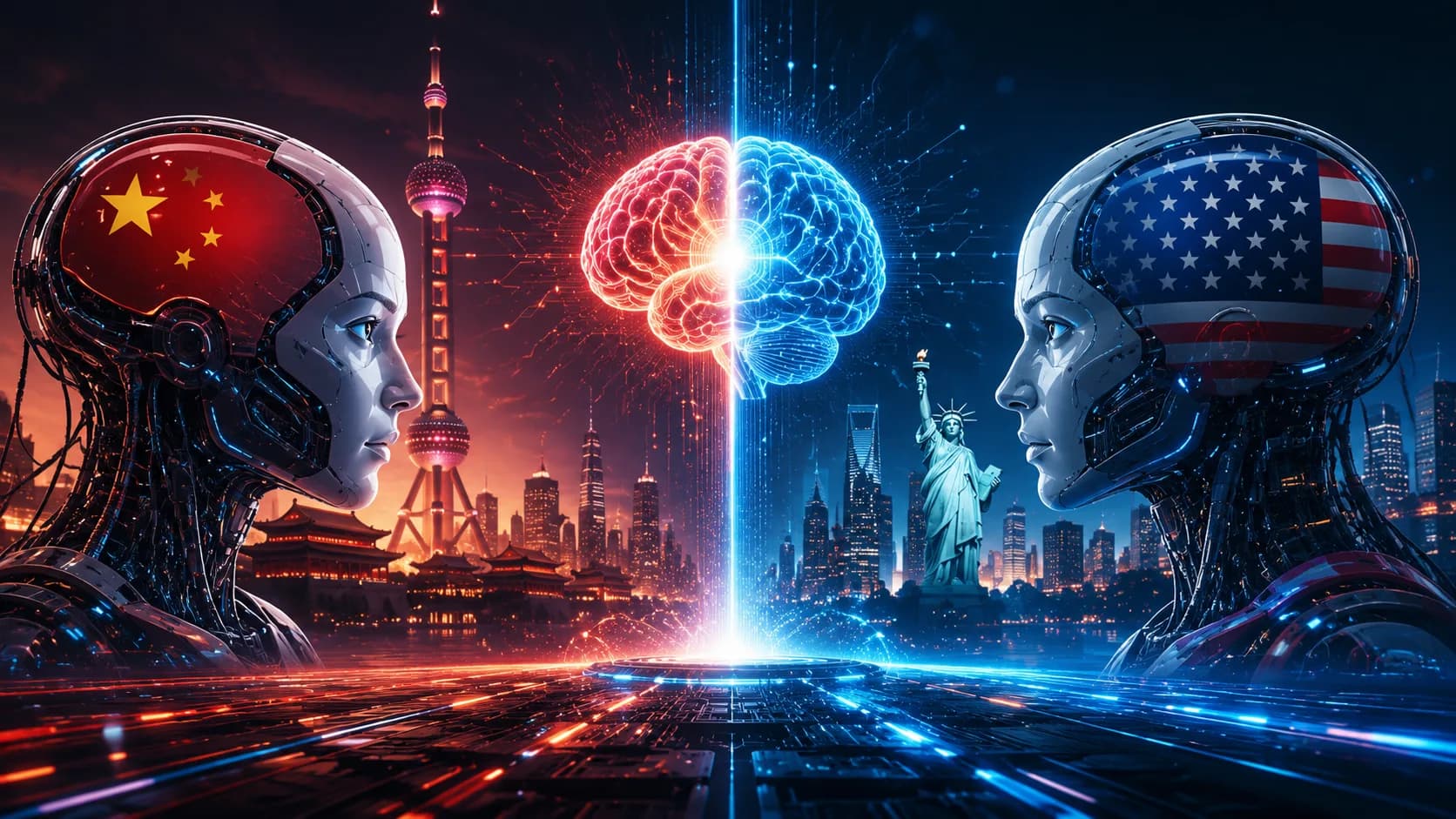
Kimi K3 is an open-weight frontier model that surprised the global AI community with its performance. But why is this coming up in between a news report surrounding China and the AI arms race?
Because, the United States appears to be faltering and the AI gap between them and China seems to be increasing, as per a big claim by an Axios article. The article titled ‘China has just erased America’s AI lead’, talks about Moonshot AI’s Kimi K3, which is an open-weight frontier model that surprised the global AI community with its performance.
Why does Kimi K3 matter in the AI race?
According to early evaluations, it rivals or even surpasses several leading US models in specific tasks while costing significantly less to run.
Also Read | Microsoft’s silent room is so quiet it can affect your mind
However, this will raise eyebrows at Silicon Valley, as unlike many flagship American models, Kimi K3 is open-weight, allowing developers to inspect, modify and deploy it more freely. The launch has challenged a long-held assumption that the US maintained a comfortable technological lead over China in generative AI.
The article also claims that Chinese AI companies are iterating much faster than expected. Open-source strategies are accelerating adoption worldwide.
Also Read | Meta pulls controversial AI Instagram image feature after backlash
If Chinese models become the default choice because of lower costs and comparable performance, US firms could lose both market share and geopolitical influence.
Is America still in a winnable stage?
The authors also suggest that AI companies based in the US like Anthropic or OpenAI still lead the AI race, ahead of Chinese AI companies. However, whether this is just an early lead, considering the growth of Chinese AI organizations, remains to be seen.
Moreover, the technological gap, due to the rapid development of Agentic AI, is significantly shrinking. This has also surprised policymakers and AI investors alike, who did not expect such a rapid upsurge in AI tech development.
The AI competition has effectively become a two-horse race between the US and China, with leadership likely to swing based on execution rather than an enduring technological advantage.
