



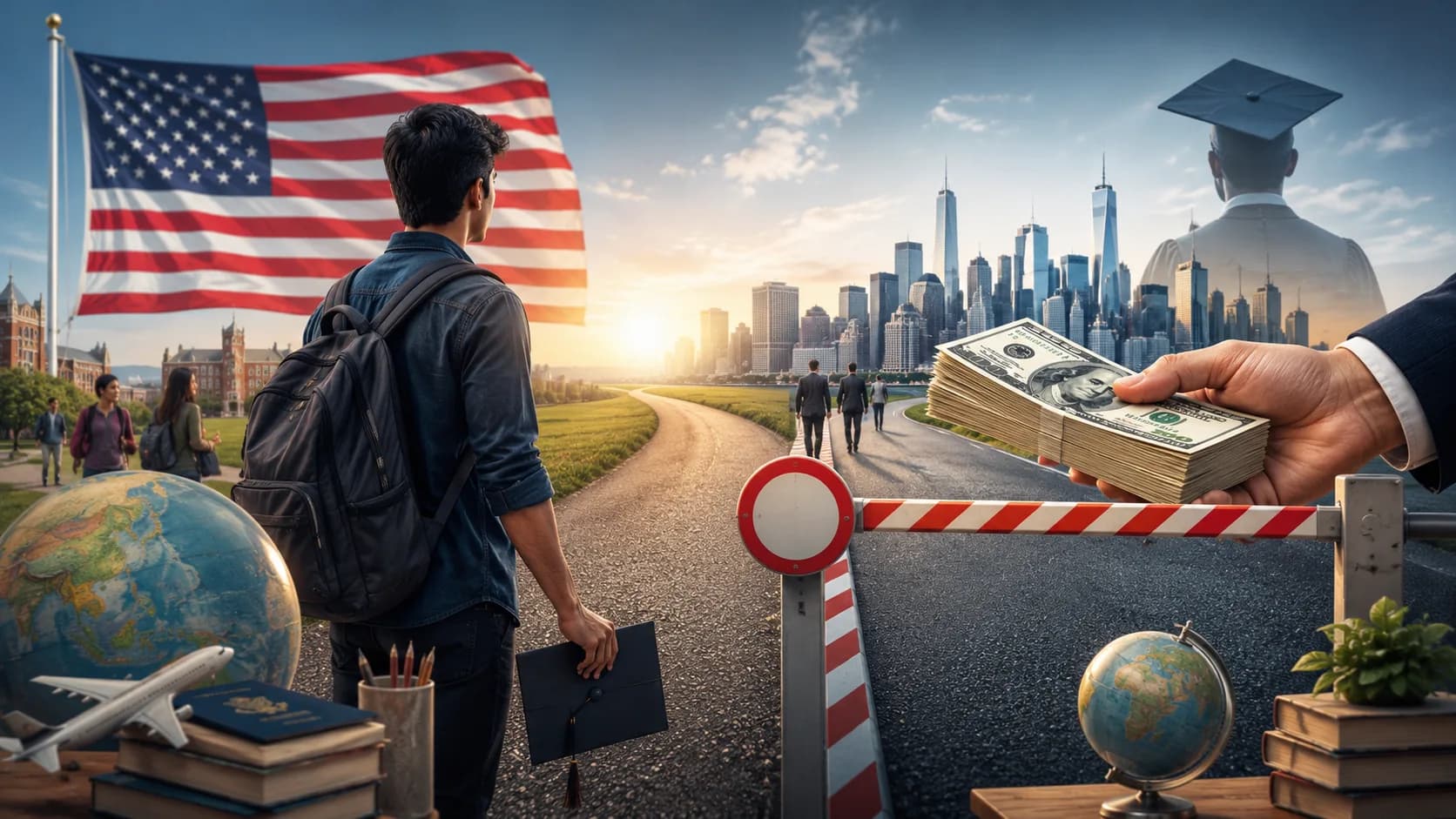














The new Department of Homeland Security (DHS) rule will apply to holders of F-1 student visas and J-1 exchange visitor visas. Under the revised framework, eligible visa holders can remain in the United States only for the duration of their academic or exchange programme, up to a maximum of four years.
According to reports by Bloomberg, Reuters and Business Standard, the move is one of the most significant changes to US student immigration rules in decades.
Extensions required for longer programmes
Students enrolled in programmes extending beyond four years, including many doctoral candidates, medical residents and researchers, will now have to seek formal extensions from US Citizenship and Immigration Services (USCIS). Applicants will be required to submit biometric information, pay applicable fees and await government approval instead of relying on educational institutions to maintain their immigration status.
Students already studying in the US when the rule comes into force will be assigned a fixed end date based on their current programme, along with a grace period. Those who remain after their authorised stay expires could begin accruing unlawful presence, potentially triggering three- or ten-year bans on re-entering the United States.
Also Read | Trump caps US student visas at four years, journalist visas at 240 days
Government cites oversight and national security
According to DHS, the revised policy is intended to strengthen oversight of foreign nationals and improve national security by allowing authorities to verify that visa holders continue to meet programme requirements regularly. Officials argue that fixed admission periods will reduce opportunities for visa misuse and overstays.
The rule also reduces the grace period after graduation from 60 days to 30 days and places additional restrictions on changing academic programmes or institutions without prior approval.
Also Read | Who is Roger Rogoff? Trump fires Seattle’s top prosecutor within an hour of judges appointing him
Critics warn of impact on international education
Higher education groups and medical organisations have criticised the policy, arguing that it creates unnecessary administrative hurdles for students pursuing longer academic programmes. Critics say the requirement for repeated extensions could discourage talented international students from choosing US universities and complicate research and medical training.
The rule revives a proposal first introduced during Trump’s earlier presidency, which faced opposition from universities and academic organisations. It is scheduled to take effect on September 15, although Congress may review or delay the regulation under the federal rulemaking process. The administration has also included provisions allowing the rest of the rule to remain effective even if parts of it are challenged in court.
FAQs
Q1. What is changing in the US student visa system?
International students and exchange visitors will generally be limited to a maximum stay of four years instead of remaining for the duration of their studies.
Q2. Who will need to apply for an extension?
Students in programmes lasting more than four years, such as many PhD and medical residency programmes, will need USCIS approval to stay longer.