





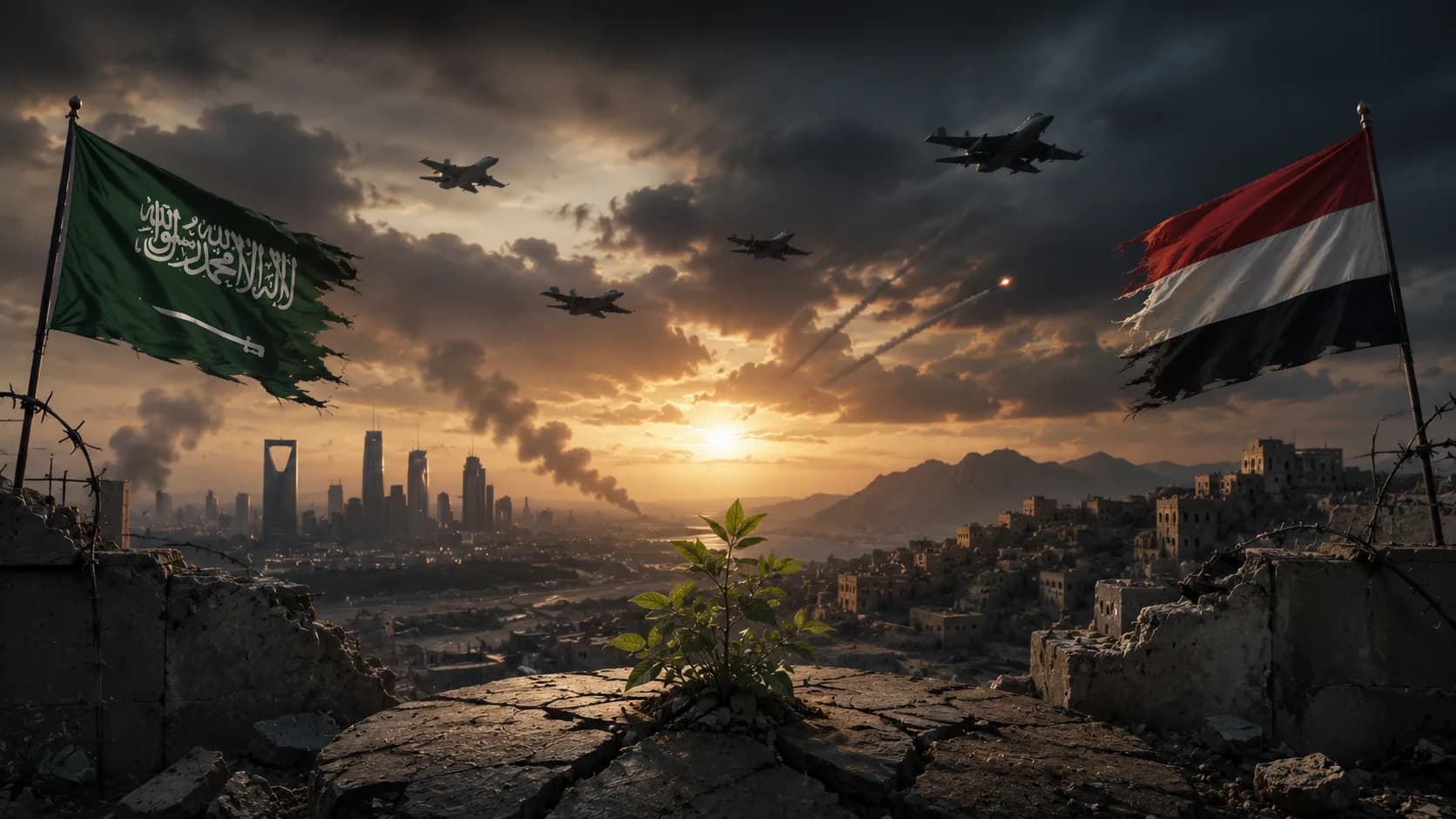





















After more than four years of relative calm between Saudi Arabia and Yemen’s Houthi movement, tensions are rising once again. What began with an Iranian aircraft attempting to land in Yemen has quickly evolved into a diplomatic and military confrontation involving Saudi Arabia, Iran, the United States (US) and the Houthis. Although neither side appears eager to return to full-scale war, recent events suggest the informal peace established in 2022 is becoming increasingly fragile.
What triggered the latest Saudi-Houthi tensions?
The immediate trigger came on 13 July 2026, when Saudi-backed forces struck the runway at Sanaa International Airport to prevent an Iranian Mahan Air aircraft carrying a Houthi delegation from landing. The aircraft eventually diverted safely to Hodeidah Airport.
The Houthis responded by launching missiles towards Saudi Arabia’s Abha International Airport. Although Saudi air defences intercepted the missiles and no casualties were reported, the attack marked the first Houthi strike on Saudi territory since the March 2022 truce.
Also Read | Ship carrying 4 Indians hit in attack at Ukraine’s Odesa port
While the military exchange remained limited, it demonstrated how quickly a relatively isolated incident could reignite one of the Middle East’s longest-running conflicts.
Why the Iranian aircraft sparked a regional crisis
The dispute is about much more than a single aircraft.
Saudi Arabia viewed the Iranian flight as an attempt to strengthen Tehran’s direct connection with Houthi-controlled territory, potentially expanding Iranian influence inside Yemen. Iran and the Houthis, however, argued that the flight was intended to ease restrictions on Sanaa International Airport.
This disagreement reflects the broader regional rivalry between Saudi Arabia and Iran, with Yemen increasingly serving as an arena for proxy competition rather than merely a domestic civil war.
How is US involved?
US has also adopted firmer rhetoric, linking Houthi military actions to Iran’s regional strategy and threats to international shipping in the Red Sea. Although Washington has not announced plans for direct military intervention, its statements indicate that the Houthis are increasingly being viewed through the broader lens of US-Iran tensions.
Also Read | Pakistan terror attack: 11 security personnel killed near Afghan border, 15 militants dead
Why is the Bab al-Mandab Strait so important?
Yemen occupies one of the world’s most strategically significant maritime locations. It borders the Bab al-Mandab Strait, a narrow waterway connecting the Red Sea with the Gulf of Aden. A significant share of trade between Europe and Asia passes through this route before reaching the Suez Canal.
Any disruption along this corridor affects global shipping costs, energy supplies and international trade.
What could happen next?
If tensions between Iran and US continue to escalate, analysts fear the Houthis could once again become a key pressure point by threatening commercial shipping in the Red Sea, similar to the attacks witnessed in recent years.
FAQs:
Why are Saudi Arabia and the Houthis clashing again?
Tensions flared after Saudi-backed forces blocked an Iranian aircraft from landing in Sanaa, prompting the Houthis to launch missiles at Saudi Arabia.
Why is the Bab al-Mandab Strait important in the Saudi-Houthi conflict?
The strait is a vital global shipping route, and any disruption there can impact international trade, energy supplies and shipping costs.
